

Weeds and Ants Keep Coming Back in My Pavers
You pull them in June and they are back by August. Ant hills push sand up between the stones and the joints keep opening. The weed is not the problem. The empty joint is, and a deep wash and polymeric sand close it. Lumen Landscaping washes and re-sands weedy interlock across Hamilton: call (905) 906-0671 or send the form for a free written quote.
- Fully insured
- 1-year craftsmanship warranty
- Hamilton owned and operated
Quick to quote, quick to start, we answer every call.
Serving Hamilton, Burlington, Oakville and the wider region, from Guelph to Niagara.
Get your fast, free quote
We reply fast, usually within the hour.
The problem
What you are seeing
It starts with a few green threads in the lines between the pavers. By midsummer there are dandelions in the patio and grass in the driveway, and every Saturday starts with a kneeling pad. Then the ant hills appear: little volcanoes of fine sand pushed up out of the joints, more of them every week, and a joint that was full in May is a slot you can drop a coin into by September. Walk the patio and the pavers near the edges have started to lean outward, the gaps between them wider than the gaps in the middle.
Here is the thing most people have not been told. Weeds in interlock almost never grow up from the soil underneath. They start from seed that lands in a joint where the sand is loose or gone, finds a little dirt and water, and takes hold. Ants love the same joint for the same reason. Pulling the weed and flooding the nest clears the symptom for a few weeks and leaves the open joint ready for the next one.
We hear this one from Mississauga and Burlington as often as from Hamilton, and the answer is the same everywhere: fill the joint with something that hardens, and keep it filled.
Our Work
Interlock we have washed, relaid and re-sanded

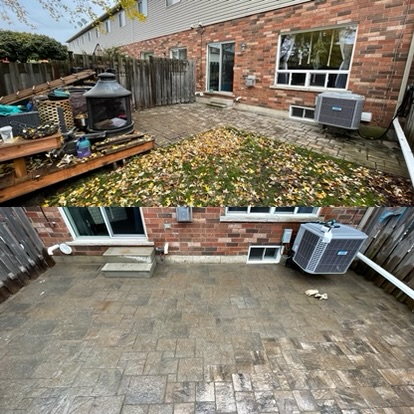
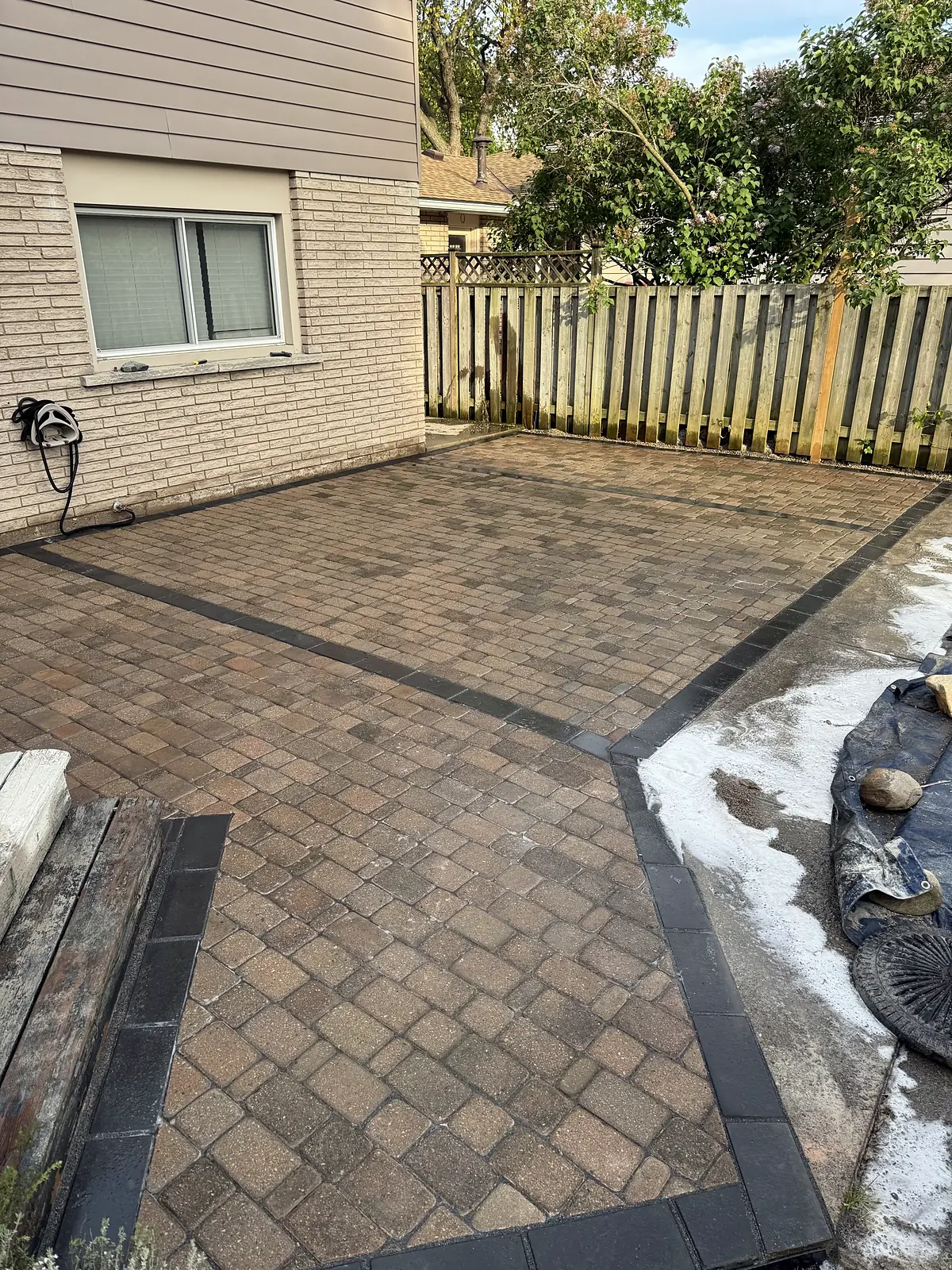
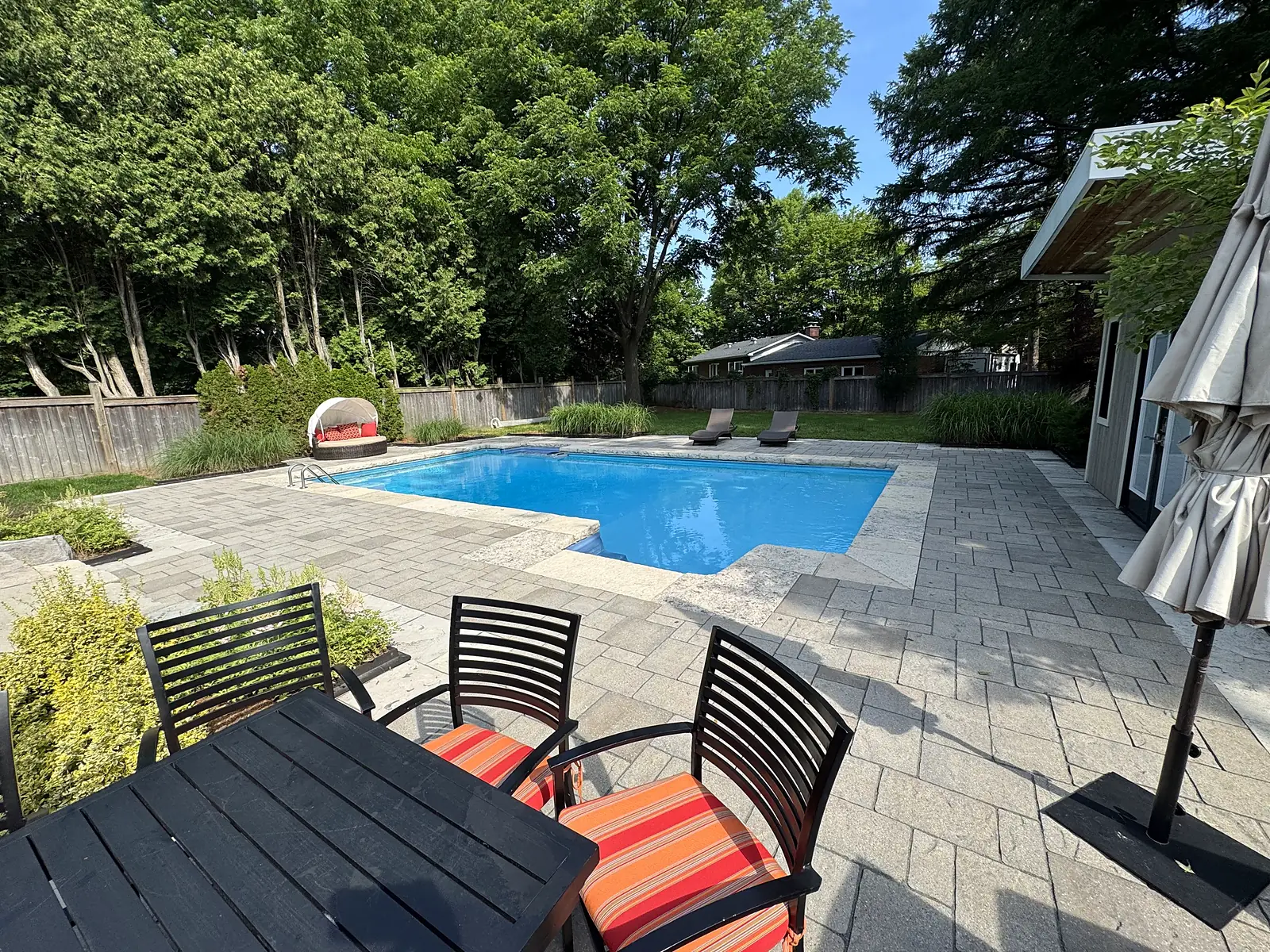
Why the joints keep opening
A joint that holds weeds and ants is a joint that is empty. These are the reasons it emptied.
- Plain sand in the joints: Ordinary jointing sand washes out a little with every rain and every hosing. Once it drops below the surface, seeds and ants have a pocket to work in.
- Polymeric sand that was never set: Polymeric sand only hardens when it is compacted into the joint, wetted properly and left to cure. Swept in thin or wetted too hard, it crusts on top and crumbles underneath.
- Edges that crept: Without an edge restraint the outside pavers creep outward a little each season. Every joint behind them opens, and the sand in all of them drops.
- The wrong kind of cleaning: A pressure washer with a surface cleaner skims the top and blows the sand out of the joints without getting the dirt and seeds out of the bottom. The joint is emptier and just as dirty.
- Shade, damp and dirt: A patio under trees or on the north side of a house collects leaf litter and stays wet. Dirt settles into the joints, moss follows, and a joint full of damp dirt is a seed bed.
- Ants moving in: Ants dig out loose joint sand to build their nests under the pavers. Each hill is sand that used to be holding a joint shut, and the pavers above a big nest start to tip.
Google reviews
What our customers say
“We had a gravel walkway around our pool and equipment that had become overgrown with weeds, and grasses. The crew removed all the existing weeds etc., stone, and fabric. … We are very pleased with their work. They delivered as promised.”
“My front walk and back patio needed maintenance due to misaligned stones and weeds. … I am very happy with the result and greatly appreciate the owner's planting suggestions for the low maintenance gardens I require.”
“They returned my call the same day I phoned. He arranged a visit and gave me a few options to repair my stone stairs. He did the work within 2 weeks and did a great job. I highly recommend him.”
The fix
How we get the weeds and ants out for good
We pressure wash the whole area with a 4,000 PSI washer and a nozzle attachment instead of a surface cleaner, because the nozzle gets deep between the pavers and blows the dirt, roots and seeds out of the bottom of every joint. We rinse the surrounding surfaces and collect the waste for disposal, then let the pavers dry. Then we apply premium polymeric sand, compact it into the joints with a rubber plate tamper so it packs to the bottom instead of sitting on top, and apply a second layer to refill and strengthen the joints before it is set. Polymeric sand hardens between the pavers and keeps weeds and ants out, and done this way it stays put for years instead of one season. That is our patio restoration service, and it works on patios, driveways, walkways and steps.
If the joints are open but the pavers are clean and level, we can scrape the joints out and install polymeric sand without the wash. If pavers have started to lean because the edge was never locked, we add the restraint first, and if an ant nest has hollowed the bedding under a few pavers we lift those, re-screed and reset them before sanding. Sealing afterwards is worth asking about: it deepens the colour, helps resist stains and salt, and keeps the joints tight for longer. We wrote more about the order of work in our guide to uneven stones and weeds.
One honest note on sprays. Ontario banned most cosmetic weed killers in 2009, and the products left on the allowable list are low risk by design, so spraying an interlock patio is slow, repetitive and never fixes the joint. A full joint is the only thing that does.

Check this yourself first
A screwdriver and a slow walk around the patio will tell you whether this is a re-sanding job or something more.
- Probe a few joints: Push a screwdriver into a joint in the middle of the patio and one near the edge. If it stops on something hard, there is polymeric sand still doing its job. If it slides in, the joint is empty or holding loose sand.
- Count the hills: Ant hills clustered in one area usually mean one large nest under those pavers. Note whether the pavers above it rock, because a nest that big has hollowed out the bedding.
- Check the edges: Look along the outside courses. Pavers leaning out, or a gap along the border, mean the restraint is missing or has failed, and no amount of sand will stay in joints that keep opening.
- Look at what is in the joint: Scrape one out with the screwdriver. Dark dirt and roots mean the joint has been empty long enough to become soil, and a wash has to get all of that out before new sand goes in.
- When to call: Weeds every few weeks, ant hills that come back after flooding, or pavers that have started to lean are worth fixing this season. Call (905) 906-0671 and we will take a look.

Planning
What a lasting fix includes, and what changes the price
A lasting fix always includes
- A deep wash with a nozzle, so the bottom of every joint is clean, not just the surface
- Dry pavers before any sand goes in
- Polymeric sand compacted into the joints with a plate tamper, then a second application
- Edge restraint wherever an edge is open
- Pavers that have tipped over a nest lifted and reset first
What affects the price
- The size of the area and how many separate areas there are
- How much dirt and root is in the joints, which sets the washing time
- Whether any pavers have to be lifted and reset before sanding
- Edge restraint that has to be added or replaced
- Sealing, if you want it done at the same time
- Access for the washer and the collected waste
A typical job, in plain words. Picture a backyard patio with weeds along most of the joints and a few ant hills near the house wall. We wash it on the first visit, let it dry, then sand it. The joints near the ant hills get a check for hollow bedding before the sand goes in. The patio looks new by the time we sweep off, and the Saturday weeding stops. A driveway in Stoney Creek or a front walk in Burlington is the same job with more salt stain to wash out first.
Every quote is written and free, and materials are billed at what they cost us with no markup.
Related
Related pages
Service: patio restoration. Related problems: a sinking interlock patio and faded, stained or mossy patio stones. Areas: Hamilton and Mississauga. More answers on our FAQ page, and more problems we fix.
FAQs
Weeds and ants in pavers questions
Because the joint is still empty. Weeds in interlock start from seed that lands in loose or missing joint sand. Pulling the plant leaves the pocket it grew in, and the next seed takes it. Filling the joint with polymeric sand that hardens is what stops the cycle.
Yes, when it is compacted in and properly set. Ants need loose sand to dig in. A joint that has hardened gives them nothing to move, and they go elsewhere. If a nest has already hollowed out the bedding under some pavers, we reset those first.
You can, and it is better than nothing. The two things that go wrong are using a surface cleaner, which leaves the bottom of the joint dirty, and wetting the polymeric sand too hard or too soon, so it never sets. We use a nozzle, compact the sand in and apply it twice.
No, but it helps. Sealing deepens the colour, helps the pavers resist stains, oil and salt, and keeps the joints tighter for longer. Ask us to add it to your quote and we will tell you whether your pavers are a good candidate.
Yes. We wash and re-sand interlock patios, driveways, walkways and steps, so the whole property matches. A driveway usually needs more washing because of salt and tire marks, and the apron at the street gets checked for sinking while we are there.
A patio or a walkway is usually a two visit job: wash on the first visit, sand once the pavers are dry. A large driveway or several areas can take longer. Your written quote gives the timeline, and we pick the visits around the weather so the sand sets properly.
How it works
Getting started is easy
- 1
Call or send the form
Tell us what you have in mind. We reply fast, usually within the hour.
- 2
Get your free quote
We look at your project and send you a clear, written quote quickly.
- 3
We build it
We start quickly and back our craftsmanship with a 1-year warranty.
Get Free Quote
Get a Free Quote to Close the Joints
Tell us how big the area is and what is growing in it. We will take a look, tell you whether it is a re-sanding job or something more, and get back to you fast with a free written quote.