
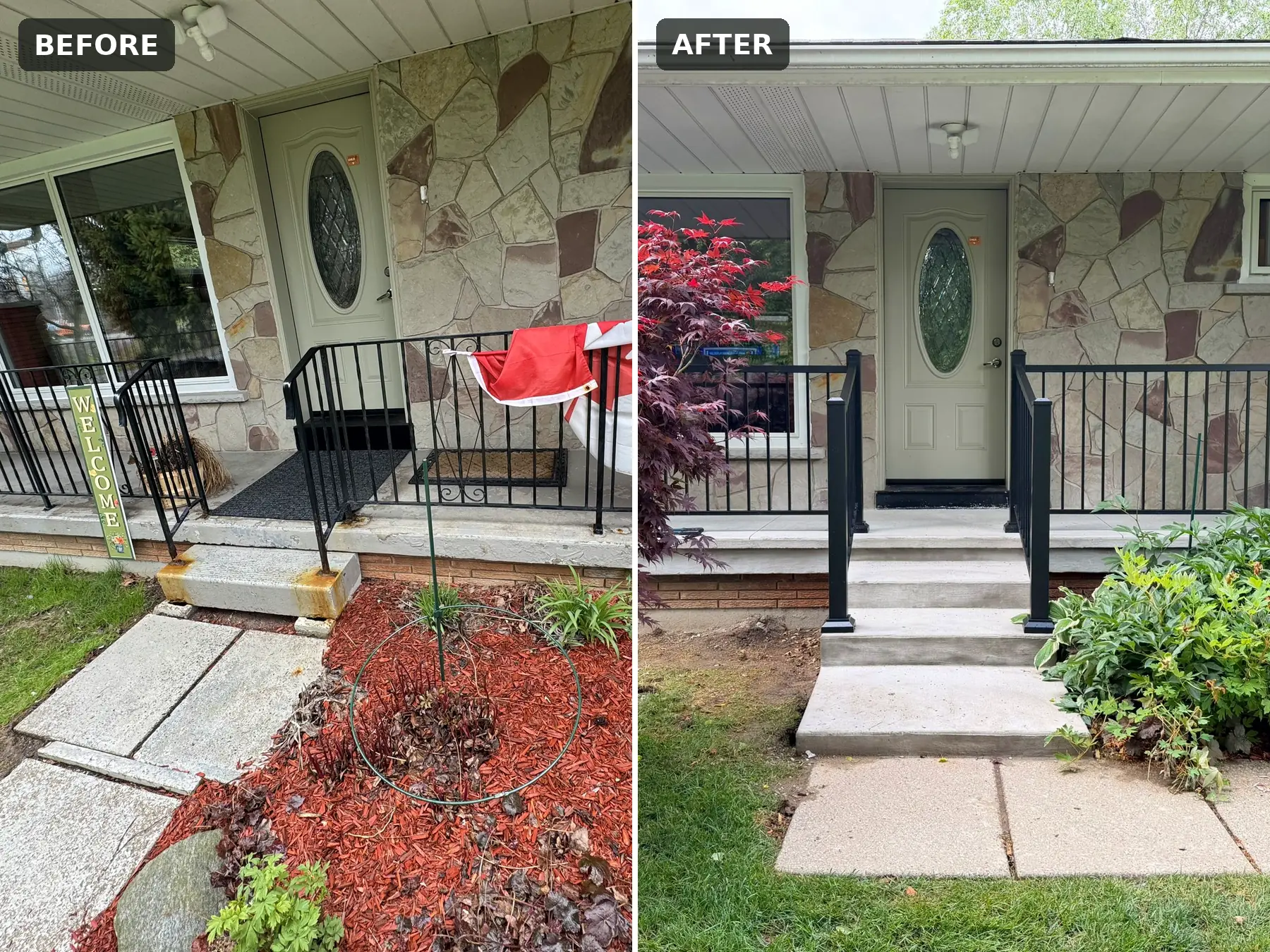
My Concrete Front Steps Are Cracking and Crumbling
Grey flakes on the walk every spring, a corner gone off the bottom step, a crack opening between the porch and the house. Three stages of one problem, and an honest answer for each: parge it, resurface it, or replace it. Lumen Landscaping parges, resurfaces and replaces concrete steps across Hamilton: call (905) 906-0671 or send the form for a free written quote.
- Fully insured
- 1-year craftsmanship warranty
- Hamilton owned and operated
Quick to quote, quick to start, we answer every call.
Serving Hamilton, Burlington, Oakville and the wider region, from Guelph to Niagara.
Get your fast, free quote
We reply fast, usually within the hour.
The problem
What you are seeing
The first stage is cosmetic. The smooth skin on the treads starts to flake, you sweep grey chips off the walk every spring, and pits open up where the salt sat. The second stage is a crack. A corner breaks off the bottom step, a crack runs across a tread, or the parging on the face of the porch comes away in sheets and the block or brick behind it shows. The third stage is movement. A gap opens between the porch and the house wall, the top step is no longer level with the door sill, and the awning posts sit at a slight angle because the slab they stand on has dropped.
All three are the same enemy at different depths. Hamilton's freeze season runs from around late October to late April, and every one of those nights, water that has soaked into the concrete freezes and expands. Salt makes it worse by drawing more water into the surface and keeping it wet. The surface goes first, then the cracks, and if the steps were poured on soil with no base, the whole thing moves.
The honest answer depends on which stage you are at, and a good contractor will tell you which one that is before quoting anything.
Our Work
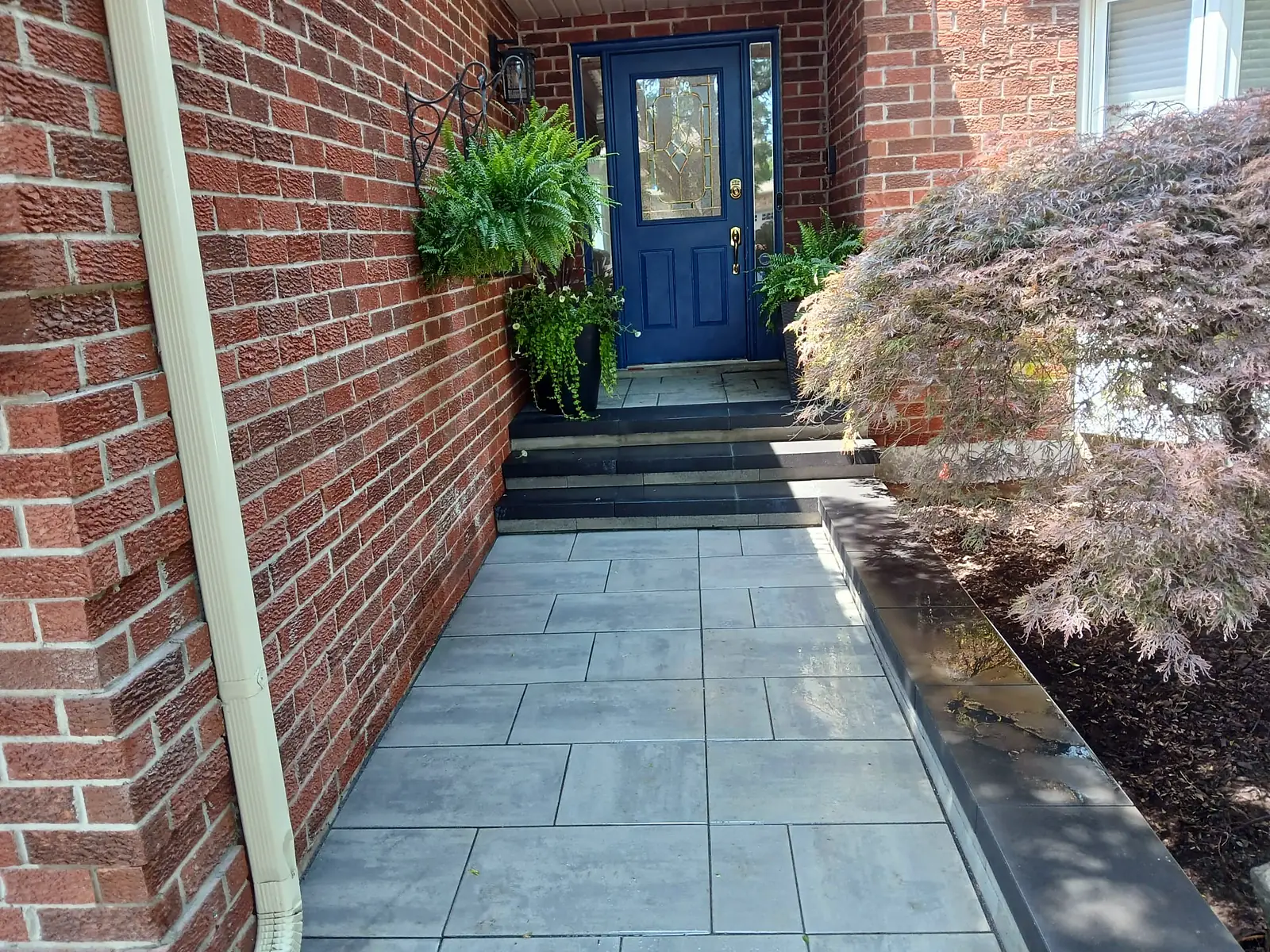
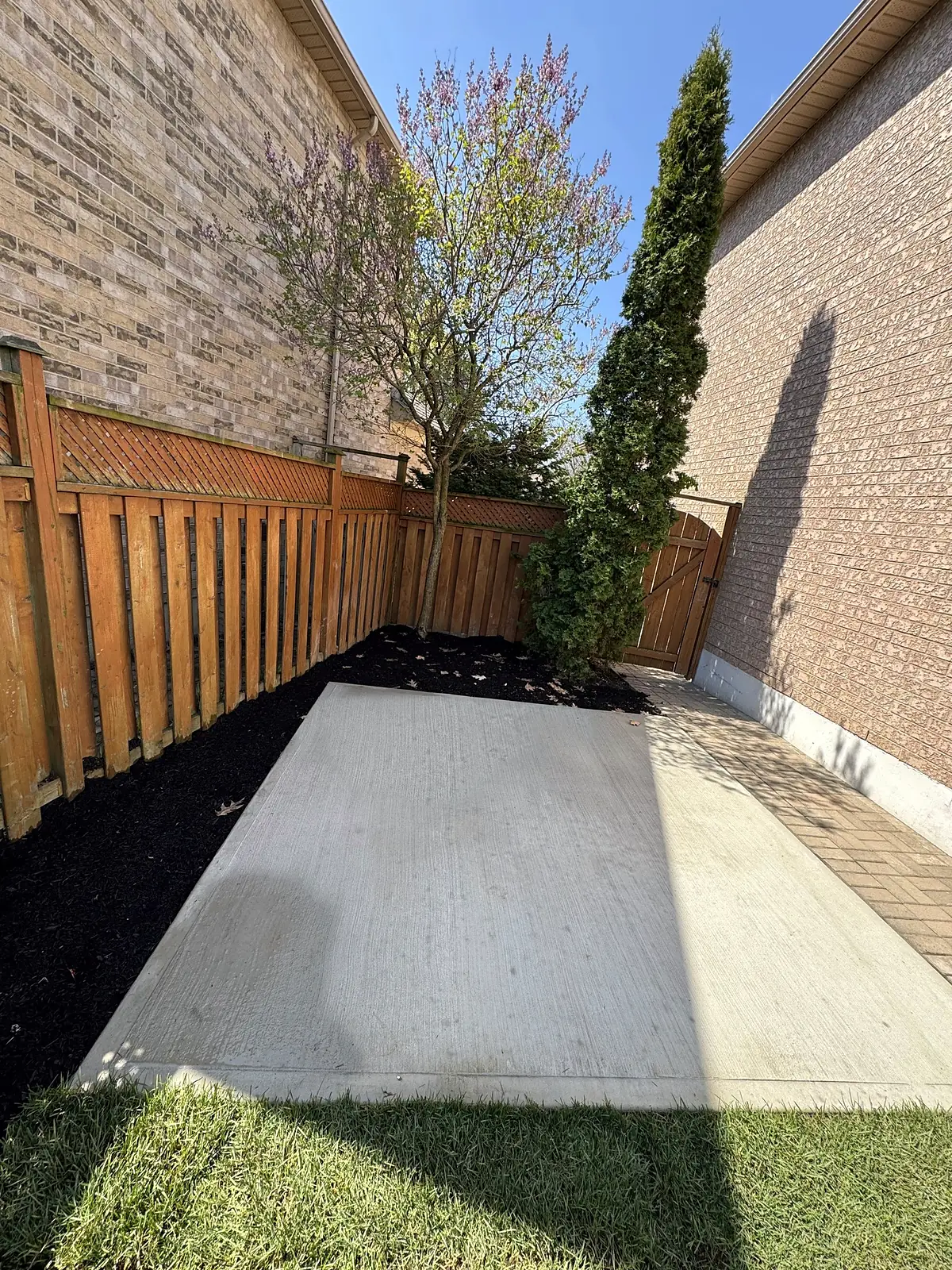
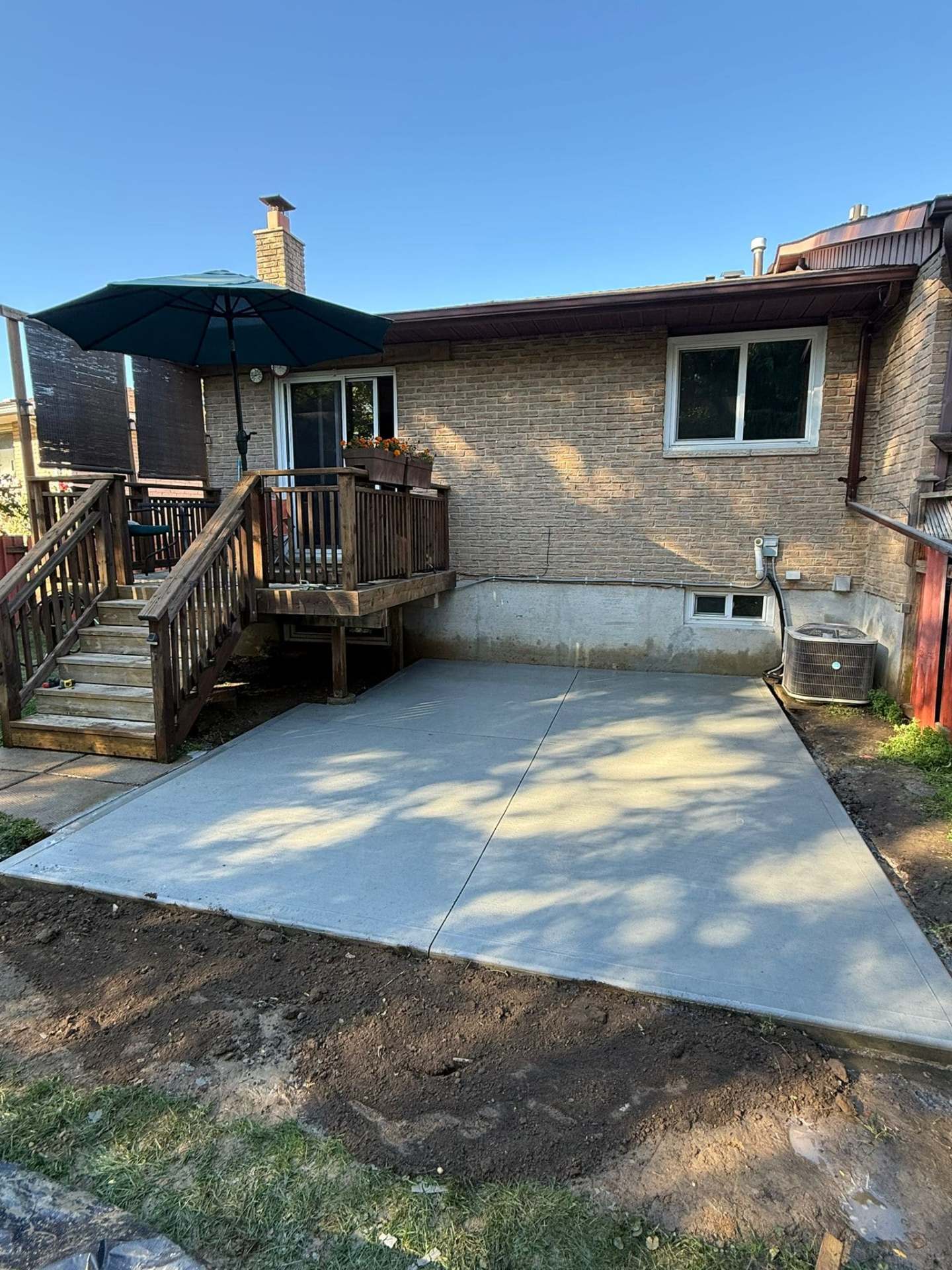
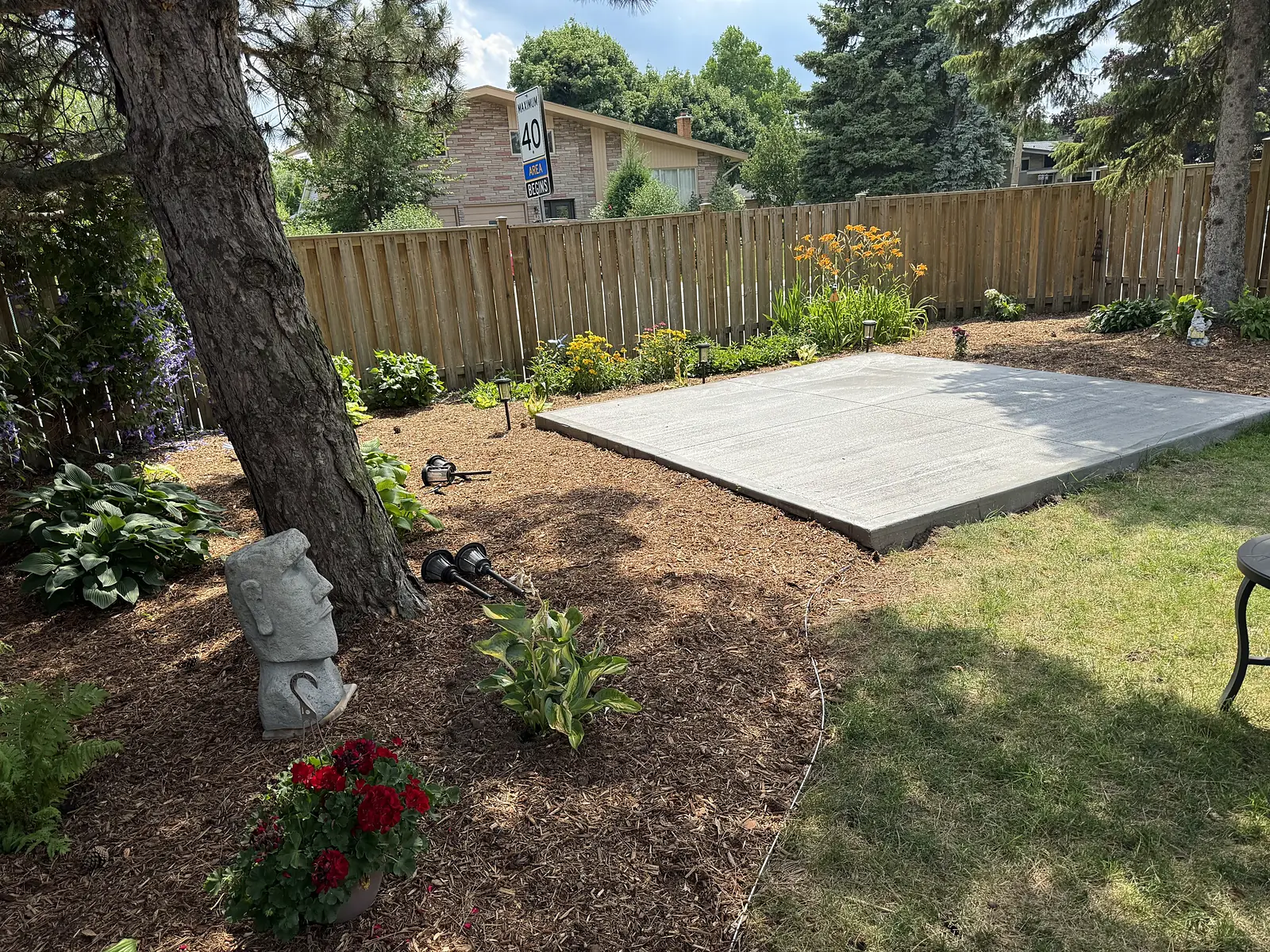
Steps, walks and concrete pads we have built

Why steps crack and crumble
Front steps take more punishment than any other concrete on the house: foot traffic, salt, roof drip and winter, all on the shady side of a porch. These are the usual reasons they fail.
- Salt and freeze and thaw: De-icing salt draws water into the surface and keeps it wet. When it freezes, the top layer scales off. That is the flaking, and it is why the bottom step, where the most salt lands, goes first.
- Water getting into cracks: A hairline crack lets water in. Water freezes and widens it. The next year more water gets in. A crack that was nothing becomes a broken corner in a few winters.
- Poured on soil, with no base: Steps and porches poured straight on the ground settle as the ground softens and heaves as it freezes. That is the porch pulling away from the house: the house sits on a footing, the porch does not.
- No reinforcement: Concrete without rebar or mesh has nothing holding it together once a crack starts. A reinforced slab cracks and stays put. An unreinforced one cracks and separates.
- Parging that has let go: Parging is a thin coat over block or rough concrete. Applied without a bonding coat, or over loose material, it separates from the wall, holds water behind it and comes off in sheets.
- Roof water and the drip line: A porch without an eavestrough above it takes the whole roof's runoff on one line of concrete, which stays wet, freezes and scales faster than the rest.
Google reviews
What our customers say
“The crew at Lumen Landscaping did an amazing job pouring our concrete patio last September. The entire experience was positive from beginning to end. The owner was honest, professional, and clearly takes great pride in his work.”
“We recently hired Lumen Landscaping to build a stone patio in our backyard, a concrete pad for our shed. … The owner is professional and highly knowledgeable, providing great advice and solutions for a reasonable price.”
“They built a concrete slab for our new backyard shed and also cleaned up a side garden area that needed a refresh. … Prices are reasonable and results are great. He's our go to person for outdoor landscaping work.”
The fix
How we fix cracked concrete steps, stage by stage
Parging. When the concrete underneath is sound and the face is the problem, we strip or grind the existing paint and loose parging, clean and prep the surface, apply a concrete bonding adhesive, and parge with a polymer reinforced parging mix for a durable, even finish. Lights are disconnected and reconnected as needed. It is the right answer for a porch wall that looks worse than it is.
Resurfacing. Worn, scaled treads on a porch that has not moved can be resurfaced, and we do that work. If the concrete underneath is badly cracked or sinking, we will tell you honestly and quote a replacement instead, because a new skin on a moving slab cracks with it.
Replacement. When the porch has settled, pulled from the house or broken through, we replace it. We disconnect or support the awning, excavate and dispose of the old porch, install a new gravel base, and pour the new porch at least 4 inches thick throughout with rebar reinforcement and a non slip brush finish. Then the awning and railings go back on with all new hardware. Bull noses on the steps are an option, and so is a front porch wall running the whole front of the porch down to below grade, built with rebar and parged on completion. See our concrete steps, porches and pads page for the scope in full, and our concrete page for the finishes.
In Hamilton, a porch attached to the house needs a building permit, and we tell you before quoting whether yours does. On the older streets of Stoney Creek's Old Town and in Hamilton's lower city, the porch is often the original one and has outlasted two roofs, so a replacement is a once in a lifetime job worth doing properly. In Burlington the same rules about attached structures apply, and we check them for you. We also wrote a guide on preventing concrete cracking in Ontario winters.

Check this yourself first
A hammer, a level and a careful look will tell you which stage your steps are at before anyone quotes you a whole new porch.
- Tap the surface: Tap the treads and the parged face with a hammer handle. A solid sound means the concrete underneath is sound and the damage is skin deep. A hollow sound means a layer has separated and will keep coming off.
- Look at the cracks: A thin crack with both sides level is a surface crack. A crack where one side sits higher than the other, or a corner that has broken clean off, means the slab is moving or has lost its reinforcement.
- Check the gap at the house: Look where the porch meets the wall. A gap that has opened, a tread no longer level with the door sill, or a railing post that has pulled from its anchor means the porch has settled or heaved. That is a replacement conversation.
- Put a level on the top step: If the landing tilts toward the door, water and ice collect at the threshold every winter, and the fix is the slab, not the surface.
- When to call: A hollow face, a broken tread, a landing that tilts toward the door, or a porch that has pulled away from the house is worth looking at this season. Call (905) 906-0671 and we will tell you honestly which stage it is at.

Planning
What a lasting fix includes, and what changes the price
A lasting fix always includes
- An honest read of which stage the steps are at, before anything is quoted
- Parging: loose material stripped, a bonding coat, a polymer reinforced mix
- Replacement: the old porch out, a new gravel base, concrete at least 4 inches thick with rebar, a non slip brush finish
- The awning and railings reinstalled with new hardware
- Stress joints cut and the concrete cleaned on completion
What affects the price
- Which stage: parging a face, resurfacing treads, or a whole new porch
- The size of the porch and the number of steps
- How much old concrete has to be broken out and hauled to a licensed disposal site
- An awning or railings that have to be supported, removed and refitted
- Options such as bull noses on the steps or a parged front wall below grade
- Lights, railings and anything else fixed to the porch
A typical job, in plain words. Picture a porch with scaled treads, a hollow sounding front face and a top step still level with the door. The slab is fine, so the face gets stripped and parged and the treads get resurfaced, and the porch looks new for a fraction of the work of replacing it. Now picture the same porch with a gap opening at the house wall. That one comes out, gets a gravel base and goes back in at least 4 inches thick with rebar, because resurfacing a porch that is moving is money thrown at a symptom. One winter later, keep de-icers off the new concrete and use sand for grip until it has cured through a season.
Every quote is written and free, and materials are billed at what they cost us with no markup.
Related
Related pages
Services: concrete steps, porches and pads and concrete. Related problems: a cracked or sunken concrete walkway and ice on the walkway every winter. Areas: Hamilton and Stoney Creek. More answers on our FAQ page, and more problems we fix.
FAQs
Cracked concrete steps questions
It depends on what is underneath. If the slab is solid and level and the damage is flaking or loose parging, we repair the surface. If the porch has settled, pulled away from the house or broken through, replacement on a proper base is the fix that lasts. We tell you which before we quote.
A thin coat of cement based mix over block or rough concrete, applied for looks and protection. Done properly it goes over a clean, prepped surface with a bonding adhesive and uses a polymer reinforced mix, so it stays stuck through the freeze and thaw instead of coming off in sheets.
Salt. The bottom step gets the most of it, from the walk and from what is tracked down, and salt draws water into the surface and keeps it wet through the freeze and thaw. The top step under the awning stays dry and lasts longest.
Usually, yes. We disconnect or support the awning, do the work, and reinstall the awning and railings with all new hardware. If the railings are rusted through or no longer meet the rules for an attached porch, we tell you up front.
Keep de-icing salt off them through the first winter and use sand for grip, then seal them once they have cured through a season. Sealing helps the surface resist salt, stains and freeze and thaw damage, and we can add it to your quote.
In Hamilton, a porch attached to the house needs a building permit. A freestanding set of steps usually does not. We tell you before quoting whether yours needs one, and we build to what the permit requires.
How it works
Getting started is easy
- 1
Call or send the form
Tell us what you have in mind. We reply fast, usually within the hour.
- 2
Get your free quote
We look at your project and send you a clear, written quote quickly.
- 3
We build it
We start quickly and back our craftsmanship with a 1-year warranty.
Get Free Quote
Get a Free Quote for Your Steps or Porch
Tell us what the steps are doing and send a photo of the face and the top step if you can. We will tell you honestly which stage it is at and get back to you fast with a free written quote.