

Water Pools in My Yard After Every Rain
A puddle that lasts three days, a corner of lawn that squelches in June, moss where grass used to be. Water sits where it has no way out, and the reason is a low spot, a blocked swale, clay or a downspout. Here is how to tell which. Lumen Landscaping fixes pooling water in yards across Hamilton: call (905) 906-0671 or send the form for a free written quote.
- Fully insured
- 1-year craftsmanship warranty
- Hamilton owned and operated
Quick to quote, quick to start, we answer every call.
Serving Hamilton, Burlington, Oakville and the wider region, from Guelph to Niagara.
Get your fast, free quote
We reply fast, usually within the hour.
The problem
What you are seeing
Every rain leaves the same puddle. It sits in the back corner for days, the grass around it has turned to moss and mud, and the kids track it into the house. In spring the whole back third of the lawn is soft enough to leave footprints, the mower sinks, and by midsummer the grass there is thin and yellow because the roots drowned in May. Sometimes it is the side yard, sometimes a dip in the front, sometimes a ring around the patio.
Water pools where it has nowhere to go. A lawn is supposed to shed rain gently toward a swale, the street or a low corner that drains. When the surface has a dip with no outlet, when the swale that used to carry the water has been filled by a shed or a garden bed, when the ground is clay that will not take water, or when a downspout is adding a roof's worth to one spot, the water stops and waits. The puddle is the symptom. One of those four is the cause, and it is usually easy to tell which.
This page works back from the puddle you can see to the cause, then up the ladder of fixes from the cheapest to the most thorough. Most yards need one or two rungs, not all of them.
Our Work
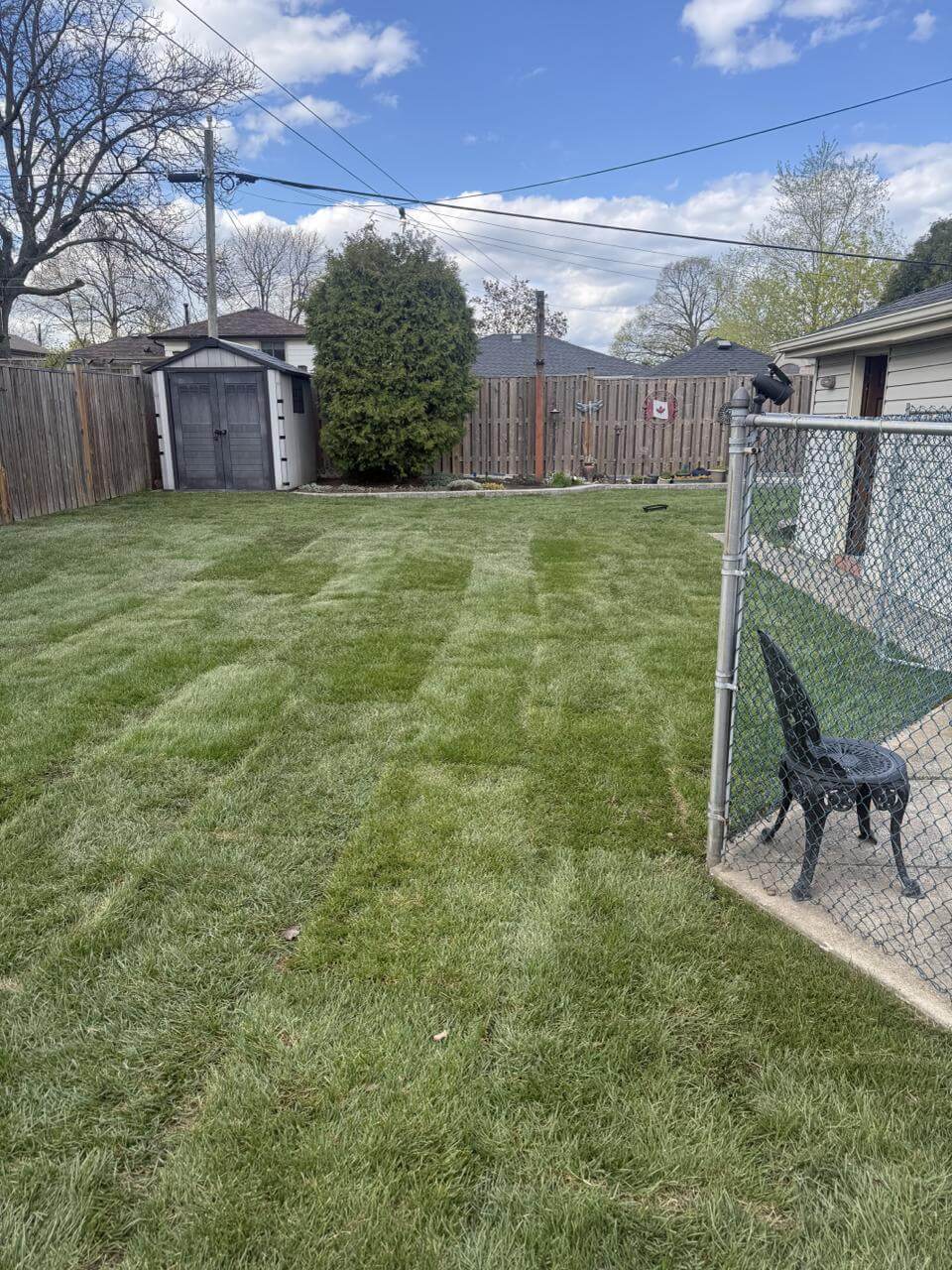
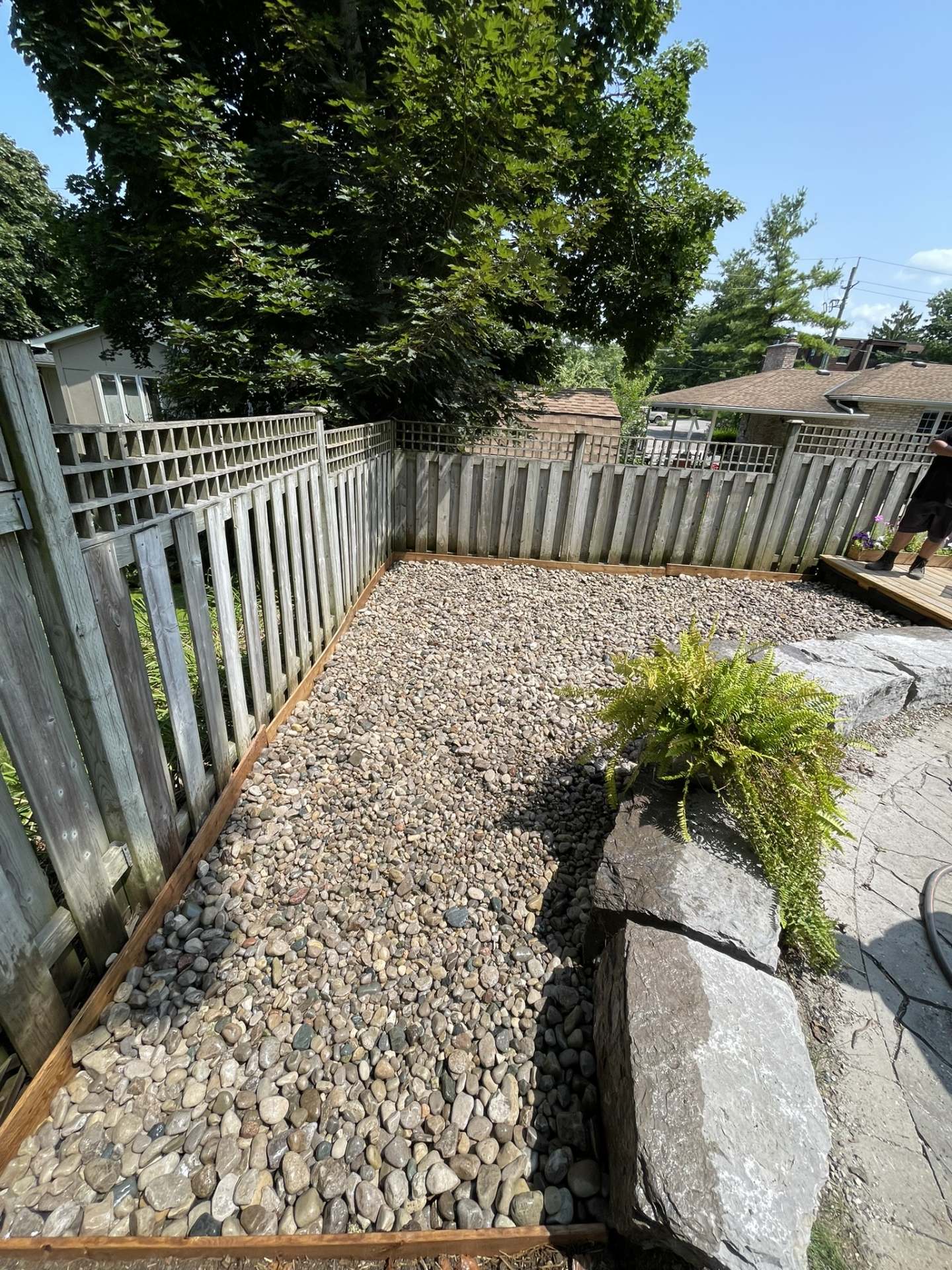
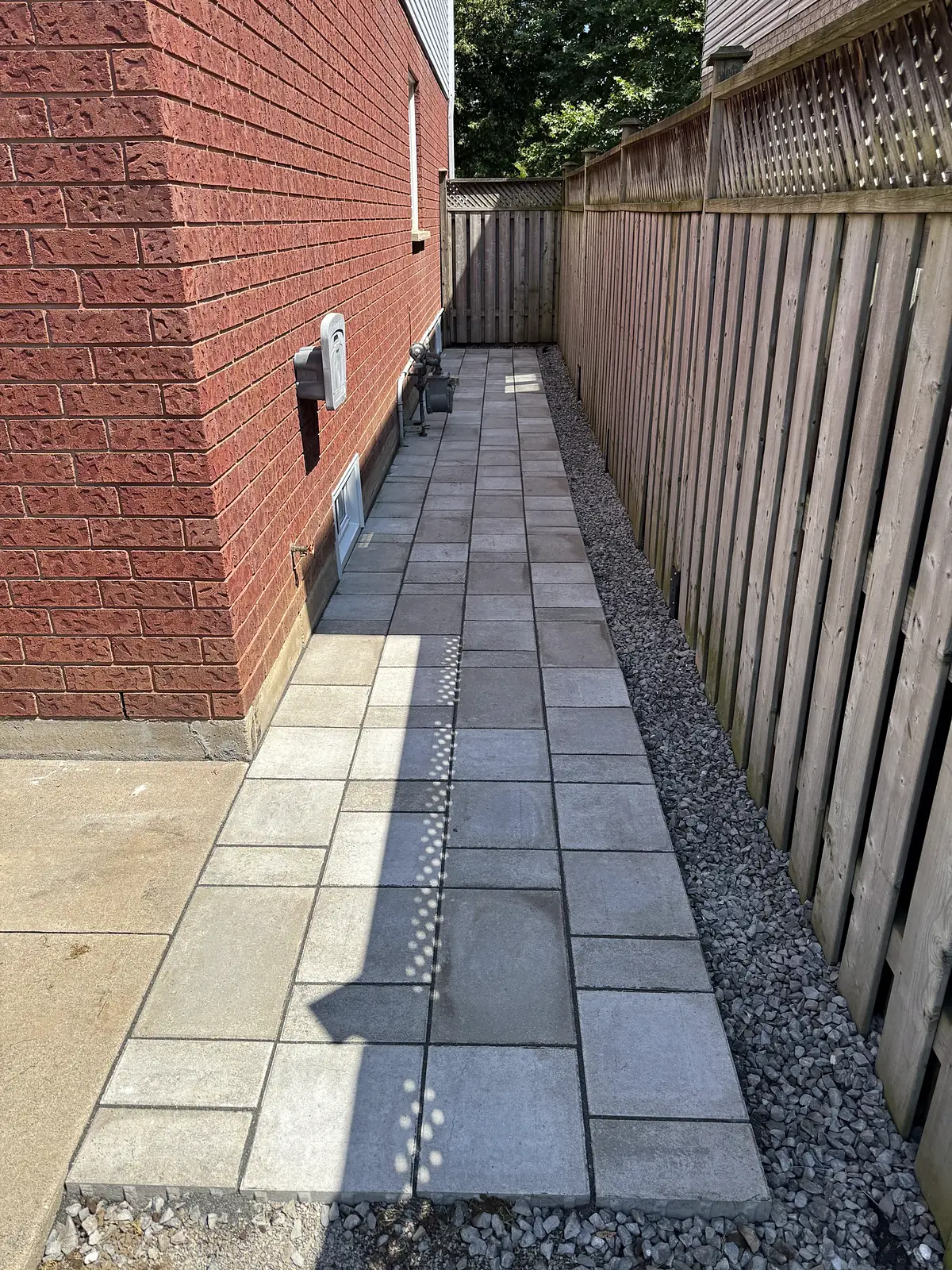
Lawns, rock beds and paths we have built

Why water pools in the yard
One of these is almost always the cause, and the shape of the puddle tells you which.
- A low spot with no outlet: The lawn dips and the dip has no way out, so water collects and can only leave by soaking in or evaporating. On clay, that takes days.
- A blocked swale: Most lots were graded with a shallow swale that carries water along the property line to the street. A shed, a raised bed, a fence post, a load of topsoil or a neighbour's pool deck across it dams the whole yard behind it.
- Clay: Much of Hamilton sits on clay, and the Binbrook and Glanbrook side, Mount Hope included, is on the Haldimand clay plain. Clay holds water instead of letting it through, so a yard that looks graded still ponds after every storm.
- A downspout into the lawn: One downspout can put a whole roof section onto a patch of lawn the size of a car. If that patch is low, or clay, it never gets a chance to dry.
- Compacted ground: A new build lot that was driven over for a year, or an old lawn that gets walked on wet, packs down until water sits on top of it the way it sits on a road.
- Something changed next door: A neighbour's regrading, a new fence, a shed or a pool can change where the water goes on your side of the line. Our page on runoff from the neighbour's yard covers that one.
Google reviews
What our customers say
“The team did an excellent job re-sodding our backyard. They were professional, careful working around our pool, and the finished result looks fantastic.”
“I recently had Lumen remove the surface of our weed-infested lawn and replace it with fresh sod on the larger of two areas, and river rock on the smaller area. It was a pleasure dealing with Jeff at Lumen.”
“Excellent experience with Lumen Landscaping. Efficient, knowledgeable, hardworking, and my lawn looks fantastic. Highly recommend! I had Lumen landscape a second project one year later. Same terrific experience.”
The fix
The ladder of fixes, cheapest first
Extend the downspouts. If a roof is feeding the puddle, we carry the downspout water past the low spot, on the surface or in a buried line to somewhere it can leave. On its own this fixes more yards than people expect.
Regrade the low spot. We fill and reshape the dip so it drains to the swale or the street, then re-sod it. Routine landscaping in Hamilton, with fill of 15 cm or less, no change to drainage onto a neighbour and no swale touched, needs no permit; anything bigger is a site alteration permit, and we tell you which yours is. See our grading page for how a regrade is done and finished.
Reopen or build a swale. If the swale is filled or blocked, we clear it and reshape it so it carries water the way the lot was designed to. In Hamilton the homeowner is responsible for keeping the lot graded as it was approved, and filling or blocking a swale is how a dry yard becomes a wet one, so the swale is never the thing we build over.
A French drain. On clay, where the water cannot soak in, a trench with perforated pipe in clear stone collects the water below the surface and carries it to a low point or a dry well. It is the fix for the puddle that lasts for days. Weeping tile does the same job along a foundation. All five fixes are on our yard drainage page, and we wrote about how good drainage prevents ice damage too in this guide.
Before any trench is dug, Ontario One Call gets a locate request, which is the law for anyone digging in Ontario and takes about five business days. On a rural lot in Mount Hope or Flamborough we also ask where the well and the septic bed are before we plan a line, and on a creek lot in Waterdown, which falls under Conservation Halton rather than the Hamilton Conservation Authority, we check whether the work is in a regulated area first.

Check this yourself first
Four checks, one rainy weekend, and you will know which rung of the ladder your yard needs.
- Time the puddle: Note how long the water stays after a rain. Hours means a low spot that drains slowly. Days means the ground under it is clay or packed, and surface grading alone will not be enough.
- Dig a hole and fill it: Dig a hole a shovel deep in the wet area, fill it with water and come back in the morning. If it is still full, the ground is clay and the fix needs somewhere for water to go, not just a new slope.
- Find the swale: Look for the shallow dip along the property lines and across the back of the lot. Then look for what is sitting in it: a shed, a bed, fill, a fence. If the puddle is right behind one of those, you have found the dam.
- Follow the downspouts: Trace every downspout to where it lets out. One that empties into the wet area is feeding it, and extending it past the low spot is often the cheapest fix on this page.
- When to call: A puddle that lasts days, lawn that squelches in June, water against the patio or the foundation, or a swale you can see has been filled is worth fixing this season. Call (905) 906-0671 and we will take a look.

Planning
What a lasting fix includes, and what changes the price
A lasting fix always includes
- Finding the cause: a low spot, a blocked swale, clay or a downspout, before choosing the fix
- Downspouts carried past the low spot
- The swale kept open, or reopened if it was filled
- A regrade that gives water a way out, re-sodded or planted when we are done
- A French drain or weeping tile where the ground will not take water
- A locate before any digging
What affects the price
- Which rung of the ladder the yard needs: an extension, a regrade, a swale or a drain
- The size of the wet area and how much soil has to move
- How far the water has to be carried to leave the lot, and whether the line is buried
- Clay, which means a drain instead of a regrade and a trench instead of a rake
- New sod and beds put back where we have dug
- Access for a small machine, or hand work through a narrow gate
A typical fix, in plain words. Picture a back corner that holds water for three days after every rain, with a downspout emptying ten feet from it and a shed sitting across the swale. We carry the downspout past the corner, reopen the swale beside the shed, regrade the corner so it falls toward it, and re-sod. The corner drains the way it was meant to. The same corner in Binbrook, on the clay plain, usually also gets a French drain, because the ground there will not take the water however well it is shaped.
Every quote is written and free, and materials are billed at what they cost us with no markup.
Related
Related pages
Services: yard drainage and grading. Related problems: water draining toward the house, runoff from the neighbour's yard and a bumpy lawn full of low spots. Areas: Hamilton and Binbrook and Glanbrook. More answers on our FAQ page, and more problems we fix.
FAQs
Water pooling questions
Usually a swale that has been blocked on your lot, a low spot that has no outlet, or a downspout feeding the wet area. Sometimes the ground is simply lower, so everyone's water ends up on your side. The hole test and a look along the swale usually tell us which within a few minutes.
Only if there is somewhere for the water to go afterwards. Fill with no outlet moves the puddle, and fill across a swale makes it worse. In Hamilton, routine landscaping with fill of 15 cm or less, no change to drainage onto a neighbour and no swale touched needs no permit; more than that is a site alteration permit.
A shallow, grassed dip that carries water across the lot to the street, usually along the property lines. Most subdivisions were graded with them. In Hamilton the homeowner is responsible for keeping the grading as it was approved, and a filled or blocked swale is the single most common cause of a yard that ponds.
When the ground will not take water. If a hole filled with water is still full the next morning, you are on clay, and shaping the surface only moves the puddle. A French drain collects water below the surface in clear stone and pipe and carries it to a low point or a dry well.
Yes. We finish a regraded or trenched yard with new sod or garden beds, so one crew handles the whole job from the first cut to the final sweep. Sod goes down spring to fall, and the drainage work is planned so the sod is not the last thing waiting on the weather.
Yes. By law anyone digging in Ontario must request a locate from Ontario One Call first, homeowners included. It is free and takes about five business days, and we arrange it. On a rural lot we also ask where the well and septic bed are before we plan any trench.
How it works
Getting started is easy
- 1
Call or send the form
Tell us what you have in mind. We reply fast, usually within the hour.
- 2
Get your free quote
We look at your project and send you a clear, written quote quickly.
- 3
We build it
We start quickly and back our craftsmanship with a 1-year warranty.
Get Free Quote
Get a Free Quote to Dry Out Your Yard
Tell us where the water sits and how long it stays, and send a photo after a rain if you have one. We will tell you which fix the yard needs and get back to you fast with a free written quote.