
Weeping Tile for Homeowners
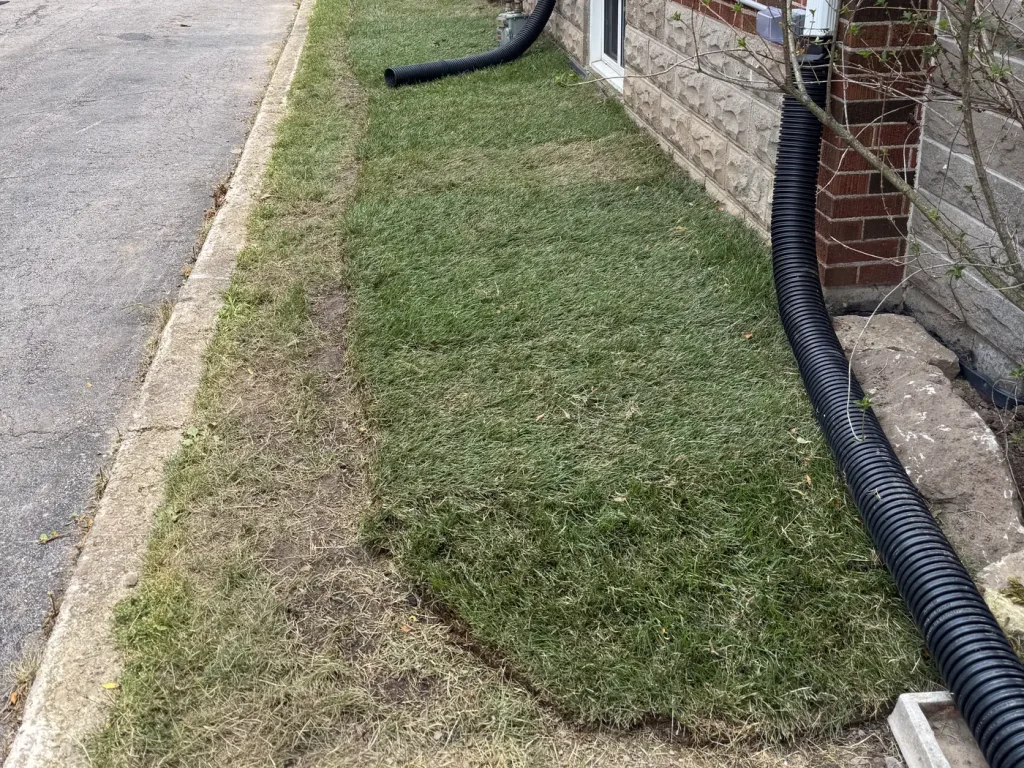
Weeping tile is a perforated pipe that runs around the outside of your foundation at the footing, buried in gravel, and carries groundwater away from the house to a sump pit or a storm sewer before it can get into the basement. It is called tile because it used to be short lengths of clay pipe laid end to end; today it is plastic, but the name stuck.
Weeping tile is a plumber’s and a foundation contractor’s business when it needs replacing. What we do, as yard drainage work in Hamilton, is the part above and around it: the grading, the downspouts and the yard drains that decide how much water the weeping tile has to deal with. This post explains how the whole system works so you can tell which part of it is failing.
How it works
When a house is built, a trench is dug around the footing and a pipe with holes in it is laid in a bed of clear gravel, usually wrapped in a filter sock to keep silt out. Water in the soil around the foundation drains into the gravel, into the pipe, and along it to the lowest point. In most Hamilton houses built after the 1970s the pipe drains to a sump pit in the basement, and a pump lifts the water out to the lawn or the storm sewer. In older houses it often ran straight to the storm or sanitary sewer, which is why so many older homes have been asked to disconnect.
How it fails
- Silt. Over decades, fine soil works through the gravel and into the pipe, and the pipe clogs. Clay tile with open joints clogs fastest; this is the usual story in Westdale and the older lower city streets.
- Roots. Trees find the water and fill the pipe with roots.
- Crushing or separation. Old clay tile breaks, and plastic pipe can be crushed by settling or by a machine.
- Overload. The tile is fine, but downspouts, a yard graded toward the house and a neighbour’s runoff send it far more water than it was ever meant to carry. The basement gets wet in heavy storms and dries out in between.
The first three are repaired by digging down to the footing, inside or out, which is major work. The fourth, which is at least as common, is fixed outside at a fraction of the cost, and it is the one to rule out first.
The signs
Water on the basement floor at the wall after a long rain, especially at the corners, points at the weeping tile or at an overloaded one. A sump pump that runs constantly, even in dry weather, suggests high groundwater or a spring. A pump that runs hard only during storms suggests surface water getting to the footing: downspouts, grading or a window well. Damp patches high on the wall are surface water coming through the wall above the tile, not a tile problem at all.
What keeps the weeping tile working
Grading
The ground along the foundation should fall away from the house for at least the first few feet, so rain runs off into the lawn rather than soaking down the wall to the footing. Soil settles along foundations for years, and a yard that once sloped away often slopes in. Regrading that strip and re-sodding it is the single most effective thing you can do for a wet basement. See yard grading in Hamilton.
Downspouts
A roof sheds an enormous amount of water, and a downspout that empties at the wall puts it all exactly where the weeping tile is. Extensions, or buried runs to the lawn or a dry well, take that load off the tile entirely. Our post on downspouts and eavestroughs covers the options.
Window wells
A window well without a drain to the weeping tile, or with one that is clogged, fills like a bucket and pours through the window. Clearing the well, adding gravel at the bottom and a cover on top keeps it empty.
Yard drains
If the yard sends water at the house from a slope, a swale or a French drain across the yard catches it before it arrives. On a Mountain lot where the whole backyard tilts at the house, this is often the real fix.
Patios and walkways
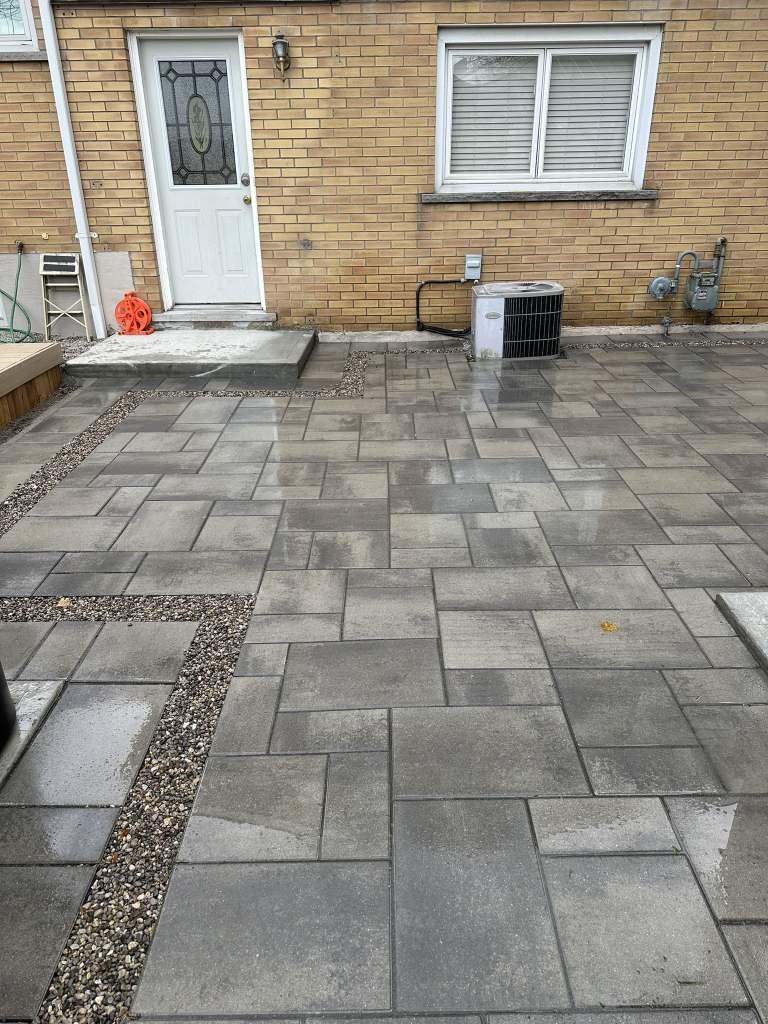
Hard surfaces next to the house must fall away from it. A patio that has settled toward the wall is a funnel to the footing; see pavers sloping toward the house.
When it really is the weeping tile
If the grading is right, the downspouts are extended, the window wells are clear and the basement still gets wet at the floor line in every rain, the tile itself is likely clogged or broken. That is a job for a foundation or drainage contractor with a camera and, usually, an excavator. We will tell you when that is what we see, rather than sell you a swale that will not fix it.
Frequently asked questions
Do you handle weeping tile and eavestrough drainage?
We handle the yard side of it: grading, downspout runs, eavestrough drainage, window wells, swales, French drains and catch basins, and we put the yard back when it is done. Replacing the tile at the footing is a foundation contractor’s job, and we will say so when that is what you need.
Can a downspout connect to the weeping tile?
It should not. Roof water overloads the tile and the sump, and in many places it is not permitted. Run the downspout to the lawn, a dry well or the storm connection instead.
How do I know if my sump pump problem is a yard problem?
If the pump runs hard during and right after rain and goes quiet in dry weather, the water is coming from the surface, and the yard is the place to fix it.
Start outside, where the fix is cheaper
Call (905) 906-0671 or send the form on our contact page and tell us where the basement gets wet. We are quick to quote, quick to start, and we answer every call.
