Is Fall a Good Time to Lay Sod in Hamilton?
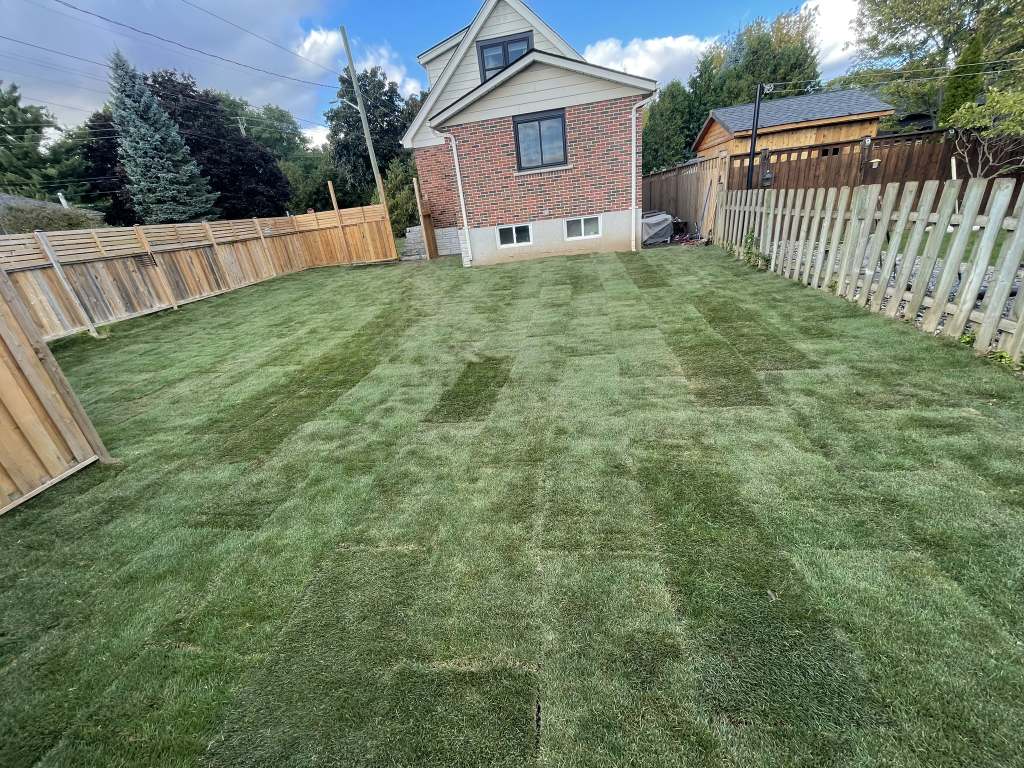
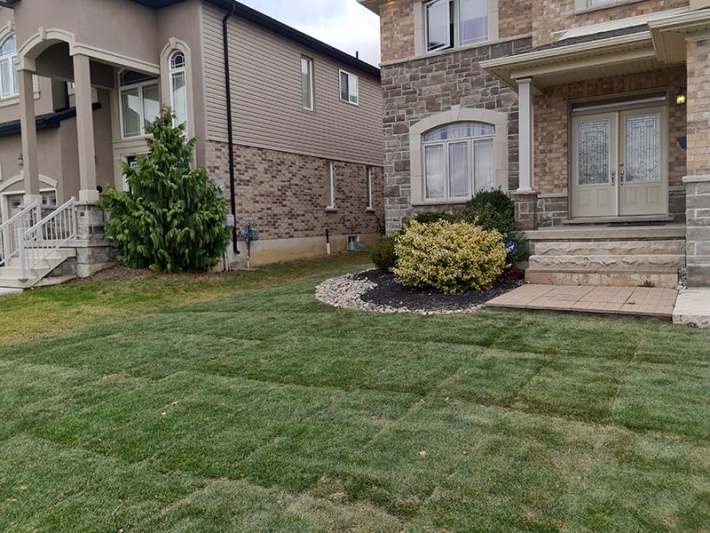
Yes. Fall is one of the best times to lay sod in Hamilton, often better than spring. The soil is still warm from summer, the air is cool, the rain is regular, and the weeds have stopped competing, so new sod roots quickly with far less watering from you.
We lay sod from early spring until the end of November as part of our sod installation in Hamilton, and September and October are our favourite months for it. Here is why, how late you can go, and what a fall lawn needs from you before and after winter.
Why fall works so well
- Warm soil. Roots grow by soil temperature, not air temperature, and the ground in September is warmer than it is in April. Sod laid in early fall is knitting into the soil within two weeks.
- Cool air. The grass blades lose less water, so the sod does not dry out between waterings the way July sod does. A heat wave in the first week is the biggest risk to new sod, and fall rarely has one.
- Rain. Fall rain does much of the watering, and a watering schedule that is a daily chore in summer becomes a check every other day.
- No weed pressure. Annual weeds have finished for the year, so the new lawn is not competing with anything.
- Two growing seasons before the first summer. A fall lawn roots through October, rests over winter, and grows hard in spring, so by its first July it is a mature lawn rather than a new one.
How late is too late?
Sod can be laid any day the ground is not frozen and the sod farm is still cutting, which in Hamilton usually means into late November. The later it goes in, the less it roots before the ground freezes, and sod laid in the last weeks of the season simply sits dormant until spring, roots in April, and is fine. The things that go wrong with late sod are practical rather than biological: a hard freeze before it is rolled and watered in, or a dry spell with the hose already put away. If the forecast allows it, we lay it; if it does not, we tell you and book the first week of spring instead.
The sweet spot is roughly Labour Day to Thanksgiving. Sod laid then roots fully before winter and needs the least from you.
What a fall installation includes
The same as any other season, because the preparation is what makes the lawn:
- Strip the old grass and weeds and haul them away.
- Regrade so water runs away from the house and does not pool.
- Add new topsoil where the grade is low or the soil is poor.
- Rake out stones and debris and apply a starter fertilizer.
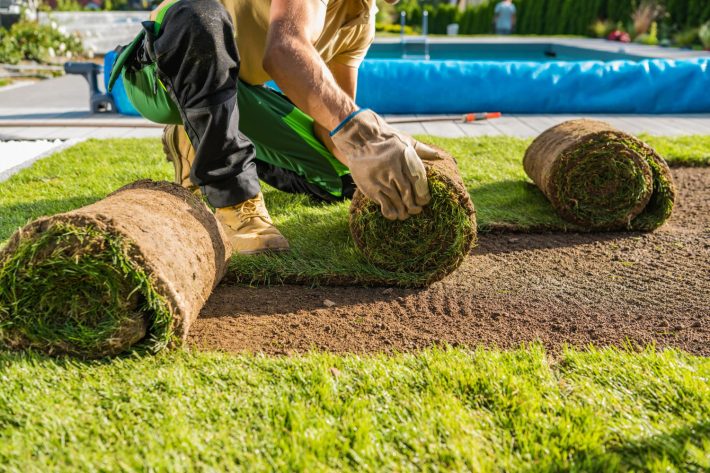
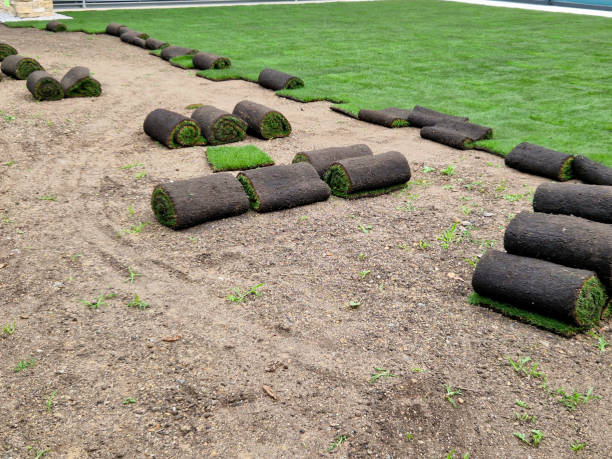
- Lay premium Kentucky bluegrass sod tight, with staggered joints.
- Roll it for soil contact and water it in.
- Leave you a written twelve month lawn care plan.
Fall is also a good time to fix the reasons the old lawn failed, since the crew is already there: a soggy corner gets a swale or a drain, a slope gets regraded. See yard grading if your lawn has low spots.
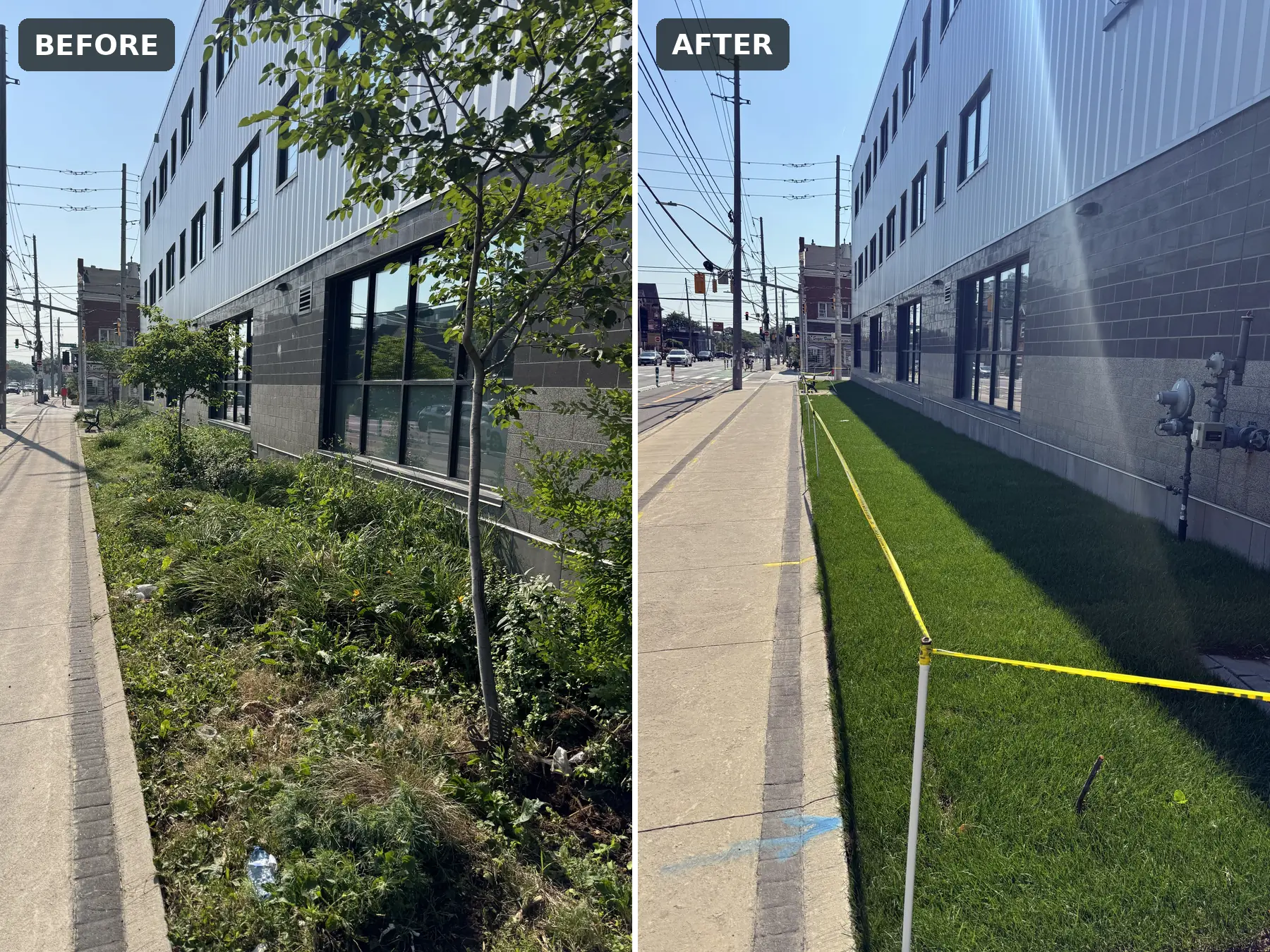
Looking after fall sod
Water it in the day it goes down, then keep the soil under it moist. In September that may mean watering daily for the first week; in late October the rain may do it for you. Check by lifting a corner: the soil underneath should be damp, not muddy and not dry. After two or three weeks, tug a corner; when it resists, the roots have taken and you can water less often and more deeply. Keep foot traffic off until then.
Mow once, if the grass gets tall enough before it stops growing, with a sharp blade and the mower set high. Do not leave it long going into winter, and do not scalp it either. Rake leaves off it; a mat of wet leaves over new sod through November smothers it. In spring, it will green up with the rest of the street and be ready for normal use.
What about spring?
Spring sod is fine, and we lay a great deal of it. It needs more watering because it is heading into summer, it competes with spring weeds, and it has to survive its first July as a young lawn. It also books up fast. If you have the choice, fall is easier on the lawn and on you; if the yard is a mess now, do it now. A lawn laid in May in Waterdown and a lawn laid in September both look the same the following summer, as long as they were both prepared properly and watered.
Frequently asked questions
Will fall sod survive its first winter?
Yes, as long as it was watered in and the ground was not frozen when it was laid. Sod is mature grass; it has survived winters on the farm already. See will new sod survive its first winter.
Do you lay sod in November?
Yes, while the ground is open and the farm is cutting. Late sod roots in spring instead of fall, and it is fine. We watch the forecast and tell you if a hard freeze makes it wiser to wait.
How often do I water new sod in the fall?
Enough to keep the soil under it moist: daily in warm weather, every second or third day once it cools, less when it rains. Your care plan spells it out week by week.
Book a fall lawn
Measure the area, take a photo, and call (905) 906-0671 or send the form on our contact page. Many sod quotes can be given by phone, text or email. We are quick to quote, quick to start, and we answer every call.