
Will New Sod Survive Its First Winter?
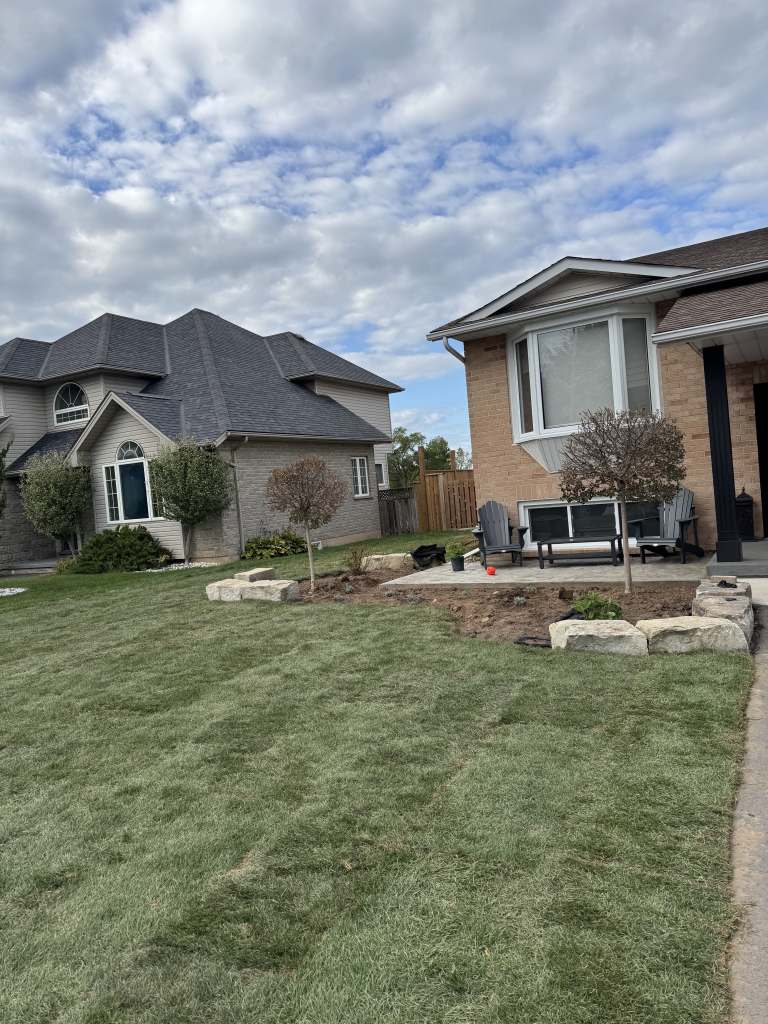
Yes, new sod survives its first winter as long as it was watered in when it was laid and has had a chance to root, or, if it went in late, the ground was not frozen when it went down. Sod is mature grass that has already lived through winters on the farm. What kills new sod over winter is not the cold; it is going into winter dry, being smothered under leaves or heavy snow piles, or being driven on while frozen.
Every lawn we lay as part of our sod installation in Hamilton comes with a written twelve month lawn care plan, and the winter section of it is short. Here it is in full, plus what to expect when the snow goes.
What is happening under the snow
Kentucky bluegrass goes dormant when the soil cools. The blades stop growing and may brown off, but the crown of each plant, at the soil line, stays alive, and the roots keep working slowly whenever the ground is above freezing. Snow is a blanket: under a steady snow cover the soil stays near freezing rather than far below it, and the grass is sheltered from wind. The hard times for a lawn are the open, windy weeks with no snow and a deep freeze, and the thaw and refreeze cycles of a Hamilton February, when ice sits on the grass for weeks. Established lawns shrug those off. New sod does too, if it went into winter in good shape.
What kills new sod over winter
- Going in dry. Sod laid in a dry October and never watered in has no contact with the soil and no moisture in it. The wind desiccates it through the winter and it is dead by spring. Watering in is the whole difference.
- Leaves. A mat of wet leaves left on new sod through November smothers it and invites snow mould. Rake them off before the snow.
- Snow piles. A driveway’s worth of snow heaped on one corner of the lawn, with salt in it, sits there until April and leaves a dead patch. Pile snow on the hardscape or on established lawn instead.
- Traffic on frozen grass. Walking or driving on frozen turf snaps the crowns. Keep off it when it is white with frost, and keep the car off the lawn edge.
- Salt. De-icer thrown off the walk onto the lawn edge burns a strip along the hard surface. Use sand on the walk near new sod.
- Water sitting on it. A low spot that holds water in a thaw, then freezes into a sheet of ice, suffocates the grass under the ice. This is a grading problem and the lawn will tell you where it is in April; see yard grading.
What to do in November
- Keep watering until the ground freezes if the fall is dry. New sod should go into winter with moist soil under it.
- Mow it once more if it is still growing, at a normal height, not scalped and not left long. Long grass mats under snow and gets mould; scalped grass has no reserve.
- Rake the leaves off, every time they fall.
- Pull the hose and the sprinkler, and have a plan for where the snow will go.
Sod laid very late
Sod laid in the last open weeks of November does not root before the freeze. It sits dormant on the soil like a blanket and roots in April. It survives as long as it was rolled and watered in, and the ground was not frozen under it. We lay late sod when the forecast allows and tell you honestly when it is wiser to wait for spring. Our post on fall sod in Hamilton covers the timing.
What to expect in April
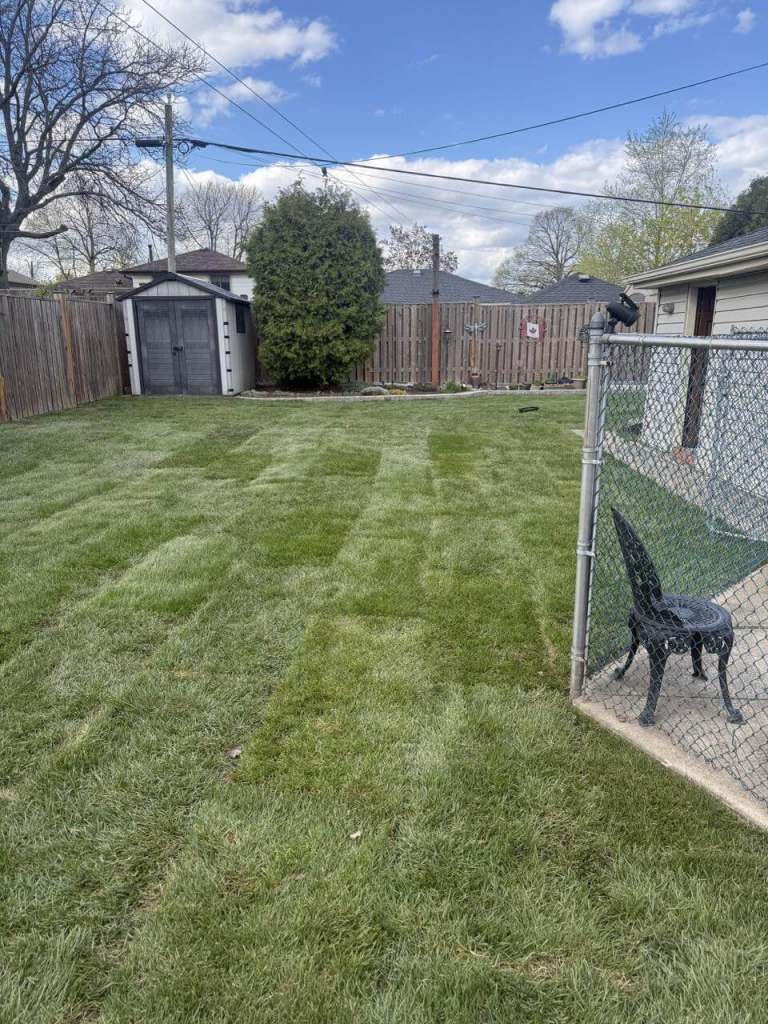
The lawn will look flat, pale and a little sorry for itself, like every lawn on the street. Give it two or three weeks of warm weather before judging it. The first mow waits until it has grown enough to take the top third off. A thin or matted patch usually fluffs up with a light rake and fills in with the spring growth. A grey, matted patch that smells is snow mould; rake it open and it recovers. A dead strip along the walk is salt; a dead patch under where the snow pile stood is the snow pile. Both fill in over the season, or we can patch them.
If whole areas are brown and lift away from the soil in April with no roots under them, the sod went into winter dry or was laid on compacted ground. That is not winter damage, and our patchy or dead lawn page explains how we fix it.
Frequently asked questions
Should I fertilize new sod before winter?
A fall lawn fertilizer in October helps the roots, but it is not essential for sod that had starter fertilizer at installation. Never fertilize once the ground is frozen; it washes off.
Can I walk on new sod in winter?
Once it is rooted and the ground is frozen solid under snow, a path across it does no harm. Avoid it when the grass is frosted and the ground is soft.
Is there a warranty on the sod?
Our work carries a 1-year craftsmanship warranty. Sod is a living thing, so it depends on the watering being done, and the care plan sets out exactly what that is.
Thinking about a new lawn before the snow?
There is still time most years. Call (905) 906-0671 or send the form on our contact page. We are quick to quote, quick to start, and we answer every call.
