Sodding a New-Build Lot in Mount Hope and Binbrook

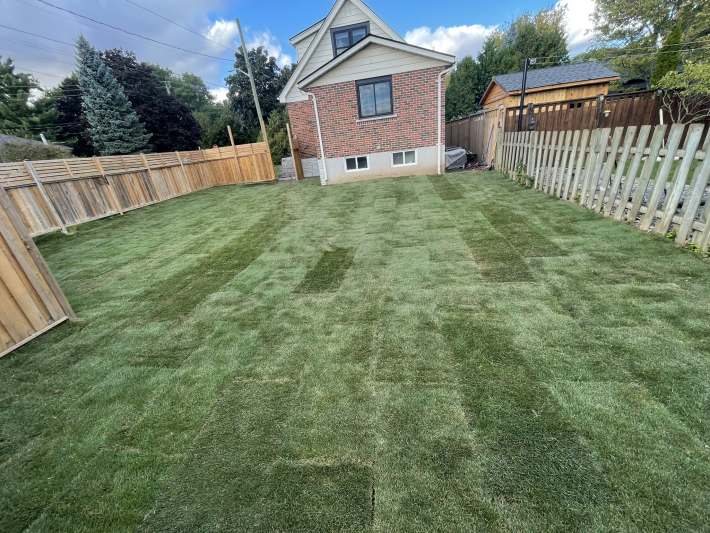
A new-build lot in Mount Hope or Binbrook is sodded properly by stripping whatever the builder left, loosening the compacted clay, bringing in real topsoil, grading so water runs away from the house, and only then laying sod. The builder’s lawn fails because it skipped every one of those steps, and laying new sod on top of it fails the same way.
These two communities are growing fast, and most of our sod installation in Hamilton calls from them start the same way: the house is two years old, the lawn the builder put down is half dead, and the backyard turns to mud every spring. Here is why, and what to do about it in the right order.
What you are actually standing on
The ground in Mount Hope and Binbrook is heavy clay, and a new subdivision makes it worse. The topsoil was scraped off the whole site before building and stockpiled or sold. Machines drove over the clay for a year, compacting it hard. Gravel, concrete washout, nails and lumber offcuts went into the yard. Then a thin skim of soil went over the lot, builder grade sod was laid on it, and the house closed. That sod had nowhere to root. It looked fine for one season on the moisture in the roll, thinned in its first summer, and died in patches by the second.
What to do first: not the sod
The order matters more here than anywhere else, because everything in a new yard is tempting to do at once. Our order:
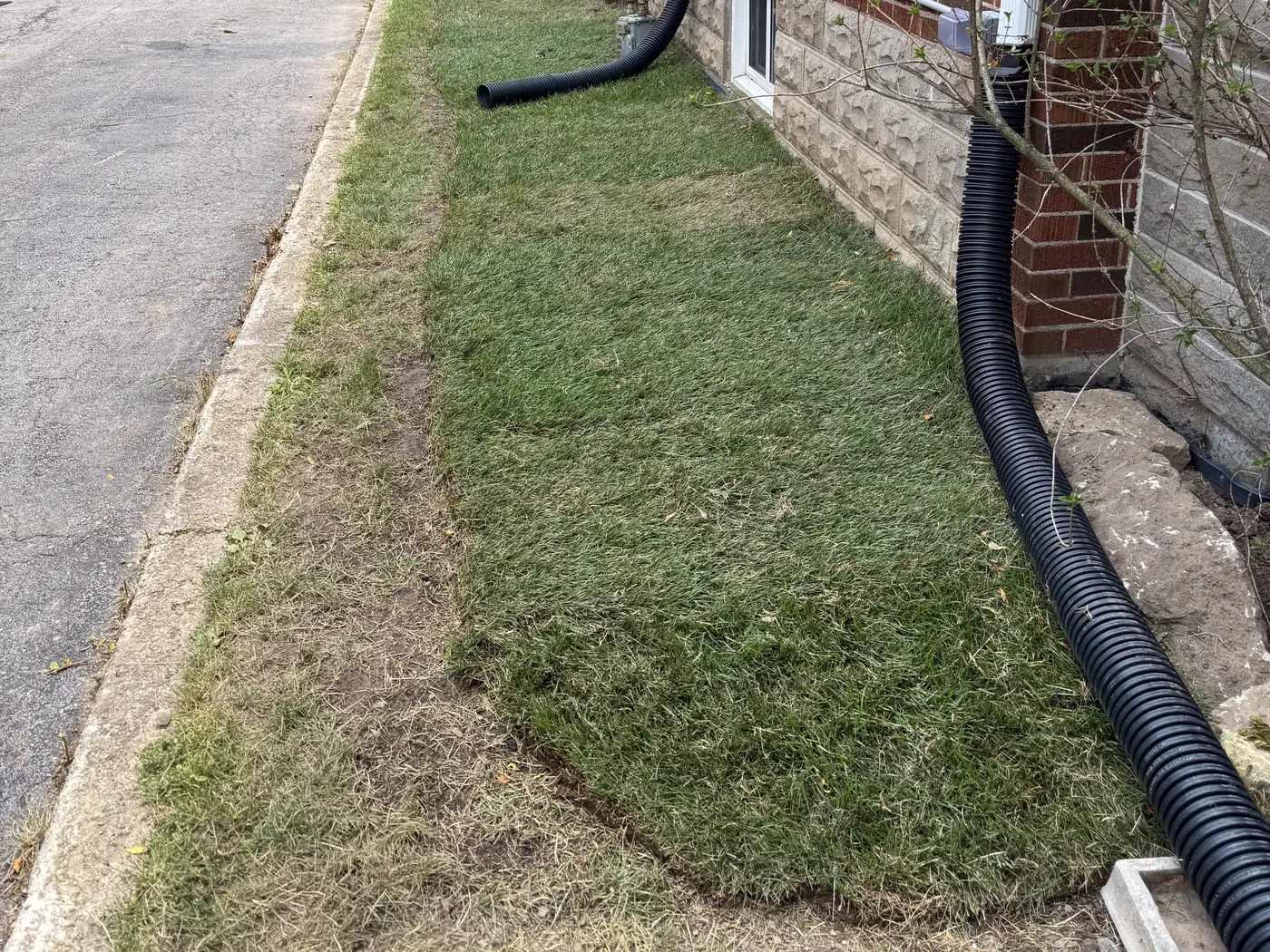
- Drainage and grade. Walk the lot in the rain. New subdivisions are graded to a plan, with swales along the lot lines and a fall to the street or the rear, and the builder’s final grade is often close to right. But downspouts have been left dumping at the wall, the clay has settled along the foundation, and the swale may have been filled by a fence or a shed. Fix the fall first; see yard grading in Hamilton. Lot grading on a new build can also be a condition of the builder’s grading certificate, so ask what has been signed off before anything is reshaped near the lot lines.
- Hardscape. If a patio, walkway or shed pad is in the plan, build it before the lawn, so the machine and the gravel never cross new sod. See interlock patios and walkways.
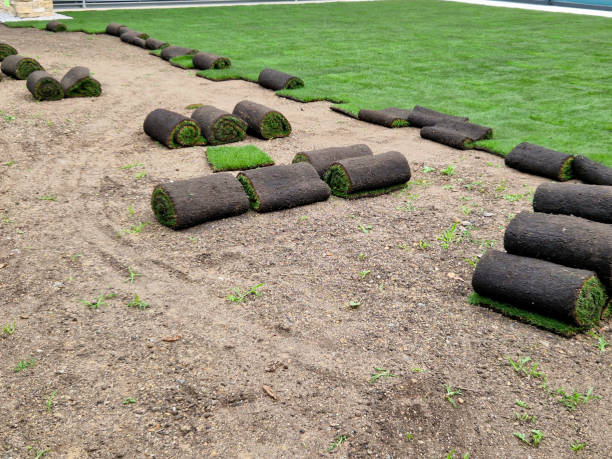
- Soil. Strip the dead builder sod and the skim under it. Break up the top of the clay so it is not a hard pan. Bring in new topsoil, several inches of it, and grade it to the fall you set in step one.
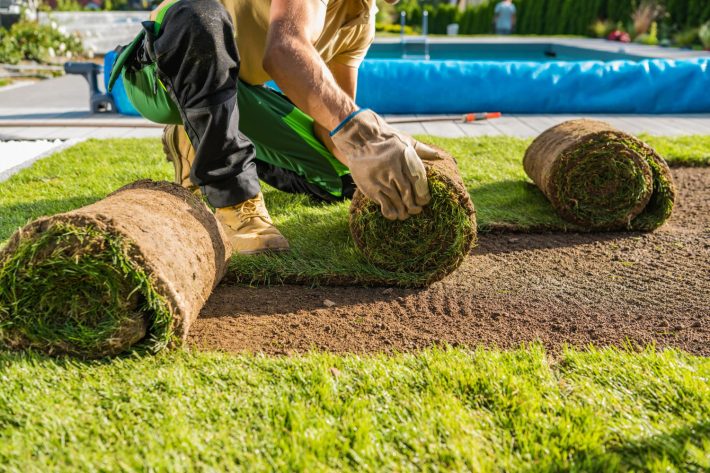
- Sod. Starter fertilizer, premium Kentucky bluegrass sod laid tight with staggered joints, rolled, and watered in.
- Beds and edges last, so the lawn and the garden read as two clean shapes.
Why the topsoil is the whole job
Grass roots will not go into compacted clay; they spread sideways in whatever loose soil is on top and dry out the first hot week. Several inches of real topsoil gives them somewhere to go. It also holds water between rains, which clay either sheds or drowns in. On a builder lot, new topsoil is nearly always needed, and your quote will show it as its own line, priced per yard installed, so you can see what the yard needs. It is the single line most often cut by a cheap quote, and the single reason most second lawns fail too.
Clay, and what else grows in it
Clay is not a bad soil; it is a hard one. With topsoil on top and water moving off it, a lawn does fine. Garden beds want the same treatment, with compost worked in, and plants chosen for heavy ground. If part of the yard stays wet no matter what, a swale, a French drain or a dry well where the clay allows it is the answer, and our yard drainage page explains the choices. The new-build lawn failing page covers the pattern we see on these lots.
What it costs, and what changes it
We quote each yard on its own rather than publishing a price, and we are happy to quote many of these by phone, text or email from the lot size and a few photos, because new-build lots are predictable. What moves the number is the amount of topsoil the yard needs, the amount of builder debris that has to come out, any drainage fix, and the access: a backyard reached through a side gate and a bare lot reached from the street are different days.
Frequently asked questions
Our new-build yard is mostly clay and gravel. Will sod grow?
Yes, on new topsoil over loosened clay with the grade falling away from the house. Not on the clay itself, which is why the builder’s sod died.
Can you just lay new sod over the dead builder sod?
No. It would die the same way. The old sod and the skim under it come off, and real soil goes on.
When is the best time to do it?
Any time the ground is open, with fall the easiest on the lawn. If the backyard is mud now, do the grading and the hardscape now and the sod when the ground is ready.
Do we need to be home?
No. We need the gate open and the hose available, and we tell you when we are coming with as much notice as we can.
Get the yard done once
Send the lot size and a few photos and call (905) 906-0671, or use the form on our contact page. We are quick to quote, quick to start, and we answer every call.