
The Lawn on My New Build Is Dying After a Year
The builder's sod looked fine at closing. Two summers later it is thin, lumpy and brown in strips, and water sits on it after every rain. Under that sod is a skim of topsoil over ground that was driven on for a year. Here is what a rebuild involves, and what cannot change. Lumen Landscaping rebuilds new build lawns with real topsoil and fresh sod across Hamilton: call (905) 906-0671 or send the form for a free written quote.
- Fully insured
- 1-year craftsmanship warranty
- Hamilton owned and operated
Quick to quote, quick to start, we answer every call.
Serving Hamilton, Burlington, Oakville and the wider region, from Guelph to Niagara.
Get your fast, free quote
We reply fast, usually within the hour.
The problem
What you are seeing
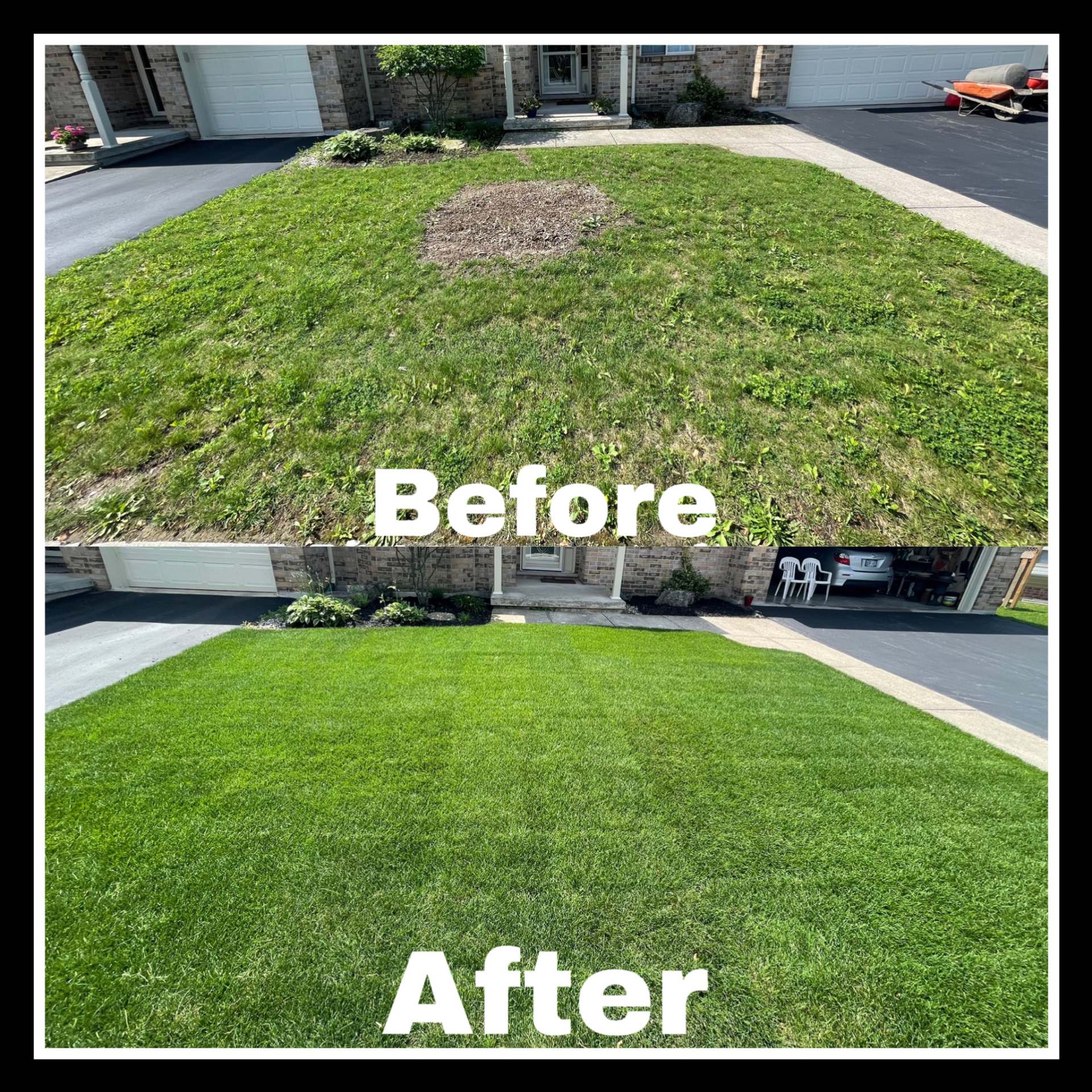
The house is two years old. The lawn that came with it was green at closing and has gone downhill since. It is thin and yellow in strips, lumpy underfoot, and brown wherever the summer sun hits it. After a rain, water sits on it like it would on a parking lot. The seams between the rolls still show. The strip along the sidewalk is dead, and the backyard is patchy where the kids play. You have watered and fed it, and it has not helped, because the problem is not the grass.
Here is what is under it. For a year before you moved in, the lot was a construction site. Trucks drove over it, materials were stacked on it, and the subsoil was packed as hard as a road. Then a skim of topsoil was spread, the lot was graded to the approved plan, and sod was rolled out on top. The roots had an inch or two to live in, over ground they could not push into. The lawn lived on that inch until the first dry summer.
This page is written for the owner of a newer house in Waterdown, in Binbrook, or on Stoney Creek Mountain, where most of Hamilton's new subdivisions have gone in. The fix is a real lawn on real soil. The catch is that the grade and the swales the builder set have to stay exactly as they are, and this page explains why.
Our Work
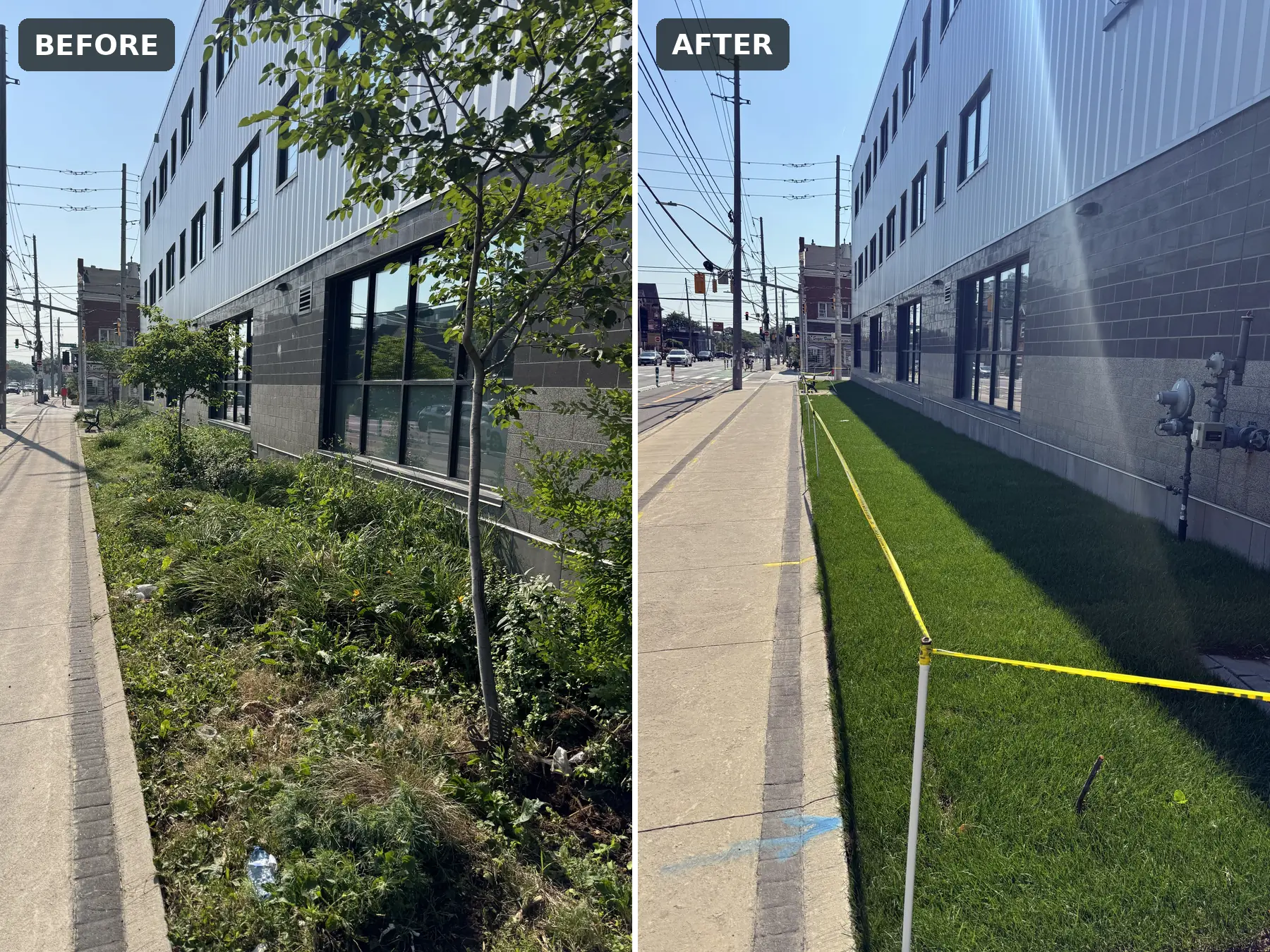
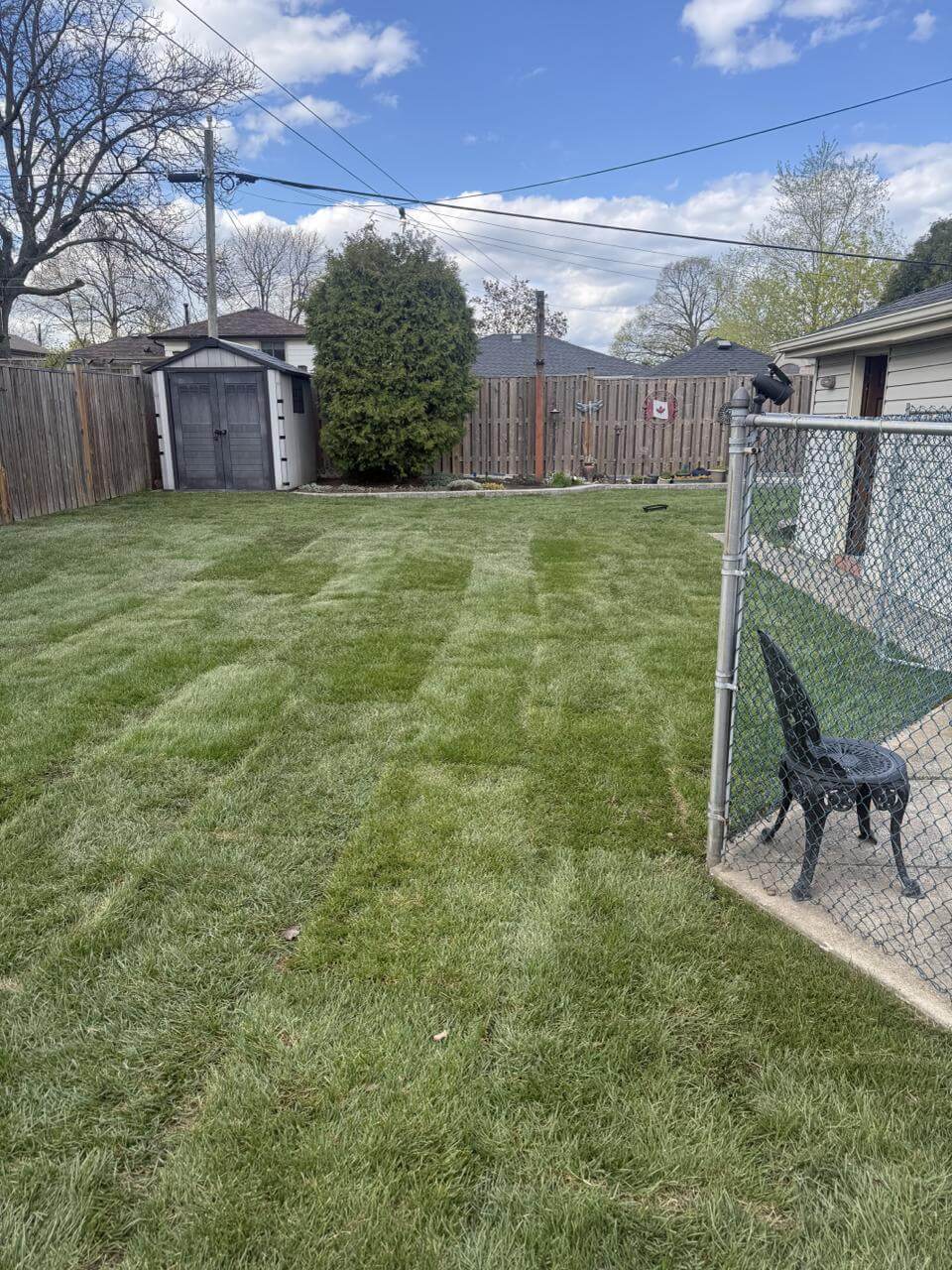
New lawns we have built


Why a new build lawn fails
Almost every new build lawn we replace has the first two of these, and the rest depend on the lot.
- Subgrade packed like a road: A year of construction traffic compacts the ground under the topsoil until roots cannot push into it and water cannot soak through. The lawn is growing on a tray.
- A skim of topsoil: The topsoil spread before sodding is often an inch or two deep. That is enough to make the sod green at closing and not enough to grow roots through a July.
- Sod laid in a hurry: Rolls laid on dry, uneven ground, not rolled in, and not watered in the first week because nobody had moved in yet, never root properly. The seams never close.
- Clay underneath: Binbrook, Glanbrook and Mount Hope sit on the Haldimand clay plain, and much of the rest of Hamilton is on clay too. Clay holds water in spring and bakes in summer, and a shallow lawn gets the worst of both.
- Salt from the new driveway and sidewalk: The first winters of salt on a new driveway and the City sidewalk kill the strip beside them, and the thin soil there has no reserve to recover.
- Downspouts onto the lawn: The builder's splash pads put each roof section onto a patch of lawn beside the house. On compacted ground that patch stays wet and the grass drowns.
Google reviews
What our customers say
“The team did an excellent job re-sodding our backyard. They were professional, careful working around our pool, and the finished result looks fantastic.”
“I recently had Lumen remove the surface of our weed-infested lawn and replace it with fresh sod on the larger of two areas, and river rock on the smaller area. It was a pleasure dealing with Jeff at Lumen.”
“Excellent experience with Lumen Landscaping. Efficient, knowledgeable, hardworking, and my lawn looks fantastic. Highly recommend! I had Lumen landscape a second project one year later. Same terrific experience.”
The fix
How we rebuild a new build lawn
We excavate and dispose of the existing grass throughout the area, and open up the surface of the ground underneath so it is no longer a tray. We complete minor regrading of the soil and rake out debris, keeping the slopes and the swales exactly as the approved grading plan set them, because in Hamilton the homeowner is responsible for keeping the lot graded as it was approved when the subdivision was built, and filling or blocking a swale can pond water and flood in heavy rain. Then we bring in premium topsoil, delivered, spread and graded where it is needed, so the roots have somewhere to live. We apply sod starter fertilizer, install premium Kentucky bluegrass sod laid tight, and roll it for proper contact and finish. You get a 12 month custom lawn care plan to help the new lawn settle in and thrive. That is our sod and lawns service, and the detail of how a yard is shaped before the sod goes down is on our grading page.
While we are there, the downspouts get extended past the lawn, because a roof section onto compacted ground is a permanent wet spot. If water is pooling in a corner, or the back of the lot drains toward the house, we sort that first through the fixes on our yard drainage page, within the approved grade. And if the lawn has also been dug up by animals, which happens on the newer streets beside open fields, our page on lawns dug up by skunks and raccoons explains the grub connection.
What cannot change: the grade. We do not raise the lawn above the sidewalk, bury the foundation, fill a swale to make the side yard look level, or send water onto the next lot. In Hamilton, routine landscaping is limited to fill of 15 cm or less with no change to drainage onto a neighbour and no swale touched, and anything beyond that is a site alteration permit. A new lawn built within those lines is a lawn that lasts, and a basement that stays dry.

Check this yourself first
A shovel and a look at your closing paperwork will tell you what you are dealing with, and who is responsible for which part.
- The shovel test: Dig a square a shovel deep. Measure the dark topsoil before you hit the packed, pale subsoil. On a new build it is often an inch or two, and that number is the whole story.
- The screwdriver test: After a rain, push a long screwdriver into the lawn. If you have to lean on it, the subgrade is compacted and the roots are not getting through.
- Find the swales and the grade: Look for the shallow dips along the property lines and across the back. Those swales, and the slope from the house to the street, were set by the builder to an approved grading plan. They are not ours to change, and they are what keeps your basement and your neighbour's dry.
- Check your warranty window: Under Tarion, water ponding caused by surface grading is a builder item in the first year of the warranty, and the builder has to follow the municipally approved grading plan. After the first year, the homeowner is responsible for maintaining the grading, and settling of walkways and driveways, and landscaping changes you make, are not covered. If you are still inside year one and water ponds, raise it with the builder first.
- When to call: A lawn that has failed in its second summer, a shovel test that finds packed subsoil an inch down, or water that sits after every rain is worth fixing this season. Call (905) 906-0671 and we will take a look.

Planning
What a lasting new lawn includes, and what changes the price
A lasting new lawn always includes
- The builder’s sod out, and the packed surface opened up
- The approved grade and every swale kept exactly as set
- Real topsoil brought in, spread and graded
- Starter fertilizer, Kentucky bluegrass sod laid tight, and a roller
- Downspouts carried past the lawn
- A 12 month care plan written for your lawn
What affects the price
- The size of the lawn, front and back
- How many yards of topsoil the shovel test says it needs
- Drainage work done at the same time, such as a swale reopened or a drain in a wet corner
- Roots, stumps or construction debris found under the surface, discussed with you before we go on
- Access for the sod and soil delivery, which on a new street is usually easy
- Timing: sod goes down spring to fall
A typical job, in plain words. Picture a two year old house in Waterdown with a front lawn that has gone to seams and strips. The shovel finds an inch of soil over packed subsoil. We strip the sod, open the surface, bring in topsoil to the depth the roots need, grade it to the slopes the builder set, lay sod and roll it. The side yard swale is still there, cleared of the bins and mulch that had crept into it, and the downspouts now run past the lawn. Two weeks of watering later it is the lawn the house was supposed to come with. The same job in Binbrook, on the clay plain, gets a hard look at drainage first, because clay under a new lawn is a bathtub in April.
Every quote is written and free, and materials are billed at what they cost us with no markup.
Related
Related pages
Services: sod and lawns, grading and yard drainage. Related problems: a patchy or dead lawn and a lawn dug up by skunks or raccoons. Areas: Waterdown, Binbrook and Glanbrook and Stoney Creek. More answers on our FAQ page, and more problems we fix.
FAQs
New build lawn questions
It was rolled out on an inch or two of topsoil over ground that a year of construction traffic had packed like a road. The roots had nowhere to go, so the lawn lived on the surface until the first dry summer. It is not the grass and it is not how you watered it. It is what is underneath.
Under Tarion, water ponding caused by surface grading is a builder item in the first year, and the builder must follow the approved grading plan. After year one the homeowner maintains the grading. Settling of walkways and driveways, and landscaping changes you make, are not covered. The sod itself is usually your problem from day one, so a dead lawn in year two is a call to us, not the builder.
Not beyond the approved grade. In Hamilton the homeowner is responsible for keeping the lot graded as it was approved, and routine landscaping is limited to fill of 15 cm or less with no swale touched and no change to drainage onto a neighbour. We build the new lawn within those lines, on real topsoil, and fix the drainage with downspouts and drains instead of fill.
It carries water from your backyard and your neighbour's to the street. It was set by the builder to the grading plan, and filling or blocking it ponds water and can flood in a heavy rain, on your side or theirs. We keep it, clear it, and sod it with the rest of the lawn.
Yes, and it is cheaper together because the soil and sod arrive once. We do both, extend the downspouts, and if a corner holds water we deal with that first. One crew, one project, one written quote.
Spring and early fall, when sod roots fastest. The new lawn needs daily water for about two weeks and roots in about two to three weeks, so we plan the install around the forecast and leave you a 12 month care plan for everything after that.
How it works
Getting started is easy
- 1
Call or send the form
Tell us what you have in mind. We reply fast, usually within the hour.
- 2
Get your free quote
We look at your project and send you a clear, written quote quickly.
- 3
We build it
We start quickly and back our craftsmanship with a 1-year warranty.
Get Free Quote
Get a Free Quote for the Lawn Your House Should Have Come With
Tell us how old the house is and what the shovel test found. We will take a look, tell you what the lawn needs and what the grade allows, and get back to you fast with a free written quote.