
Downspouts, Eavestroughs and Sinking Driveways
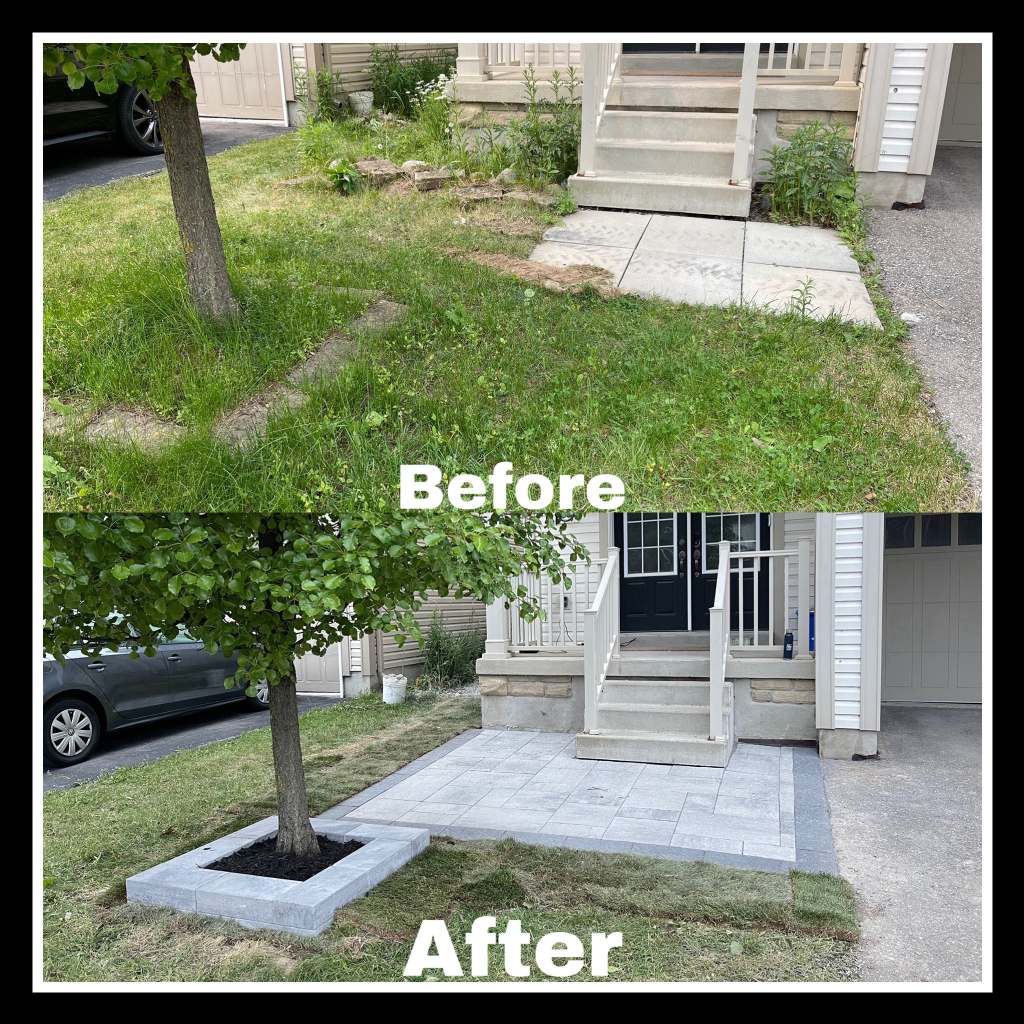
A downspout that empties next to a driveway, walkway or patio is the most common reason one corner of it sinks: every rain pours a roof’s worth of water into the same patch of base, washes the fine material out, and the surface above drops. The fix is to send the roof water somewhere else, then lift and re-base the sunken section.
We handle both halves of that as yard drainage work in Hamilton, including eavestrough drainage and the weeping tile it connects to. This post explains how to spot the problem, what the choices are for the downspout, and what resetting the surface involves.
How to spot a downspout problem
- The sunken area is a rough fan shape starting at the bottom of a downspout and spreading out from it.
- There is a stain, a moss line or a scoured channel in the gravel or the lawn where the water runs.
- On interlock, the joint sand is gone from the pavers nearest the downspout and present everywhere else.
- On concrete, the slab nearest the downspout has dropped at a joint or crack, and there may be a hollow sound when you tap it.
- In winter, that corner is the one that ices up.
A walkway along the side of a house, with the downspout at the front corner and another at the back, often sinks at both ends and stays level in the middle. That is the signature.
Why the lower city gets it worst
In the older neighbourhoods of Hamilton, many downspouts were disconnected from the storm sewer years ago, which was the right thing to do for the sewers but left the water to fall at the foundation. The original splash pads have long since tipped or vanished. The ground along the house is old fill that settles easily, and the driveways and walks were built close to the wall. The result is a lot of sunken front walks and driveway edges, all with a downspout at the top of them.
Where the water should go instead
An extension across the surface
The simplest fix: a downspout extension that carries the water past the driveway or walk and onto the lawn, at least a few feet from any hard surface and sloping away from the house. It is cheap and it works. It is also a tripping hazard across a walkway and a nuisance to mow around, which is why most people want the next option.
An underground run
A pipe from the bottom of the downspout, buried below the walkway or along the house, running to a pop-up emitter in the lawn, a dry well where the soil drains, or a catch basin that joins the rest of the yard’s drainage. Nothing shows above ground except a small green cap in the grass. Where the run crosses the driveway, it goes in before the driveway is reset so the two jobs are one.
Eavestroughs and weeping tile
Sometimes the downspout is not the problem; the eavestrough is. A trough that sags, overflows at the corners or is full of leaves dumps water along the whole wall, not just at the downspout. Clearing and re-sloping it, adding a downspout where one is missing, or increasing the size of the outlet sends the water where it should go. If the house has weeping tile at the footing, that is where the foundation’s water goes, and a downspout should never be tied into it where it will overload it. Our guide to weeping tile for homeowners explains how the pieces fit.
Resetting the sunken surface
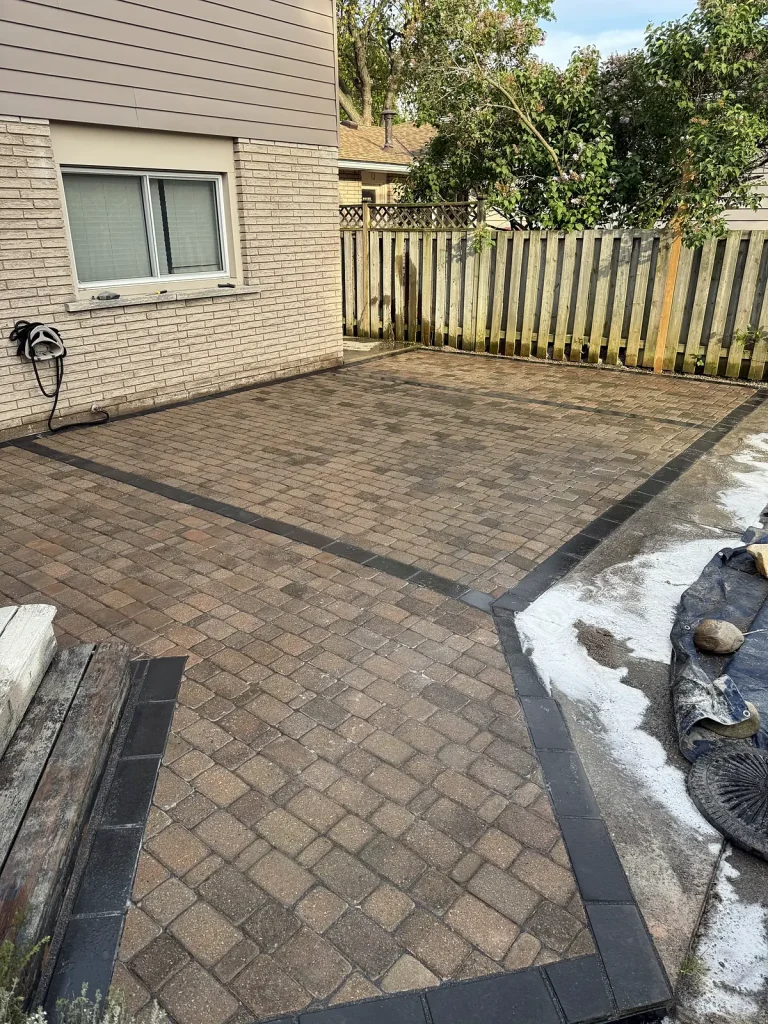
Once the water is handled, the surface comes up. For interlock, the pavers in the settled area are lifted, the washed-out base is dug out, new granular is compacted in layers, and the same pavers go back flush, with new polymeric sand across the whole area so the repair does not show. See patio and interlock restoration. For a concrete walk or driveway, a dropped section can sometimes be lifted, or the panel is cut out and repoured on a compacted base; our cracked or sunken concrete walkway page covers the choice. Either way, the downspout is dealt with first, or the repair sinks again.
Things worth doing this weekend
- Walk around the house in the rain and watch every downspout. Note any that empty onto a hard surface or within a few feet of one.
- Put a splash pad or a temporary extension on the worst one until the real fix is done.
- Clean the eavestroughs before the leaves come down, and look for sags and overflow stains.
- Check that the ground along the wall slopes away from the house. If it slopes in, that is the next job.
Frequently asked questions
My downspout is making my driveway sink. What do you do?
Redirect the downspout, by extension or an underground run to the lawn or a dry well, then lift and re-base the sunken section and reset the surface. One visit for most driveways.
Do you handle weeping tile and eavestrough drainage?
Yes. Downspout runs, eavestrough drainage and the yard side of weeping tile are all part of our drainage work.
Can the pipe run under my existing walkway?
Yes. A section of the walk is lifted, the pipe goes in, and the walk is reset. On interlock it is invisible afterward; on concrete it usually means a short cut and patch.
Stop the sinking at the source
Call (905) 906-0671 or send the form on our contact page with a photo of the downspout and the sunken spot. We are quick to quote, quick to start, and we answer every call.
