
Wet Look or Natural? Choosing an Interlock Sealer

A wet look sealer darkens and deepens the colour of your pavers, as if it had just rained; a natural sealer protects them without changing how they look. Neither is better. Wet look suits blended, darker pavers and modern slabs, natural suits lighter pavers and anyone who likes the stone as it is.
Sealing is the last step of a patio restoration in Hamilton, after the pressure wash and the new polymeric sand, and it is the step most people have questions about. Here is what each finish does, how to choose, and how to keep it looking right.
What a sealer actually does
Pavers are concrete, and concrete is porous. Left bare, it drinks up rain, oil drips, leaf tannin and barbecue grease, and the colour fades a little every summer. A sealer soaks into the surface and closes those pores, so stains sit on top where they can be washed off and the colour stays where the manufacturer put it. Most paver sealers also stiffen the polymeric sand in the joints, which slows weeds and ants and keeps the sand from washing out in a downpour.
The three finishes
Natural, or matte
A natural sealer goes on and dries invisible. The paver looks exactly as it did dry, just cleaner for longer. Choose it for light coloured pavers, for natural stone, for a traditional look, or if you have ever seen a shiny patio and thought it looked like plastic. It is also the most forgiving finish to maintain, because a worn patch does not show.
Wet look, or gloss
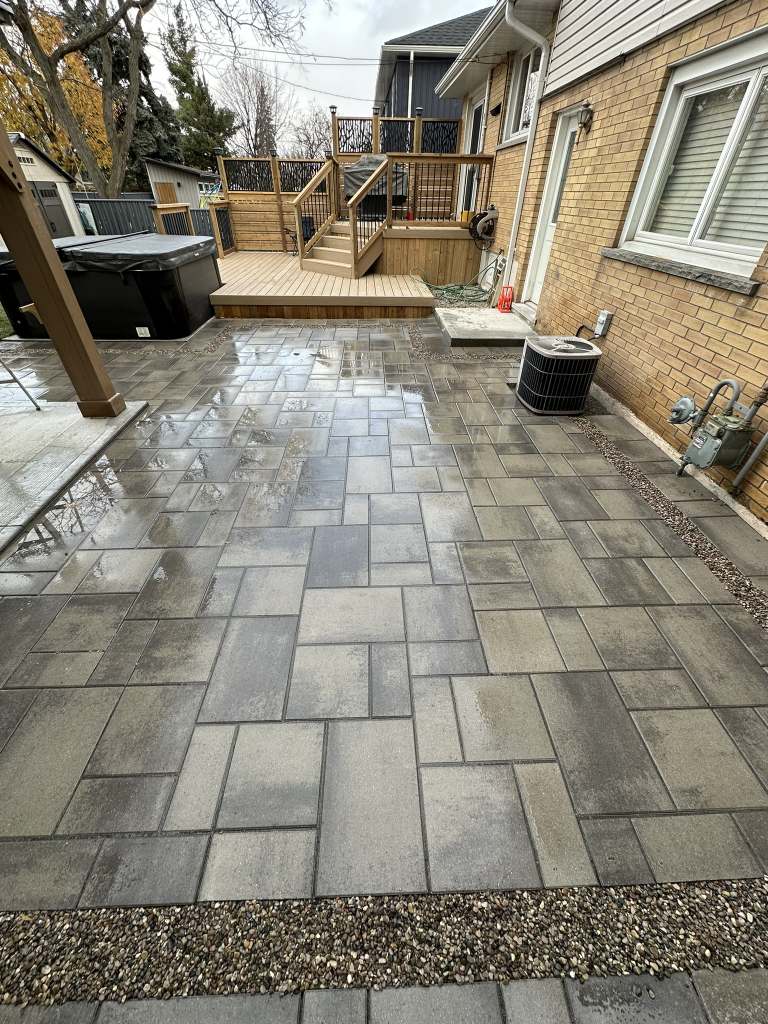
A wet look sealer leaves the pavers looking freshly rained on, with the colour darker and richer and a sheen on top. Charcoal, brown and blended pavers come alive under it, and modern large slabs look especially sharp. It shows wear more, so a high traffic path across it will dull first, and on a smooth paver a heavy gloss can be slippery when wet. Most people who choose wet look choose it after seeing a sample wet; most people who regret it never did.
Satin, or semi gloss
Between the two: some deepening of the colour, a soft sheen rather than a shine. This is the finish we suggest most often when a customer cannot decide, because it gives most of the colour of wet look without the showroom gloss.
Film forming or penetrating
Finish aside, sealers come in two families. A penetrating sealer soaks in and leaves nothing on top; it cannot peel and it does not change the surface grip, but it does less for the sand in the joints. A film forming sealer leaves a thin layer on the surface that locks the sand and gives the wet look its shine; it must be applied to a clean, dry patio in the right weather or it can turn cloudy or peel. We use a breathable film forming sealer for most interlock, so moisture under the pavers can still escape, and a penetrating sealer on natural stone and on very smooth pavers where grip matters.
Seeing it before you commit
Wet one paver with a hose. That is a close preview of wet look. Let it dry to damp and you are looking at satin. Dry is natural. We do this on the first visit, on a corner of the patio, so you can decide standing on your own stone rather than from a brochure. Plenty of people in Waterdown and across Hamilton who were sure they wanted wet look settle on satin once the hose comes out, and the reverse happens too.
When to seal, and how often
Seal a new patio after it has been through a few weeks of weather, so any efflorescence, the white haze new concrete sheds, has washed off. Seal a restored patio a day or two after the polymeric sand has set, once everything is dry. Either way the patio must be clean and dry, the forecast must be dry for a day after, and the temperature has to be warm enough for the product. Spring and early fall are the best windows in Hamilton; July pavers can be too hot and November ones too cold.
A good sealer lasts two to four years on a patio and less on a driveway, where tires and salt wear it. The sign it is time is simple: when rain stops beading and starts soaking in, reseal. Clean it first, always. Sealing over dirt seals the dirt in.
What sealing will not do
It will not level a sunken patio, fill a joint that has lost its sand, or stop weeds that are already rooted. Those are restoration jobs: lift and re-level the low spots, scrape the joints and refill them with polymeric sand, then seal. Sealing is the finish on that work, not a substitute for it. If your patio has sunk, start with our sunken interlock page.
Frequently asked questions
Should I seal my interlock at all?
Yes, if you want the colour to last and stains to wash off. It is optional, and plenty of patios go unsealed, but a sealed patio with locked joints needs far less work from you each spring.
Will pressure washing damage my pavers?
Not when it is done properly. We use a nozzle rather than a surface cleaner so the joints get cleaned deeply, and we keep the wand moving so the paver surface is not etched. Then the joints are refilled, because washing takes the old sand out.
Can you change a wet look patio back to natural?
A film forming sealer wears off over a few years and can be stripped sooner, after which a natural sealer can go on. It is work, so it is worth choosing carefully the first time.
Get your patio cleaned, sanded and sealed
Call (905) 906-0671 or send the form on our contact page with a photo of the patio. We are quick to quote, quick to start, and we answer every call.
