
Front Steps Tipping or Uneven? Rebuilding Interlock Steps Safely

Interlock front steps tip and sink because the ground under them has moved, not because the stones have worn out. The fix is to take the steps apart, dig down to solid ground, build a compacted base, and set each step level again with the same rise from bottom to top.
Steps are the one piece of interlock in Hamilton that can actually hurt someone, so they deserve more care than a patio. This post explains why they fail, what a safe step looks like, how we rebuild one, and when a wobble is a quick reset rather than a rebuild.
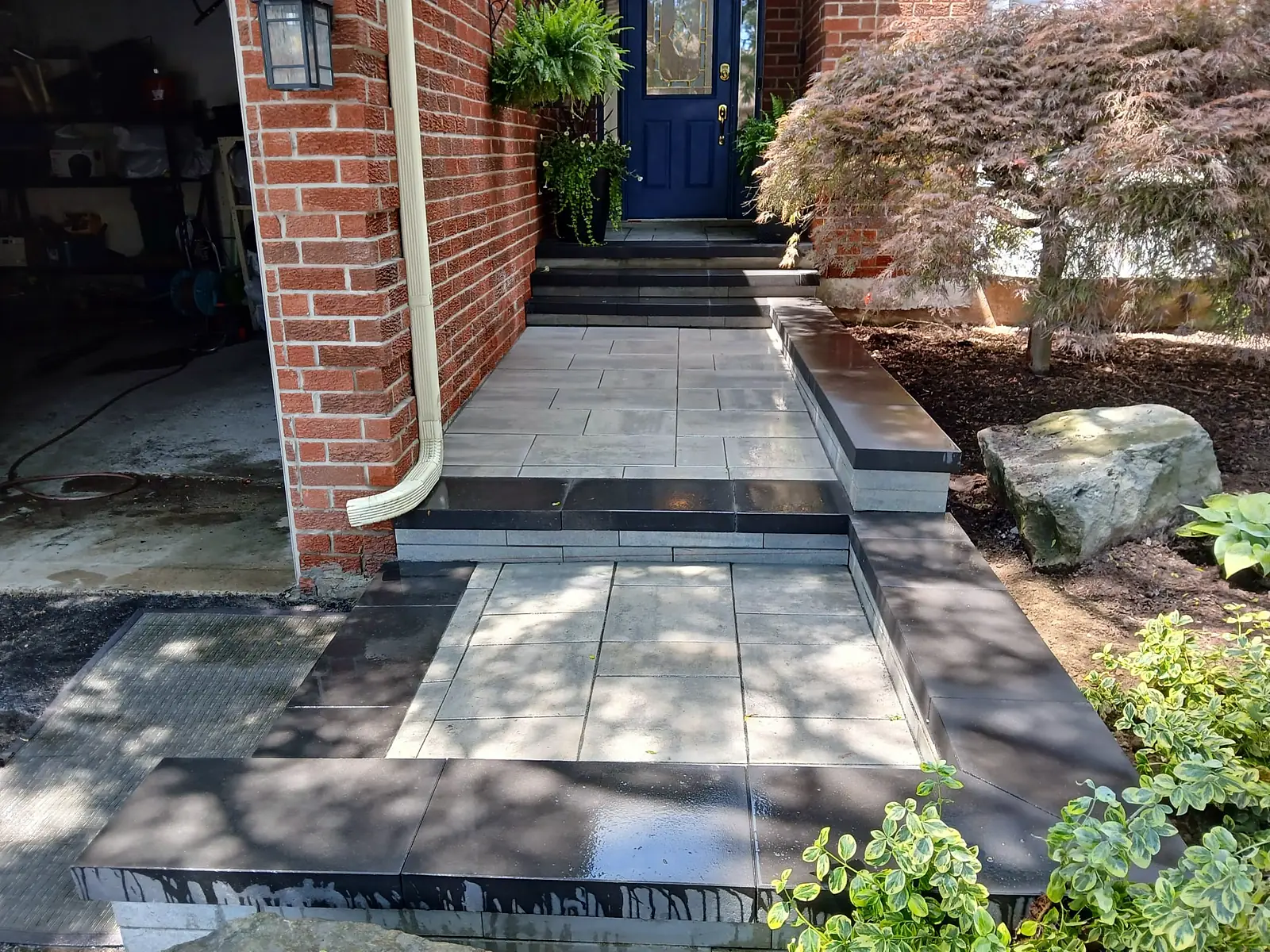
Why interlock steps tip, sink and wobble
Steps are heavy and tall, so they put more weight on a smaller patch of ground than any other part of a walkway. When that ground is soft, the steps settle unevenly and start to tip. Here is what we usually find when we take a failed set apart:
- No real base. The steps were stacked on a few inches of loose gravel or straight onto soil, so frost lifted them every winter and dropped them a little further out of level every spring.
- Water. A downspout emptying beside the steps, or a walkway that drains toward them, washes fines out from underneath. The front edge drops first, which is exactly where your foot lands.
- Built against the old porch. Many Hamilton front steps lean on a crumbling concrete porch edge for support. When the porch edge goes, the top step goes with it.
- No edge restraint on the walkway. The field spreads, the joint at the bottom step opens, and the first riser rocks.
- Rises that were never equal. A step that is an inch taller than the others trips people even when nothing has moved, and settling makes the difference worse.
In older parts of Hamilton and in Dundas, where the front yards are short and the houses sit high, the steps are often doing the job of a small retaining wall as well, holding back the grade on both sides. That adds sideways pressure the original build rarely allowed for.
What a safe step looks like
Safe steps are boring. Every rise is the same height, every tread is deep enough for a whole foot, the treads sit dead level or fall very slightly forward so water runs off, and nothing moves when you stand on the front edge. The top step meets the porch or the door landing without a lip, and the bottom step meets the walkway flush. If any of that is off, people stumble, usually at night and usually in winter.
How we rebuild interlock steps
Rebuilding is not a matter of lifting the top stones and sweeping sand underneath. The whole stack comes apart so we can fix the ground.
- Take the steps apart and set the stones aside. Sound step units and pavers are reused; broken or crumbling ones are replaced with matching units billed at what they cost us.
- Dig down to solid ground. Loose fill, old mortar and washed-out gravel all come out and go away.
- Build a compacted base, deeper than the walkway’s, because the steps carry more weight. The base is graded so water drains away from the steps and the house.
- Set each step level on the base, tied into the walkway and the porch so the stack cannot creep forward. Where the steps also hold back soil, we build them as a small wall with gravel and drainage behind.
- Check every rise with a tape before the next course goes on. Equal rises are the whole point.
- Reset the walkway pavers at the bottom step, restore the edge restraint, and sweep polymeric sand into every joint so nothing shifts.
- Move the downspout if it was the cause, so the new base stays dry.
Most front step rebuilds take a day or two. If the walkway has sunk as well, we usually lift and re-level it in the same visit, since the crew and the plate compactor are already there; see patio and interlock restoration for how that works.
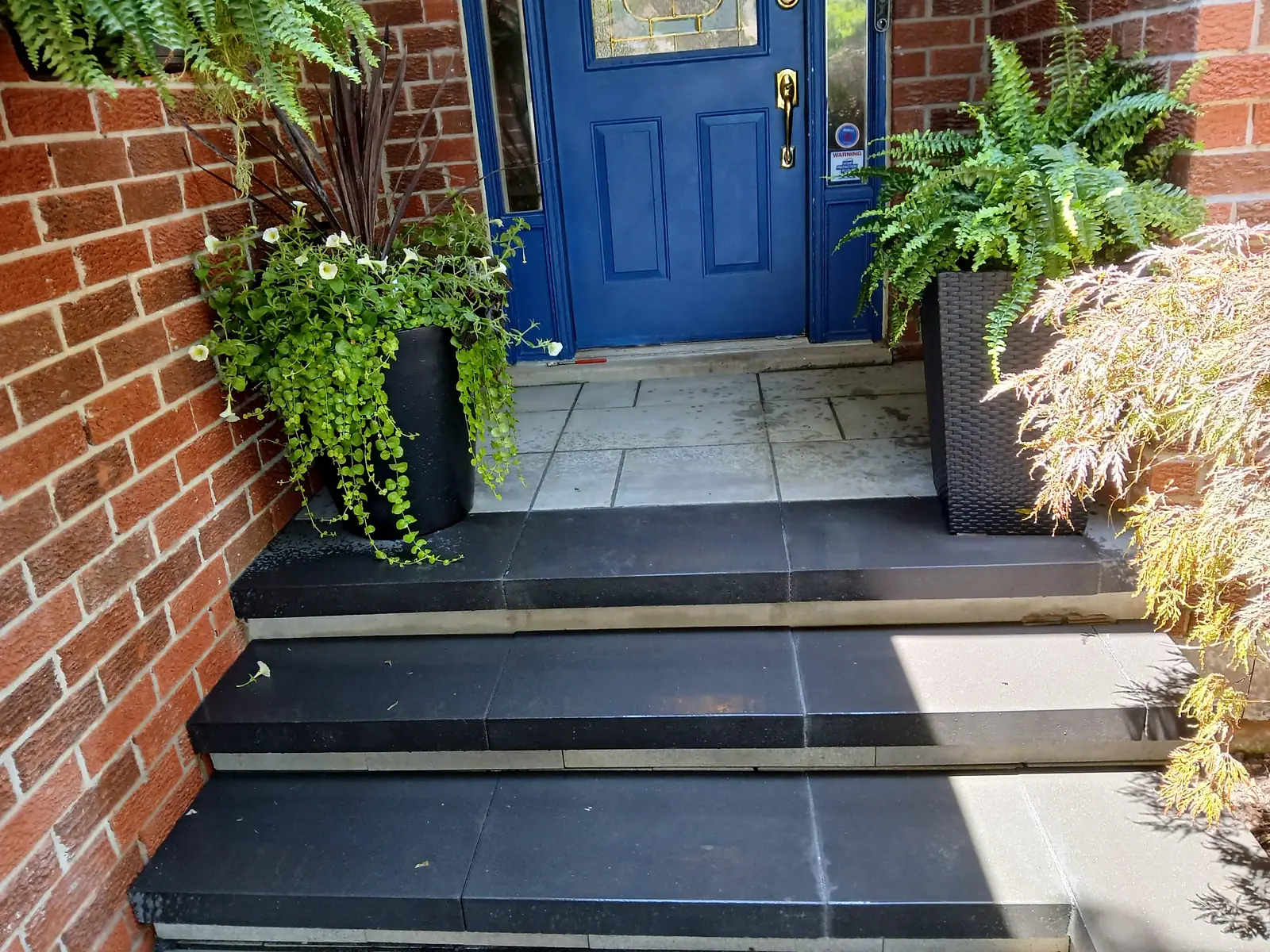
Reset or rebuild?
If only the top course rocks and the lower steps are level and firm, the top units can sometimes be lifted, re-bedded and reset in an afternoon. If any step has sunk, if the rises are no longer equal, or if the bottom step has pulled away from the walkway, the base has failed and resetting the top will not hold. We tell you which it is on the first visit. For steps, we do like to see them in person before quoting, because the safe answer depends on what is underneath.
Frequently asked questions
Can you reuse my existing stones?
Usually, yes. Step units and pavers that are sound go back in. Anything cracked or crumbling is replaced with a match, and if the original is no longer made we will show you the closest option before we order.
Can the new steps be wider or shallower than the old ones?
Yes. A rebuild is the time to change the layout. Wider steps and deeper treads are safer and look more generous at the front door, and the cost difference is usually just the extra material.
Will the rebuilt steps move again?
Not if the base is right and the water is handled. We back the work with a 1-year craftsmanship warranty, and we are fully insured.
Get your front steps fixed before winter
Send us a photo of the steps and call (905) 906-0671, or use the form on our contact page. We are quick to quote, quick to start, and we answer every call.
