
When to Trim Shrubs and Ornamental Trees in Hamilton

Trim spring flowering shrubs right after they bloom, summer flowering shrubs and most ornamental trees in late winter or early spring before the buds break, and cedars and other hedges in early summer once the spring growth has hardened. Avoid cutting anything hard in September and October, when new growth will not harden before the frost.
That covers most of what grows in a Hamilton yard. The rest of this post goes shrub by shrub, explains how far you can cut an overgrown one back without killing it, and says when a plant is past saving. Trimming and pruning are part of our garden care in Hamilton; we do not remove trees, and we will point you to an arborist for anything above a small ornamental.
The calendar
Late winter to early spring, before the buds break
This is the big pruning window, when the plant is dormant and you can see its shape. Prune shrubs that flower on this year’s growth: panicle and smooth hydrangeas, spirea, potentilla, roses, butterfly bush and summersweet. Prune most ornamental trees now too: crabapple, serviceberry, ornamental pear, and the small Japanese maples, with the exception below. Take out dead, crossing and inward growing branches first, then shape.
Right after flowering, in late spring
Shrubs that flower on last year’s wood set next year’s buds in summer, so cutting them in spring takes the flowers off. Trim these within a few weeks of the blooms fading: forsythia, lilac, bigleaf hydrangea, weigela, mock orange, flowering quince, rhododendron and azalea, ninebark and the early spireas.
Early summer, after the spring flush hardens
Hedges: cedar, yew, boxwood and privet. Trim once the soft spring growth has darkened and stiffened, usually in June, and once more in late summer for a formal hedge. Shear the sides so the hedge is slightly narrower at the top than the bottom, and never cut cedar or most evergreens back into bare wood, because it will not regrow from it. Our guide to planting a cedar hedge covers how a hedge gets started.
Maples, birches and walnuts: summer
These bleed sap heavily if cut in late winter. Prune them in midsummer, after the leaves are full, when the wounds seal quickly.
Fall: light tidying only
Dead wood can come out any time. Avoid hard cuts from September until the leaves have dropped, because they push soft new growth that frost kills, and the plant goes into winter wounded. Late fall, after the leaves are down and the plant is dormant, is fine for removing a branch; it is just too early to shape.
Cutting back an overgrown shrub without killing it
Most deciduous shrubs can be brought back from a decade of neglect, but not all in one go. The rule we use: take out up to a third of the oldest, thickest stems right at the base each year for three years, and shorten the rest to the height you want. The plant stays alive on the stems you left, pushes new growth from the base, and in three springs it is a new shrub at the right size. Lilac, forsythia, dogwood, spirea, ninebark, weigela and most hydrangeas all take this well.
Some will take a full cut to the ground in early spring and come back from the roots: forsythia, red twig dogwood, smooth hydrangea, spirea and privet. Yews and boxwood regrow from bare wood slowly and can be cut back hard in stages. Cedar, juniper, pine and spruce do not regrow from bare wood at all, so an evergreen that has grown twice too big is either lived with or replaced. The overgrown shrubs and hedges page shows what we do with each.
Small ornamental trees
A crabapple, a serviceberry or a Japanese maple in a Westdale front yard needs a light touch: dead and crossing branches out in late winter, water sprouts and suckers off in summer, and the canopy thinned rather than topped. Topping a tree, cutting the main branches off flat, ruins its shape for good and sends up a thicket of weak shoots. We trim low hanging branches, shape a small tree, or take a branch back to the trunk; anything that needs a climber or a bucket truck is an arborist’s job.
What we do on a trimming visit
- Trim every side and the top of each hedge clean.
- Shape or cut back the shrubs to the size you want, in stages if the plant needs it.
- Trim the low branches on small trees, shaped up or taken back to the trunk as you prefer.
- Collect every trimming and haul it away, so the bed is clean when we leave.
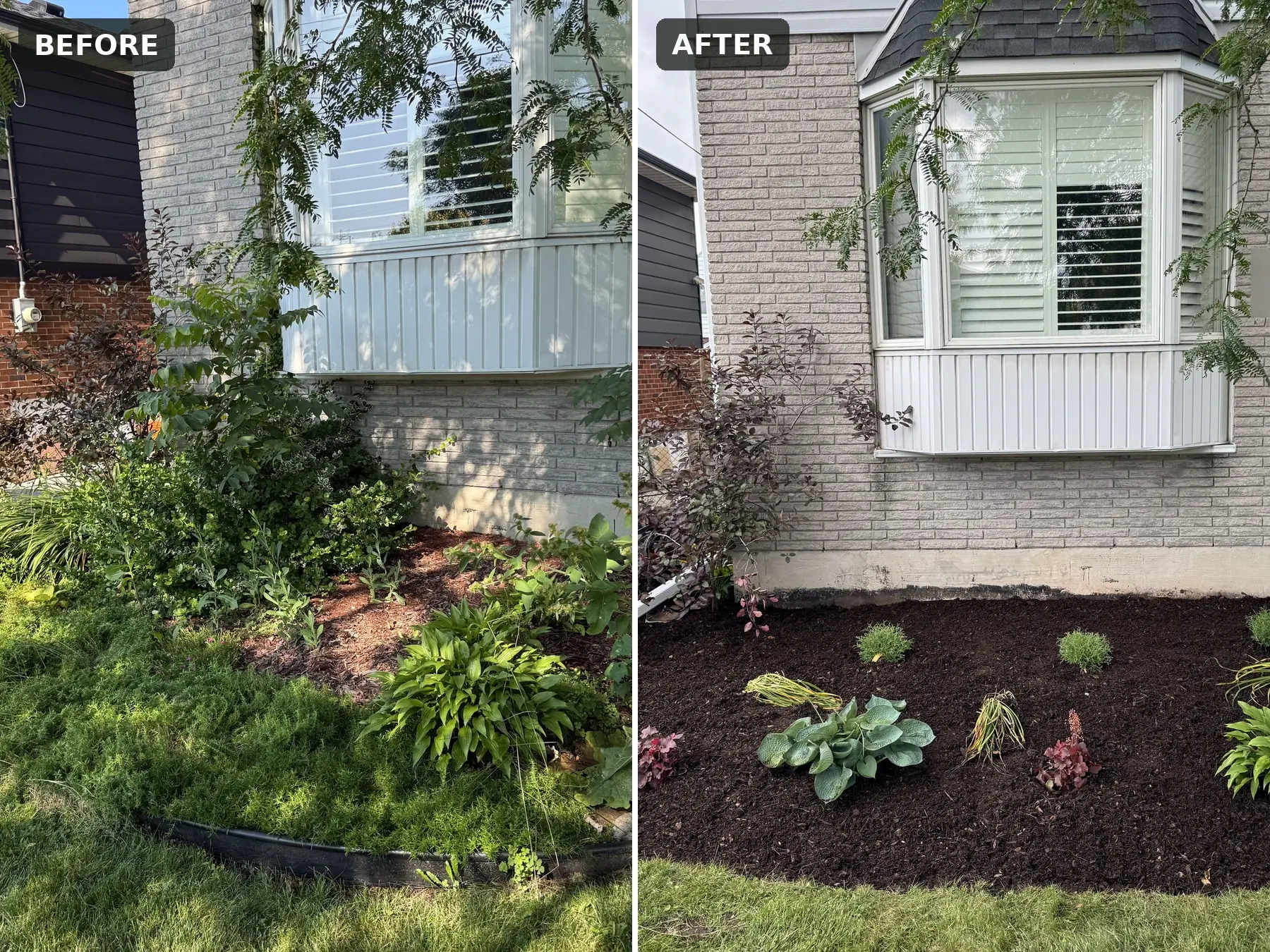
Trimming often goes with a bed cleanup, fresh mulch and a sharp edge, since the crew is already in the garden; see garden bed cleanup, mulch and edging.
Frequently asked questions
When is the best time to trim my shrubs?
Spring bloomers right after they flower, everything else in late winter or early spring, hedges in early summer. If you are not sure what a shrub is, send a photo and we will tell you when to cut it.
My bushes are overgrown. Can you cut them back without killing them?
Most deciduous shrubs, yes, by taking out a third of the old stems a year for three years. Overgrown cedars, junipers and spruces cannot be cut back into bare wood; those are replaced.
Do you remove trees?
No. We trim and prune shrubs, hedges and small ornamental trees. Tree removal is an arborist’s work, and we are happy to say so.
Book a trimming visit
Call (905) 906-0671 or send the form on our contact page with a photo of the beds. We are quick to quote, quick to start, and we answer every call.
