

My Yard Is Solid Clay and Nothing Grows
It bakes to concrete in July, turns to paste in April and heaves the walkway every January. Clay is under half the problems on this site. Here is what it is, what it does, and the three answers that work with it instead of against it. Lumen Landscaping builds lawns, beds and drainage that work with clay across Hamilton: call (905) 906-0671 or send the form for a free written quote.
- Fully insured
- 1-year craftsmanship warranty
- Hamilton owned and operated
Quick to quote, quick to start, we answer every call.
Serving Hamilton, Burlington, Oakville and the wider region, from Guelph to Niagara.
Get your fast, free quote
We reply fast, usually within the hour.
The problem
What you are living with
You know it the first time you try to dig a hole. The shovel bounces in August. In April the same ground sticks to the blade in orange slabs and the hole fills with water that does not go anywhere. Nothing you plant thrives: the lawn is thin, the shrubs sulk, the perennials rot in spring and crisp in summer. The walkway heaves every winter, the patio has a dip, and there is a puddle in the back corner that lasts for days.
Much of Hamilton sits on clay. South of the escarpment, the Haldimand clay plain runs from the Niagara Escarpment to Lake Erie and covers the whole Binbrook, Glanbrook and Mount Hope side of the city, and clay is under a lot of the Mountain and the lower city too. It is why the sinking patio, the soggy lawn, the leaning wall and the dead lawn pages on this site keep coming back to the same word.
Clay is not bad soil. It holds nutrients well and it holds water, which is the problem and the gift at once. The trick is not to fight it. It is to put the right thing on top of it, give the water somewhere to go, and plant what likes it.
Our Work
Gardens and lawns we have built
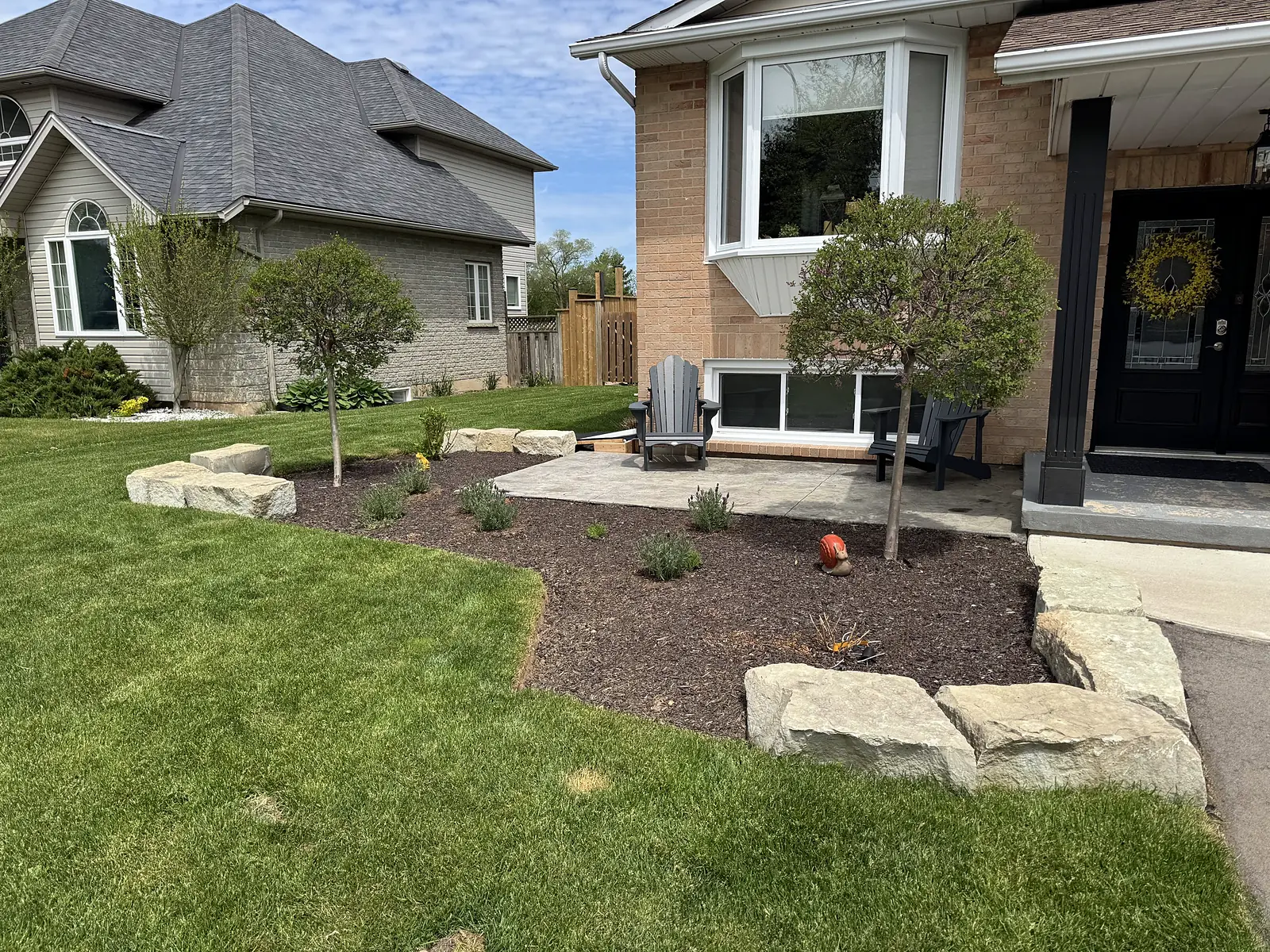
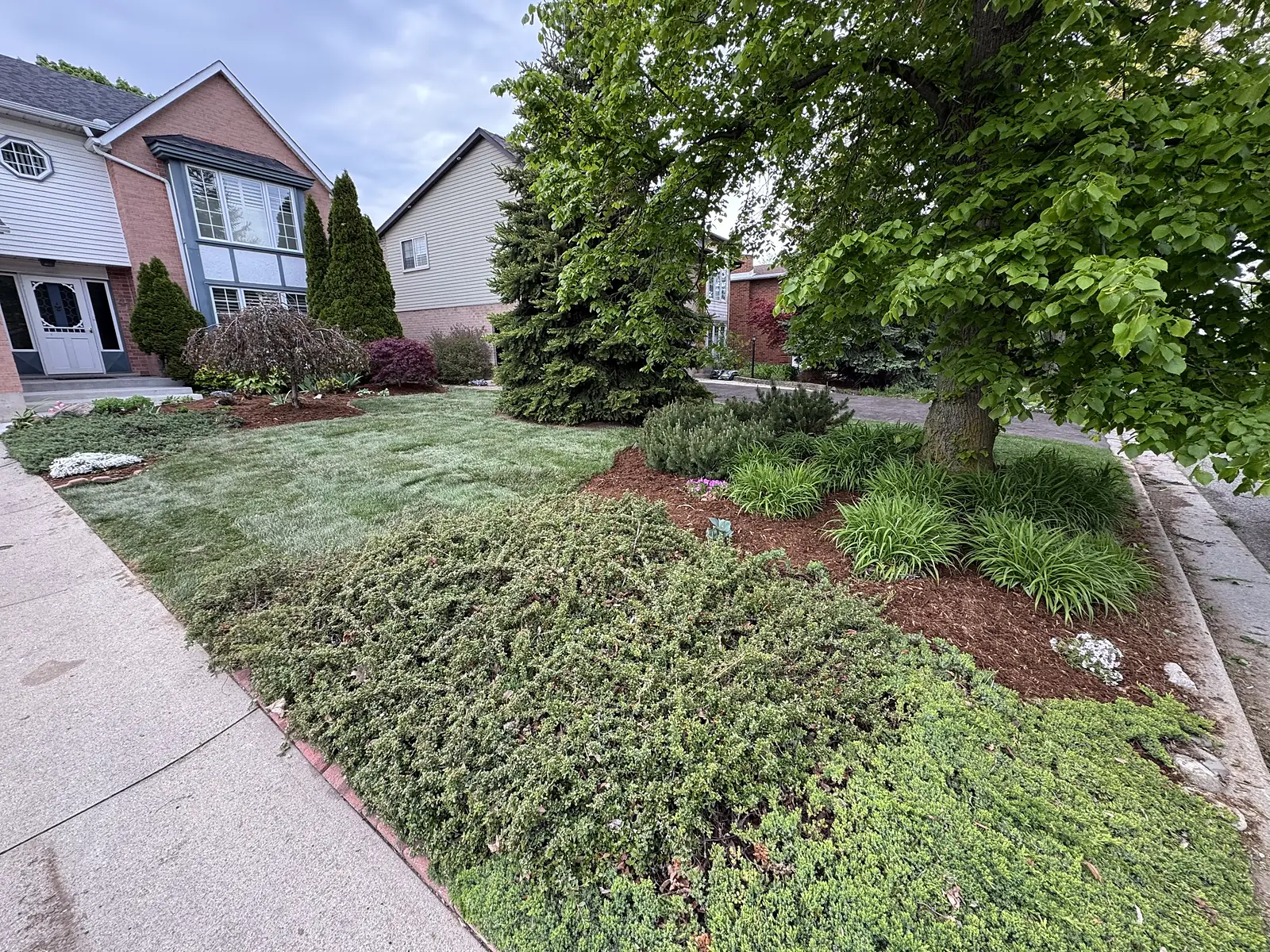

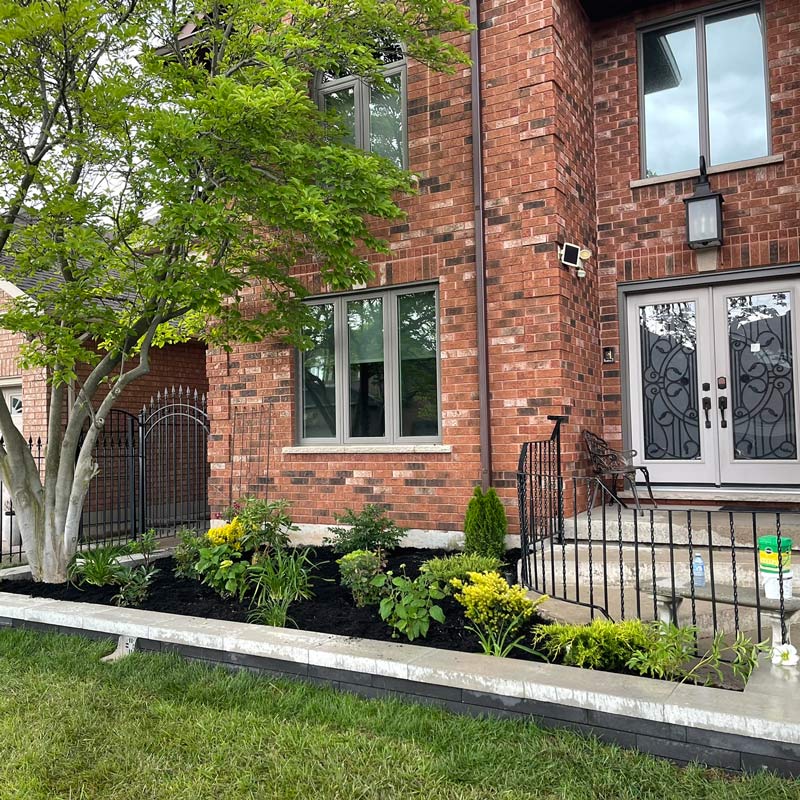
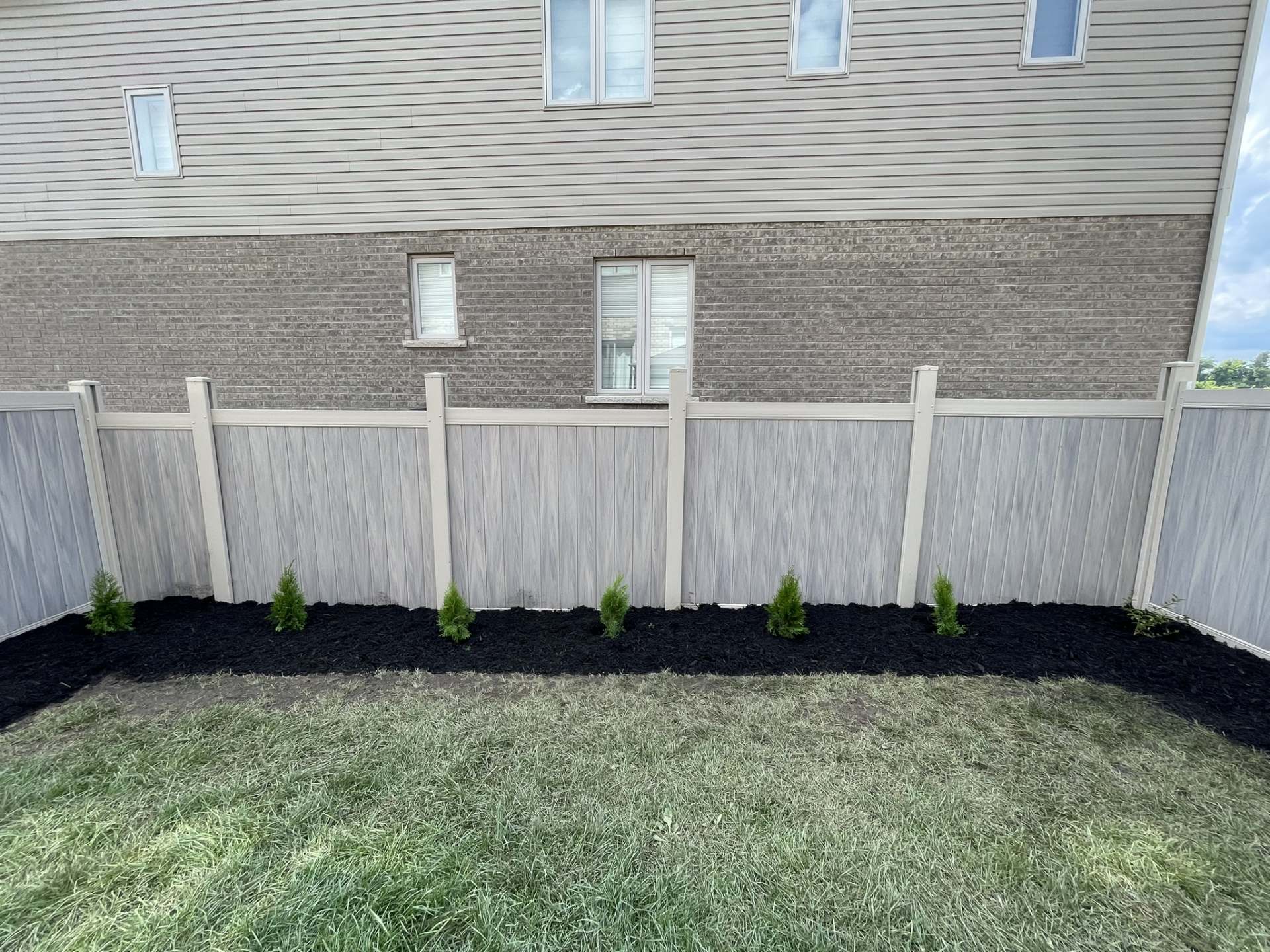
What clay does to a yard
Six behaviours, one soil. Every one of them shows up somewhere on this site as a problem of its own.
- It holds water: Clay particles are tiny and pack tight, so water sits on top or in the top layer instead of draining through. A yard on clay ponds after rain and stays wet for days. That is water pooling in the yard.
- It heaves when it freezes: Wet clay expands when it freezes and drops when it thaws. Anything sitting on it, a walk, a patio, a wall, a fence post, gets lifted a little every winter and never settles back where it was.
- It bakes hard: Dry clay sets like brick. Roots cannot push into it, water runs off it, and a lawn growing on an inch of topsoil over it has nowhere to go when July arrives. That is the patchy, dying lawn.
- It drowns roots: Plant roots need air as well as water. In spring, a planting hole in clay fills like a bucket and the roots sit in it until they rot. Shrubs planted straight into clay often die in their second spring, not their first summer.
- It compacts when worked wet: Dig, drive on or walk on clay while it is wet and it packs into something close to pottery. A new build lot that was driven over for a year is the worst case.
- It shrinks and cracks: In a drought, clay shrinks and cracks open, pulling away from roots and foundations. The cracks close again with the first rain and the cycle moves the ground a little more.
Google reviews
What our customers say
“The owner was professional, communicated well, and his crew especially Ari did a great job. I really enjoyed the experience of choosing each plant with the owner's help and now our yard feels like a true oasis.”
“Great experience with Lumen Landscaping. They completely transformed my front yard with a great mix of trees, hydrangeas, and flowers. They brought the yard back to life and did a really clean, professional job.”
“Great job having small grass lawn replaced with wood chips. Didnt know we could get a machine through the small gate - the top layer, weed barrier cloth and thick layer of chips. They cleaned up after and were done in a day.”
The fix
Three answers that work with clay
Real topsoil for lawns and beds. Grass and most garden plants do not need the clay to change. They need enough good soil on top of it to live in. For a lawn we excavate and dispose of the existing grass, regrade, bring in premium topsoil delivered, spread and graded where it is needed, apply starter fertilizer, lay premium Kentucky bluegrass sod and roll it, with a 12 month care plan. For a bed we do the same with fresh soil, fabric and mulch. One thing we do not do is mix sand into clay to loosen it, because the result is closer to concrete than to loam. See our sod and lawns page for the lawn, and our gardens and planting page for the beds.
A deep, drained base for hardscape. Interlock, concrete and walls on clay need a deeper compacted base than they would on sand, and the water under them needs somewhere to go, or the clay heaves them every winter. Our patios go on a compacted bedding base graded for drainage, our walls get clear stone and a way out for water behind them, and where a yard holds water we build the swale or the French drain first, through the fixes on our yard drainage page. A base built for clay is the difference between a patio that is flat in ten years and a sinking interlock patio in three.
Plants that like it. Clay holds nutrients and moisture, and a long list of good plants are happy in it once they are planted properly: not in a bucket shaped hole, but in a wide, shallow one with the root ball sitting a little high, backfilled with the soil that came out and topped with mulch. When we plan a garden we choose plants for your soil and your light, with several options per area, and we pick them up from a cost effective nursery with an excellent selection and bill them at what they cost us. The homeowner in one of our reviews chose each plant with us for her yard, which is the way we like to do it. For a vegetable garden on clay, a raised garden box built from 4 by 4 posts and filled with good soil skips the problem entirely.

Check this yourself first
Three tests, no tools beyond a shovel and a jar, and you will know how much clay you have and how deep the good soil goes.
- The ribbon test: Take a handful of damp soil and squeeze it between your thumb and finger into a ribbon. Sandy soil crumbles. Loam makes a short ribbon that breaks. Clay makes a long, smooth, shiny ribbon that holds together. The longer the ribbon, the more clay.
- The shovel test: Dig a square a shovel deep and measure the dark topsoil before you reach the pale or orange clay. That depth is what your lawn and your plants are living in, and it is the number that decides how much soil the yard needs.
- The hole test: Fill that hole with water and come back in the morning. Still full means the clay is not draining, and whatever goes on top needs a way for water to leave.
- Look at what is thriving: Walk the neighbourhood. The plants that look good on your street, in beds nobody fusses over, are the ones that like your soil. Note them.
- When to call: A yard where nothing grows, a shovel test that finds clay in the first inch, a hole that holds water overnight, or hardscape that heaves every winter is worth fixing this season. Call (905) 906-0671 and we will take a look.

Planning
What a lasting fix includes, and what changes the price
A lasting fix on clay always includes
- The shovel test and the hole test first, so the fix matches the ground
- Enough real topsoil for the lawn or the bed to live in
- Water given somewhere to go: a swale, a drain, or downspouts carried away
- Hardscape on a deeper compacted base with drainage
- Plants that like clay, planted wide and shallow, billed at cost
- A 12 month care plan for a new lawn
What affects the price
- How many yards of topsoil the shovel test says the yard needs
- The size of the lawn or beds
- Drainage work: a swale is simpler than a French drain
- The plants you choose, and how many, at cost
- A raised garden box or a garden wall, if the beds are going up instead of in
- Access for soil delivery, and how far it is carried
A typical job, in plain words. Picture a backyard in Mount Hope where the lawn is thin, the beds are empty because everything planted in them died, and the back corner ponds. We carry the downspouts to the corner’s new swale, regrade, bring in topsoil for the lawn and the beds, lay sod, and plant the beds with shrubs and perennials chosen for clay and for the sun each bed gets. The corner drains, the lawn roots into real soil, and the beds come back the next spring instead of rotting in it. In Guelph, by contrast, the problem can be the opposite: the dolostone bedrock sits close to the surface in parts of the city, and a bed there needs depth more than drainage.
Every quote is written and free, and materials are billed at what they cost us with no markup.
Related
Related pages
Services: sod and lawns, gardens and planting and yard drainage. Related problems: a patchy or dead lawn and water pooling in the yard. Areas: Binbrook and Glanbrook, Mount Hope and Hamilton. More answers on our FAQ page, and more problems we fix.
FAQs
Clay soil questions
It does not need fixing, it needs working with. Enough real topsoil on top for the lawn and the beds to live in, water given somewhere to go, hardscape on a deeper drained base, and plants that like clay. Mixing sand into clay to loosen it is the one thing not to do, because the result is closer to concrete than to loam.
Enough for the roots to live in, which the shovel test shows. An inch or two over clay is not a lawn. We bring in premium topsoil, spread and graded where it is needed, and the amount goes on your written quote in yards. Beds get the same treatment with fresh soil, fabric and mulch.
Because a planting hole dug in clay fills like a bucket in April and the roots sit in water until they rot. Plants on clay go in wide, shallow holes with the root ball a little high and the native soil backfilled around it, and they are chosen for clay in the first place. Planted that way, most of them thrive.
Yes. Wet clay expands when it freezes and drops when it thaws, and anything on it gets lifted a little every winter. Hardscape on clay needs a deeper compacted base and somewhere for the water under it to go. Built that way it stays flat. Built like it would be on sand, it moves.
A long list, and the ones thriving in unfussed beds on your own street are the best guide. When we plan a garden we choose plants for your soil and your light, with several options per area, pick them up from a cost effective nursery with an excellent selection, and bill them at what they cost us, with the nursery discount passed on.
Much of it. South of the escarpment the Haldimand clay plain covers the whole Binbrook, Glanbrook and Mount Hope side, and clay is under a lot of the Mountain and the lower city. The shovel test on your own lot is the only answer that matters, and it takes five minutes.
How it works
Getting started is easy
- 1
Call or send the form
Tell us what you have in mind. We reply fast, usually within the hour.
- 2
Get your free quote
We look at your project and send you a clear, written quote quickly.
- 3
We build it
We start quickly and back our craftsmanship with a 1-year warranty.
Get Free Quote
Get a Free Quote for a Yard That Grows
Tell us what the shovel test and the hole test found and what you have tried to grow. We will take a look, tell you which of the three answers your yard needs, and get back to you fast with a free written quote.