
Tree Roots Are Lifting My Walkway and Lawn
A slab tilted over a root, a crack with one side raised, ridges running across the lawn from the maple. The tree was there first. Here is what can be cut, what cannot, and how we rebuild around it. Lumen Landscaping rebuilds walkways around tree roots across Hamilton: call (905) 906-0671 or send the form for a free written quote.
- Fully insured
- 1-year craftsmanship warranty
- Hamilton owned and operated
Quick to quote, quick to start, we answer every call.
Serving Hamilton, Burlington, Oakville and the wider region, from Guelph to Niagara.
Get your fast, free quote
We reply fast, usually within the hour.
The problem
What you are seeing
The big maple on the front lawn is the best thing about the house, and it is also the reason the front walk has a slab standing an inch proud, the concrete has a crack with one side higher than the other, and the lawn has ridges running out from the trunk like spokes. The mower scalps them. Someone trips on the slab every month.
Roots grow where the water and the air are, which is the top of the soil, and they love the cool, damp ground under a walkway. As a root thickens it lifts whatever is on top of it. A slab on a thin base goes first, concrete cracks over the root, and in a lawn the roots of a shallow rooted tree like a maple rise to the surface as the soil above them washes and wears away.
Everything on this page starts from respect for the tree and for the rules around it. The fix is rarely to cut the root. It is to rebuild the walk and the lawn so they live with it.
Our Work
Walkways and lawns we have built around trees

Why roots lift walks and ridge lawns
A tree does this because of where its roots can get water and air.
- Roots live in the top of the soil: Most of a tree's roots are in the top layer, where the water and the air are. A walkway sits on exactly that layer, and the cool, damp ground under it is where roots want to be.
- A root that thickens lifts: A pencil root under a slab today is an arm thick in ten years. Whatever sits on it goes up with it, and a slab on a thin base goes up first.
- Concrete cannot flex: A poured walk over a growing root cracks where the root is, and the two pieces move apart. Interlock over the same root lifts in a hump and can be relaid. That difference decides most of these jobs.
- Shallow rooted trees: Maples, spruces and a few others root near the surface by nature. In a lawn their roots rise as the soil above them wears away, and the mower finds them.
- Whose tree it is: A boulevard tree between the sidewalk and the road is the City's. In Hamilton you must not trim, cut or remove it, and the sidewalk it lifts is the City's to fix. A private tree in the front yard is yours, and in several towns it is protected by a by-law once it reaches a certain size.
Google reviews
What our customers say
“We had a gravel walkway around our pool and equipment that had become overgrown with weeds, and grasses. The crew removed all the existing weeds etc., stone, and fabric. … We are very pleased with their work. They delivered as promised.”
“My front walk and back patio needed maintenance due to misaligned stones and weeds. … I am very happy with the result and greatly appreciate the owner's planting suggestions for the low maintenance gardens I require.”
“They returned my call the same day I phoned. He arranged a visit and gave me a few options to repair my stone stairs. He did the work within 2 weeks and did a great job. I highly recommend him.”
The fix
How we rebuild around the roots
A walk that can move. The best answer over a root zone is interlock or slabs on a compacted base, because they flex a little as the root grows and can be lifted and relaid one section at a time when it does, something a poured surface cannot do. We shape the base over the root rather than through it, give the walk a gentle rise where it has to cross the root, and keep the slope draining away from the house. That is our walkways and front entrances service. If you prefer concrete, it goes in over a proper base and mesh, as on our concrete page, and we say honestly that concrete over a live root will crack again one day.
A walk that goes around. Sometimes the answer is to move the path a metre, out of the thickest roots, and put a bed or groundcover where it used to run. A curve around a tree usually looks better than a straight line past it, and the tree stops being a problem for the walk altogether.
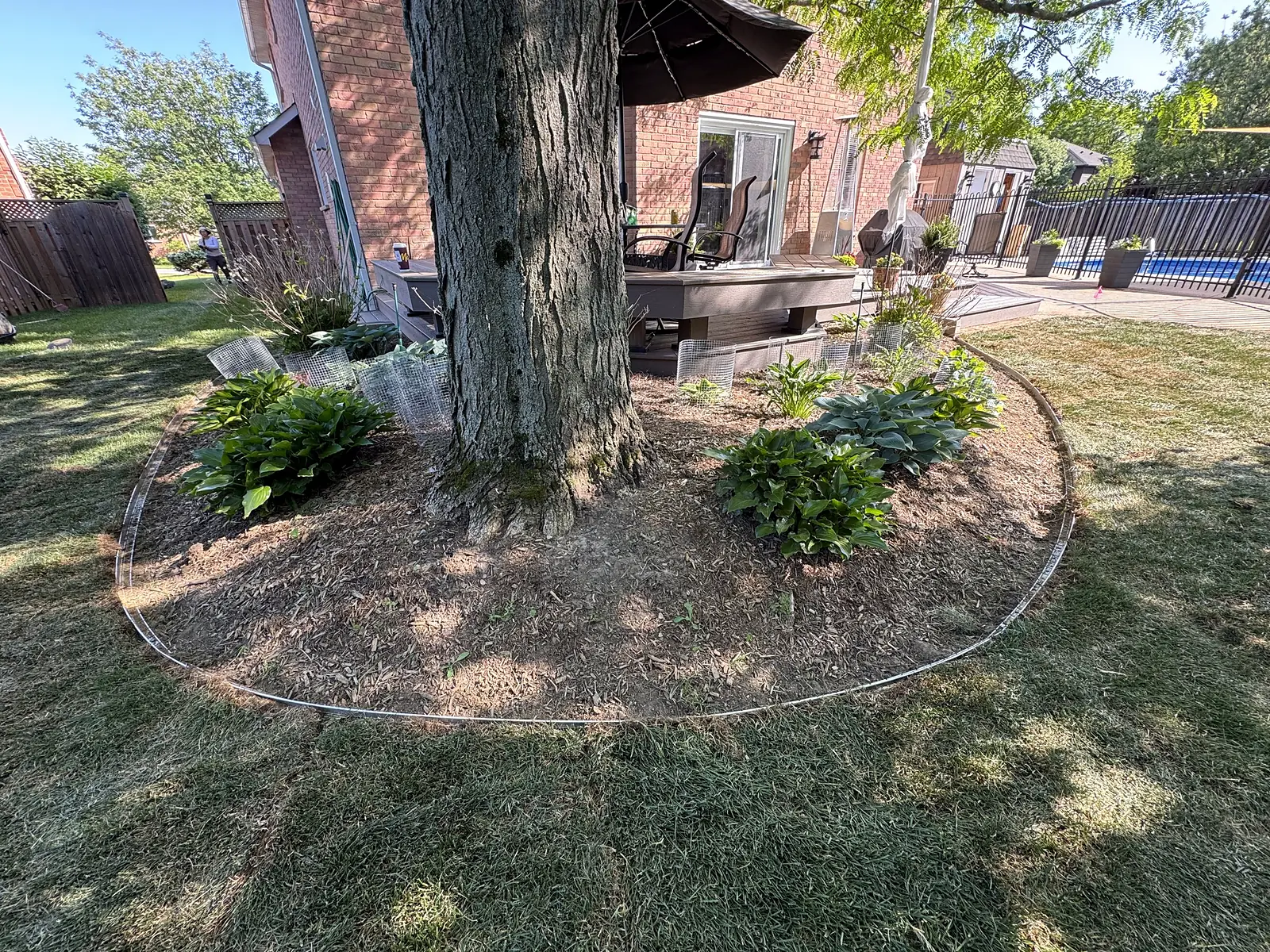
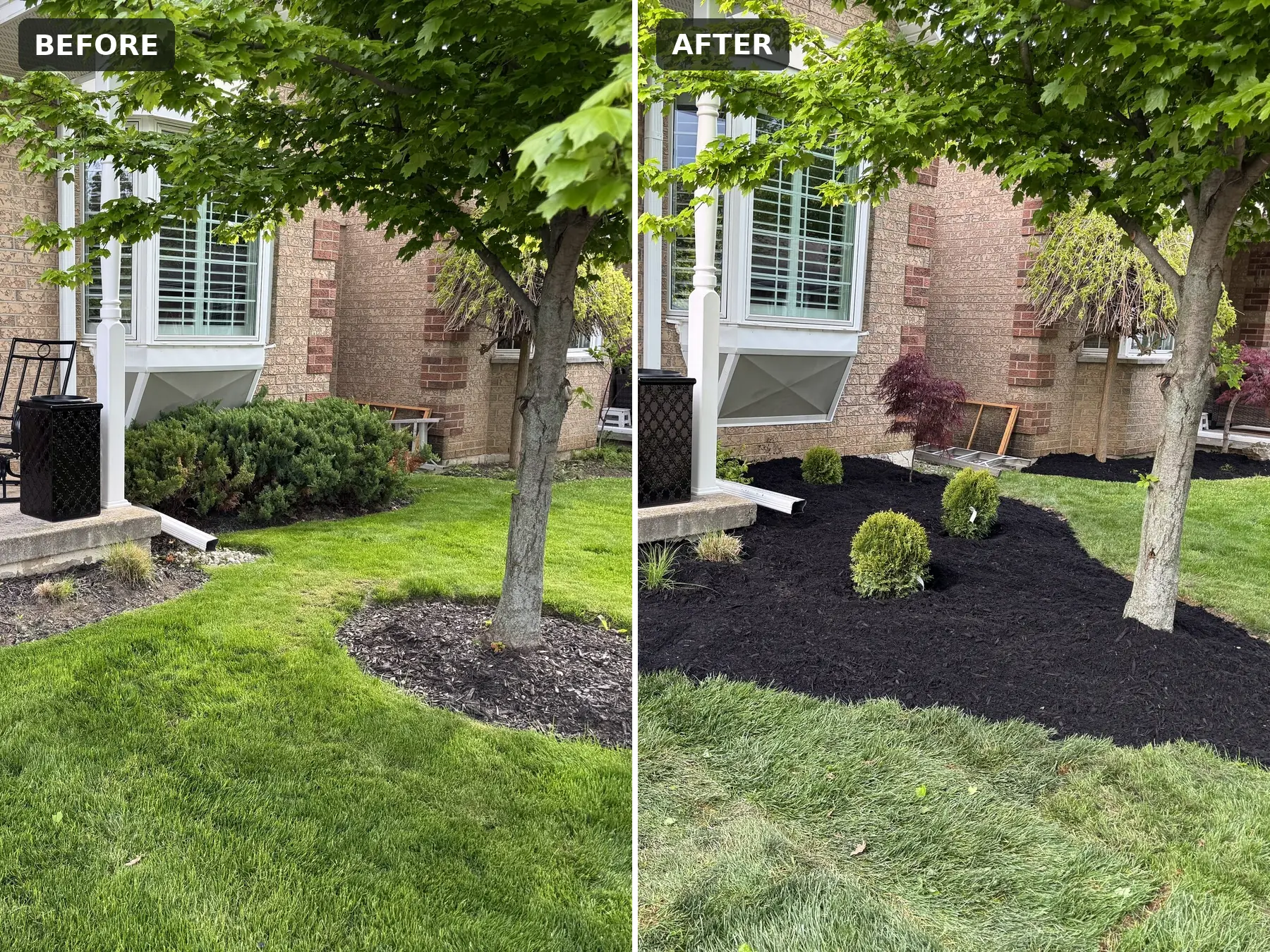
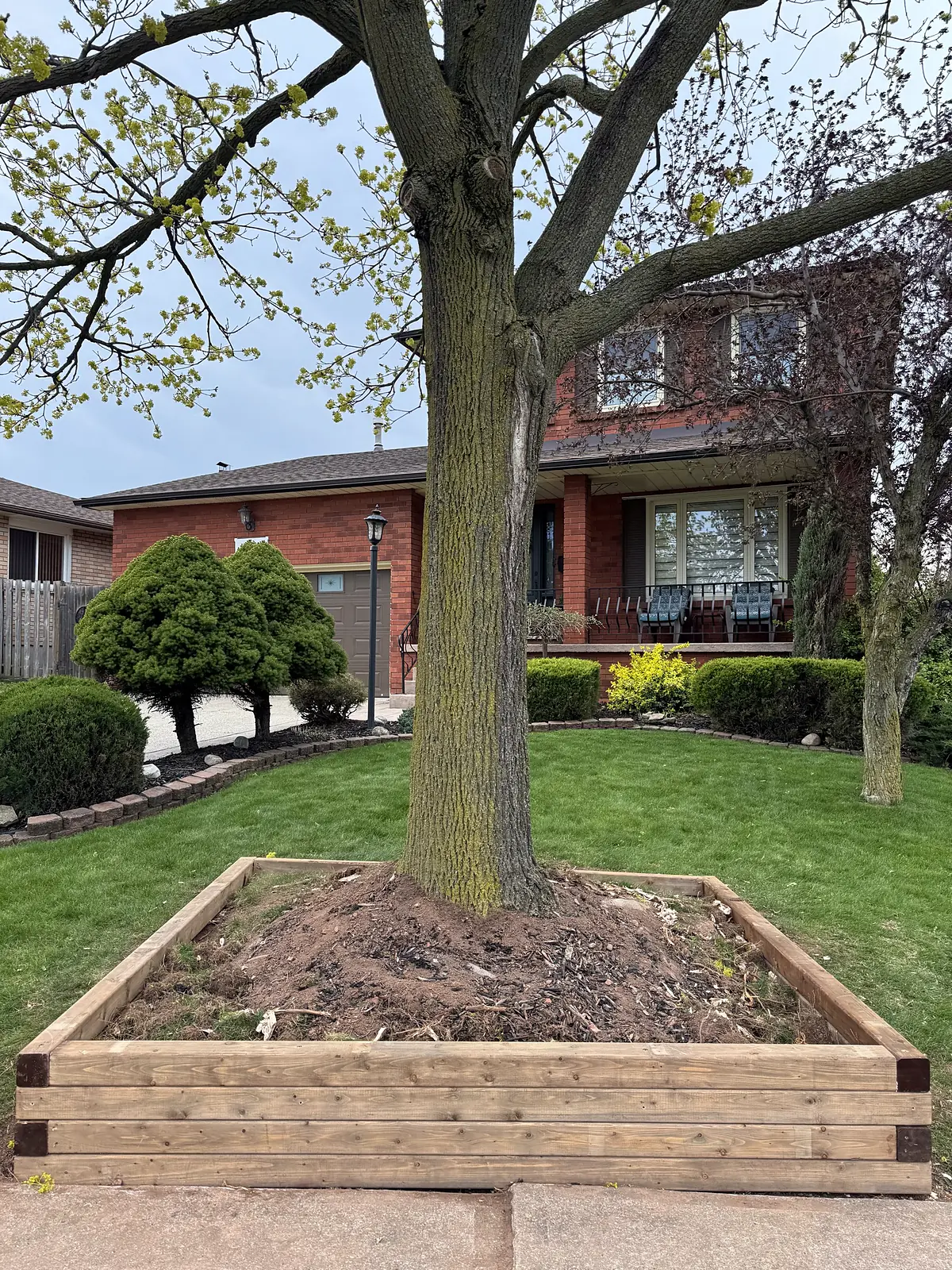
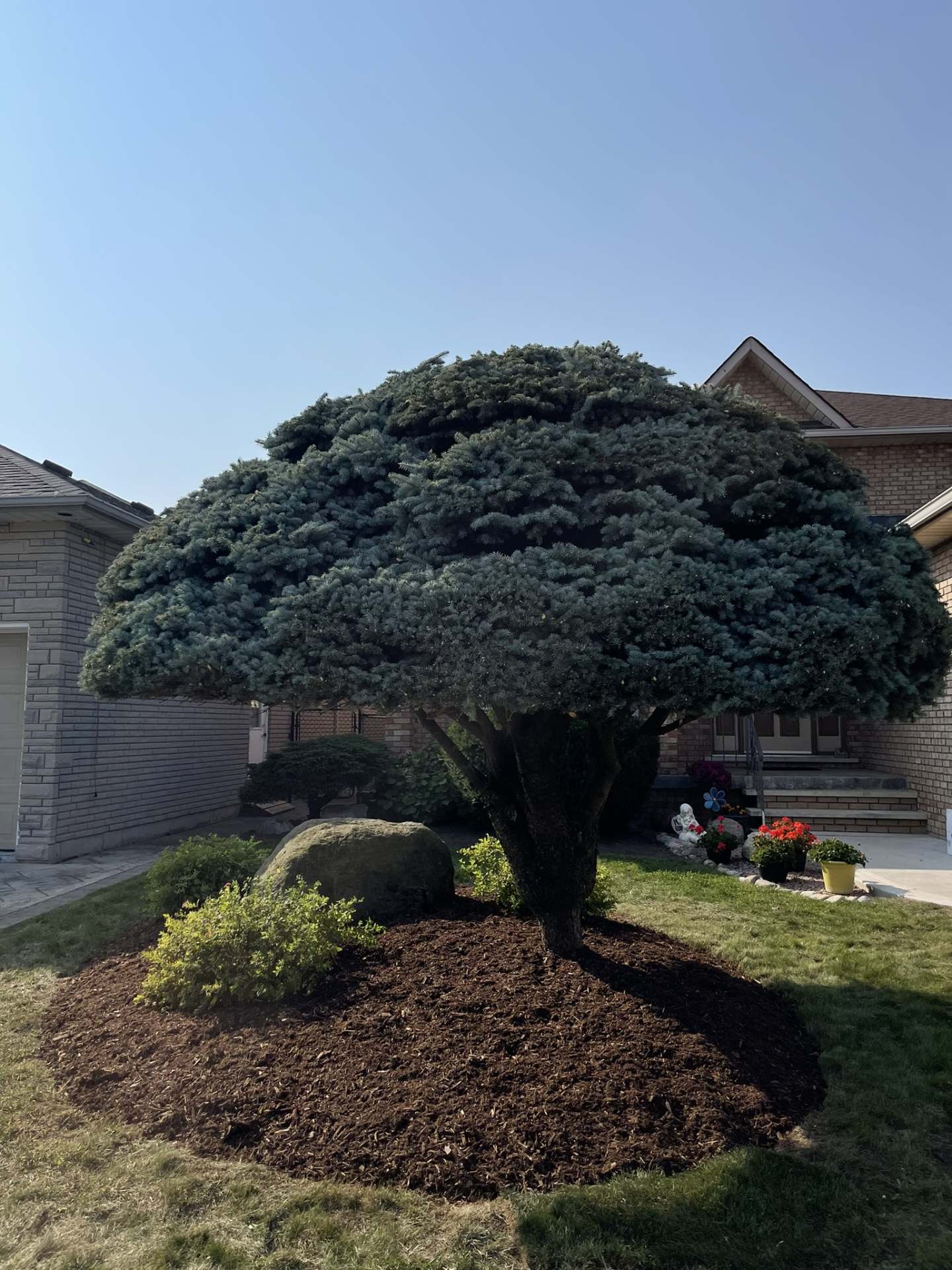
Small roots out, where it is allowed. Where a surface root is small, well away from the trunk, and the tree is yours and not protected, it can be removed and the lawn or walk rebuilt over it. We did exactly that for a customer whose front lawn was full of roots: dug them out and replaced the sod, which is our sod and lawns service. For the ridges a big tree makes in a lawn, the gentler fix is topsoil over the roots and new sod, or a tree ring bed with mulch that turns the root zone into a garden instead of a mowing hazard.
What we do not do is cut a large root to save a walk, or touch a City tree. If the walk that has failed is concrete, our page on a cracked or sunken concrete walkway covers the rebuild, and if the pavers have dipped between the roots rather than lifted over them, that is a sinking interlock problem with a different cause. In the old town in Dundas and on the established streets of Ancaster, where the trees are the oldest in the city and the by-laws are too, we check the rules with you before we quote.

Check this yourself first
Before anyone cuts anything, work out whose tree it is, how big it is, and what the rules say.
- Find the tree and the line: Is the tree on the boulevard between the sidewalk and the road, or on your lot? A boulevard tree is the City's, and in Hamilton the number for a concern about one is 905-546-2489. A tree on your side is yours, with the by-law to check.
- Measure the trunk at chest height: Wrap a tape around the trunk at about chest height and divide by three to get the diameter. In Oakville and Mississauga a private tree 15 cm or more across needs a permit to injure or remove. Hamilton has older private tree by-laws in Ancaster, Dundas and Stoney Creek, and a city-wide one has been proposed. Check hamilton.ca for where it stands.
- Look at the root: Lift the slab or look along the crack. A root the thickness of a finger well away from the trunk is one story. A root as thick as your arm close to the trunk holds the tree up and feeds it, and cutting it can kill the tree or make it unsafe. That is an arborist's call.
- Walk the lawn: Mark the ridges and the roots the mower hits. The repair for a lawn is different from the repair for a walk, and it is usually the gentler of the two.
- When to call: A slab someone trips on, a crack with a raised edge, or a lawn you can no longer mow around the tree is worth fixing this season. Call (905) 906-0671 and we will look at the walk, the lawn and the tree together.

Planning
What a lasting fix includes, and what changes the price
A lasting fix always includes
- Working out whose tree it is and what the by-law says before anything is cut
- Large roots left alone, and an arborist’s opinion where a root near the trunk is in the way
- A walk in interlock or slabs over the root zone, on a compacted base, that can be relaid when the root grows
- Or the path moved out of the roots, with a bed where it used to run
- Small surface roots removed only where it is allowed and the tree will not suffer
- Lawn ridges covered with topsoil and sod, or turned into a tree ring bed
What affects the price
- The length of the walk and whether it is rebuilt in place or rerouted
- Interlock, slabs or concrete, and the material you choose, billed at cost
- How much old walk has to be broken out and hauled away
- Root work, and whether an arborist is needed first
- The size of the lawn area to be topsoiled and sodded, or the bed to be built
- A permit, where the town requires one for the tree
A typical job, in plain words. Picture a front walk in slabs with two of them tilted over a maple root, and a lawn beside it with ridges the mower keeps hitting. The tree is on the lot and under the by-law threshold. We lift the whole walk, rebuild the base to ride over the root with a gentle rise, reset the slabs, and lay topsoil and sod over the ridges with a mulched ring around the trunk. The walk is flat, the lawn mows clean, and the tree does not know anything happened.
Every quote is written and free, and materials are billed at what they cost us with no markup.
Related
Related pages
Services: walkways and front entrances, sod and lawns and concrete. Related problems: a cracked or sunken concrete walkway and a sinking interlock patio. Areas: Dundas, Ancaster and Oakville. More answers on our FAQ page, and more problems we fix.
FAQs
Tree root questions
A small surface root well away from the trunk, on a tree that is yours and not protected, yes, and we rebuild over it. A large root near the trunk holds the tree up and feeds it, and cutting it can kill the tree or make it unsafe. That is an arborist's decision. Most of the time we rebuild the walk to live with the root instead.
The City. A boulevard tree between the sidewalk and the road is City property, and in Hamilton you must not trim, cut or remove it. The lifted sidewalk is the City's to repair. In Hamilton, call 905-546-2489. We build your walk from the sidewalk to the door and stop at the line.
Interlock or slabs, nearly always. They flex as the root grows and can be lifted and relaid one section at a time, which a poured walk cannot. Concrete over a live root cracks where the root is, and the crack opens again every few years. Concrete goes there only when you ask for it, and we say so.
The gentle fix is topsoil over the roots and new sod, so the mower clears them. The lasting fix is a tree ring bed with mulch around the trunk, so the root zone becomes a garden instead of a lawn. Small surface roots can be removed and the sod replaced where the tree is yours and will not suffer, which is a job we have done.
A root keeps growing, so a walk over it will move again one day. That is why we build it to be relaid: interlock on a compacted base that we can lift, re-bed and reset in a morning when the time comes, instead of breaking out a slab. Moving the path out of the root zone is the only fix that never comes back.
In Oakville and Mississauga, yes for any private tree 15 cm or more in diameter at chest height, and in Oakville that includes a hedge with stems that size. Hamilton has older private tree by-laws in Ancaster, Dundas and Stoney Creek, and a city-wide by-law has been proposed and was at consultation in spring 2026. Removing the tree itself is an arborist's job, not ours. Once the tree work is done, we rebuild the walk or the lawn.
How it works
Getting started is easy
- 1
Call or send the form
Tell us what you have in mind. We reply fast, usually within the hour.
- 2
Get your free quote
We look at your project and send you a clear, written quote quickly.
- 3
We build it
We start quickly and back our craftsmanship with a 1-year warranty.
Get Free Quote
Get a Free Quote to Fix the Walk and Keep the Tree
Tell us where the tree is, roughly how thick the trunk is, and what the walk and the lawn are doing. We will look at all three together and get back to you fast with a free written quote.