
Shade Garden Ideas for Burlington Yards

The best shade garden for a Burlington yard is a layered bed under the trees: a few shade shrubs for structure, hostas and ferns for the middle, a groundcover to close the gaps, and mulch over all of it. It replaces the thin, patchy grass that never grew there anyway, and it looks better in July than any lawn under a maple ever did.
The older streets of Roseland, Aldershot and Shoreacres have the biggest trees in Burlington and the shadiest yards, and shade beds are a large part of our garden installation work there and across our Burlington landscaping jobs. Here is what grows, how the bed is built on root-filled ground, and where the sun has to be before grass is worth trying.
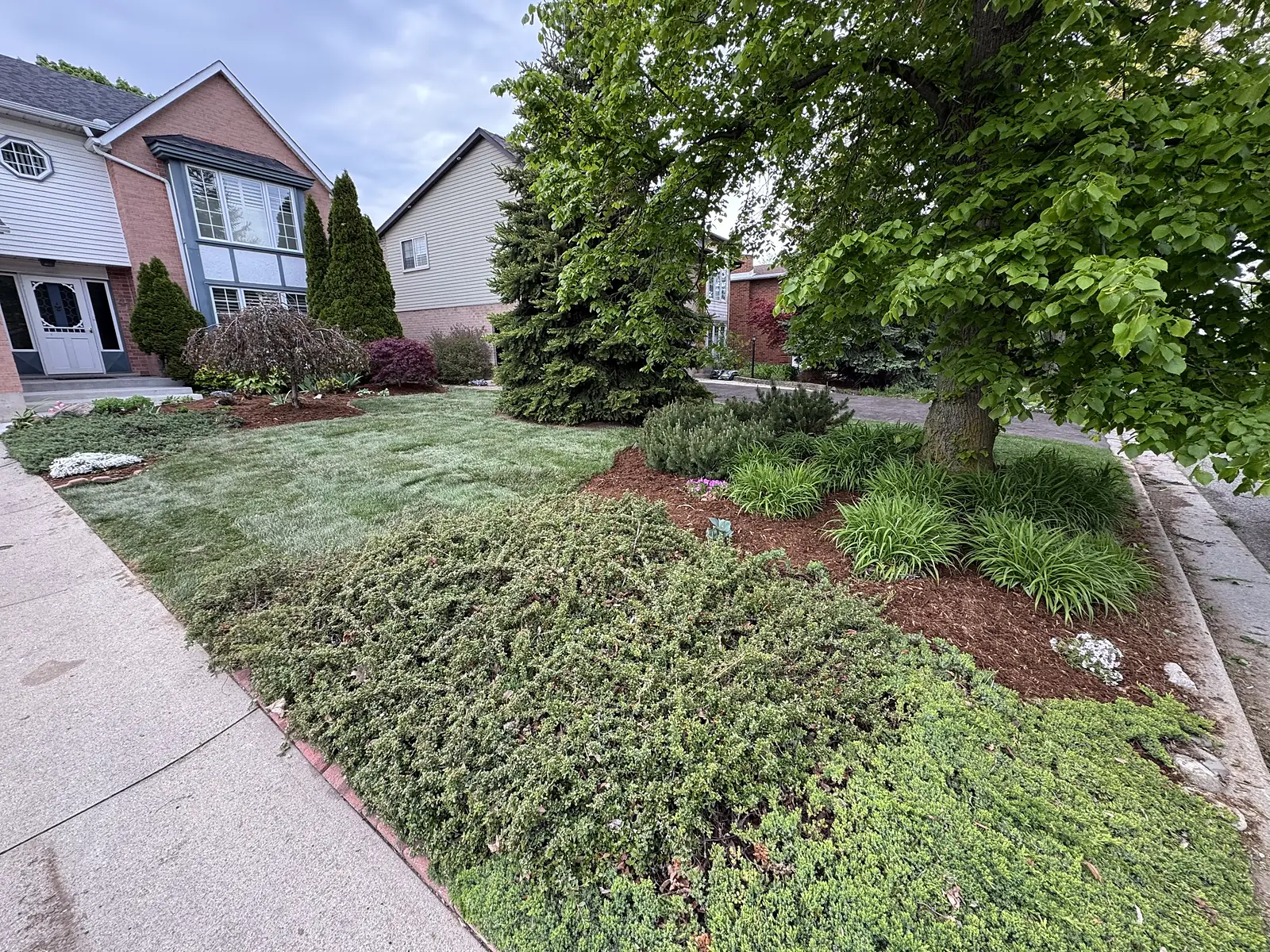
First, which kind of shade
Shade is not one thing. Dappled shade under a high canopy, where sun flickers through all day, grows almost anything that likes cool roots. Morning sun and afternoon shade on the east side of a house grows most of the hydrangeas and many perennials. Deep, dry shade under a Norway maple or a spruce, where the ground is a mat of roots and nothing gets rain, is the hard case, and it is the one most Burlington front yards have. Look at the spot at ten in the morning and at three in the afternoon before choosing plants, and dig a trowel in to see whether you are planting into soil or into roots.
What grows
Shrubs for the back of the bed
- Hydrangeas: the smooth and panicle types take more shade than people expect and flower reliably. Oakleaf hydrangea adds fall colour.
- Yews and boxwood: evergreen structure that tolerates deep shade and shearing.
- Dogwoods: red twig for winter colour in a wet spot, pagoda dogwood as a small tree in dappled shade.
- Serviceberry: a small native tree that flowers in spring and feeds the birds.
Perennials for the middle
- Hostas in every size, from a hand span to a wheelbarrow, blue, green or variegated. The backbone of every shade bed.
- Ferns: ostrich fern spreads to fill a damp corner, Japanese painted fern stays put and adds silver.
- Astilbe for feathery colour in June and July where the soil stays moist.
- Heuchera, or coral bells, for leaf colour from lime to burgundy all season.
- Bleeding heart, Solomon’s seal, brunnera and hellebores for spring.
Groundcovers to close the gaps
- Pachysandra for deep, dry shade under evergreens, where nothing else will.
- Sweet woodruff, lamium and wild ginger for dappled shade.
- Periwinkle, with care: it spreads, which is the point and the problem.
We bring several options for each spot, suited to the soil and the light, and the plants are billed at what they cost us at the nursery, with the contractor discount passed to you. Designs are available on request, but most shade beds are laid out on the ground with the pots, moved around until they look right.
Building a bed on root-filled ground
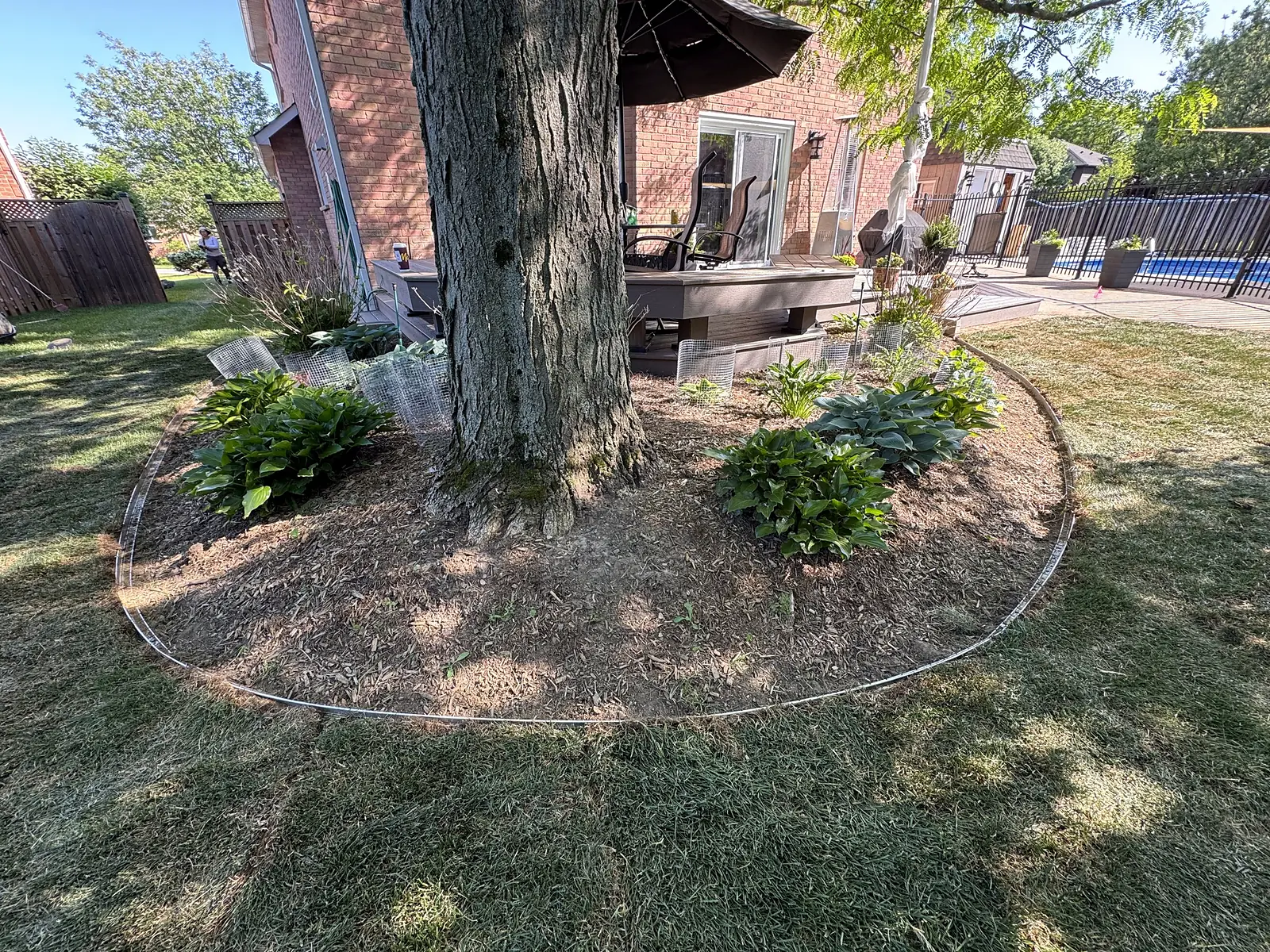
Under a mature tree you cannot dig a deep bed without harming the tree, and you should not pile soil against the trunk. What works:
- Strip the failed grass and the weeds, and shovel edge the bed into a clean shape.
- Add a shallow layer of good topsoil and compost over the root zone, a few inches, never more, and never up the trunk.
- Plant into pockets between the roots, smaller pots rather than large ones so the holes stay small.
- Mulch two to three inches deep, pulled back from every stem and the trunk.
- Water deeply through the first season, because the tree takes most of the rain.
Our garden bed cleanup, mulch and edging page covers the clearing and mulching step by step, and our guide to mulching explains the depth.
When to give up on the grass
If the spot gets less than about four hours of sun, if the ground under it is a mat of roots, or if you have re-sodded it twice and watched it thin out both times, stop. Grass wants sun and soil, and it will not get either under a big tree. A shade bed is the last time you deal with that corner. Where a yard has sun at the back and shade at the front, we sod the back and plant the front; see our sod installation page for the sunny half.
Keeping it looking good
A shade bed is low work. Top up the mulch every second spring, cut the hostas down after frost, prune the hydrangeas in early spring, and pull the few weeds that get through the mulch. Water in a dry August, because the tree is drinking first. That is the year.
Frequently asked questions
What will grow in a shady yard?
Hostas, ferns, hydrangeas, yews, boxwood, heuchera, astilbe and groundcovers such as pachysandra and sweet woodruff. The list changes with how deep and how dry the shade is, and we match the plants to the spot.
I have no idea where to start with my garden. Can you help?
Yes. We look at the light and the soil, suggest several plants for each area, pick them up from a nursery with a good selection, and plant them. Designs are available on request.
Can you plant under my big maple without hurting it?
Yes, with small plants in shallow pockets, a thin layer of soil, and mulch kept off the trunk. No deep digging and no soil piled against the tree.
Turn the shady corner into the best bed in the yard
Call (905) 906-0671 or send the form on our contact page with a photo of the shady spot at midday. We are quick to quote, quick to start, and we answer every call.
